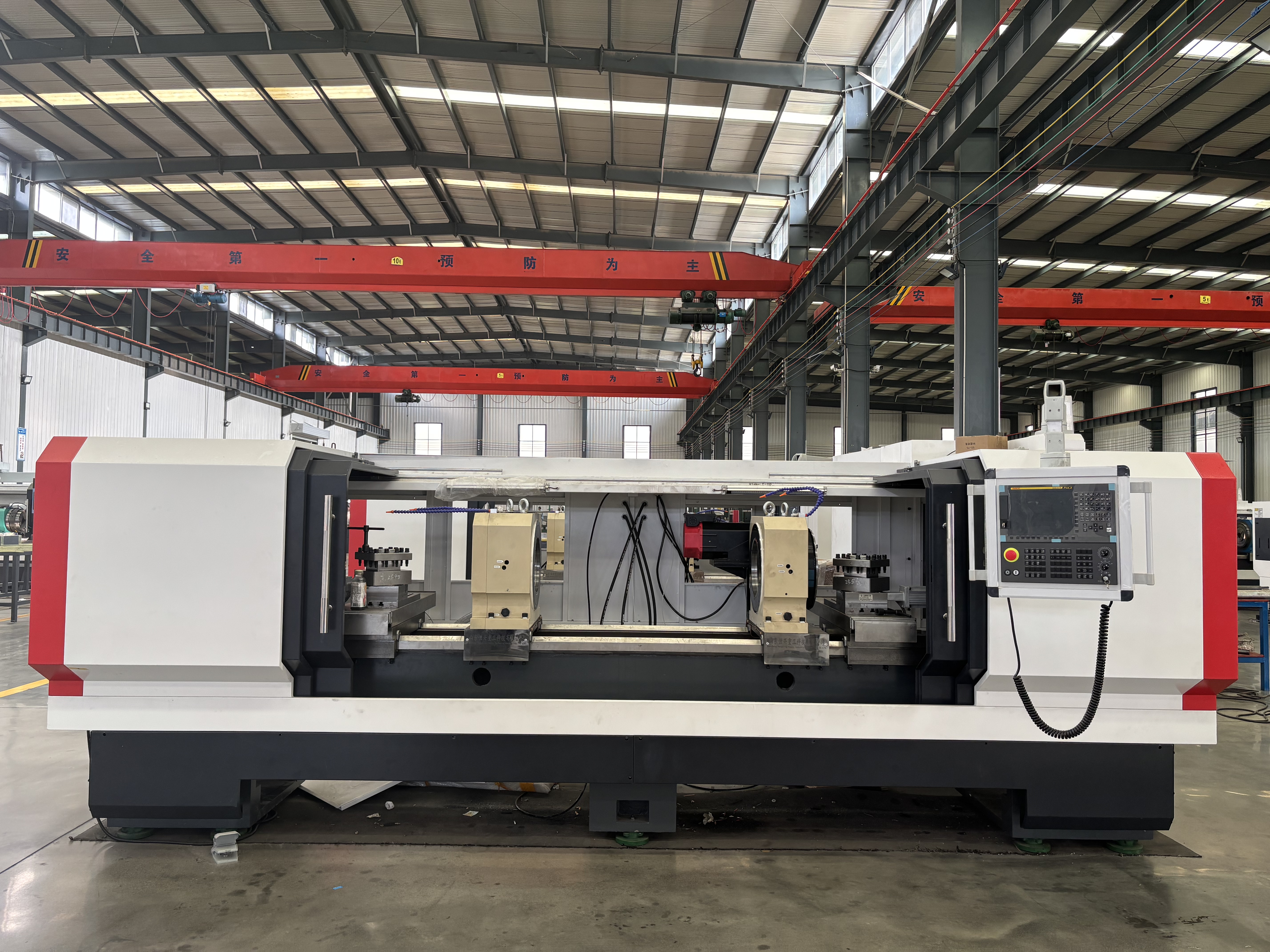
How Dual-Spindle CNC Lathes Enable Simultaneous Complex Turning Operations
Parallel vs. Tandem Spindle Architectures and Their Impact on Throughput
A dual spindle CNC lathe has two main setups: parallel or tandem. Both boost material removal and output speed. Shandong Hengxing Heavy Industry Science&Technology Co.,Ltd. optimizes these for diverse needs.Parallel mode works on two parts concurrently. It doubles production for identical high-volume items.
Tandem systems handle one part’s both sides. Main spindle machines the front first.The sub-spindle takes over for back-side finishing. Manual part resetting is eliminated.
Aerospace tests show 45% downtime reduction. Turbine shafts see 50%+ cycle time cut.Parallel suits quantity-focused tasks. Tandem excels for sub-5 micron precision parts.
Live Tooling, Y-Axis Control, and Milling-Integrated Turning Capabilities
Adding live tooling to dual-spindle CNC lathes along with Y-axis control turns these machines into real workhorses capable of handling multiple tasks at once. The rotating tools attached to turret systems let operators do milling, drilling, and tapping all while the part is still spinning on the lathe bed. No need to stop and restart operations anymore. What makes this really powerful is the Y-axis capability which lets tools position themselves away from the centerline of rotation. This breaks the traditional constraints of working only on perfectly round shapes. Combine this with proper synchronization of the C-axis spindle indexing and suddenly we're talking about creating complex features with incredible accuracy right there on the machine tool itself. Shops that implement this kind of setup often see dramatic improvements in both productivity and quality control across their production runs.
- Hexagonal bolt heads formed after turning the shank
- Helical coolant grooves in titanium medical implants
- Serial number engraving on automotive valve stems
This milling-integrated turning reduces total setups by 80% while holding positional tolerances within ±0.01 mm—consistently verified in ISO 9001-certified production environments.
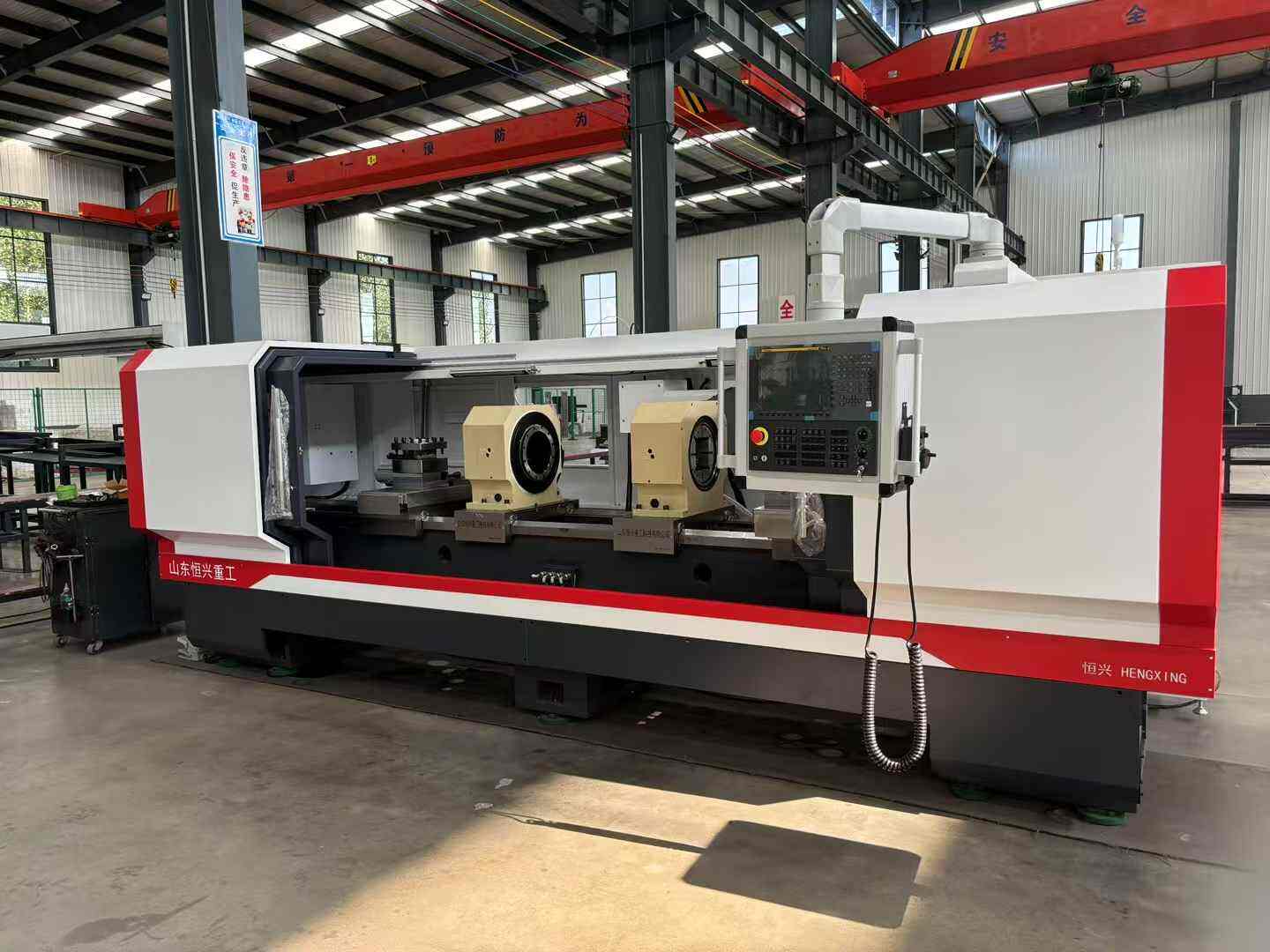
Precision Engineering: Swiss-Type and Powered Turret Dual-Spindle CNC Lathes
Swiss-Type Systems for Micro-Diameter Stability and Axial Rigidity
Swiss-type dual spindle CNC lathes stabilize micro-diameter parts. Sliding headstock and guide bushings aid this.Workpieces stay supported near the cutting zone. Bending and vibration are minimized.
Axial rigidity is enhanced. Tolerances hold at ±0.0002 in (5 μm).Airplane bolts and medical implants demand this precision. Thin parts (<1mm) are processed safely.
Integrated bar feeds enable unsupervised runs. Setup time drops by 30% for miniature parts.
Powered Turret Flexibility for Multi-Axis Coordination Without Secondary Setup
Powered turrets integrate live tools into rotating turrets. Multi-axis work proceeds without part movement.Main spindle completes initial cutting. The part moves to the sub-spindle for backworking.All work finishes in one chucking cycle. Manual handling alignment errors are reduced.
Production time cuts by 40–45%. Spiral grooves and cross-drilled holes are machined continuously.It’s essential for small-batch, multi-dimensional precision parts. Modern shops rely on this flexibility.
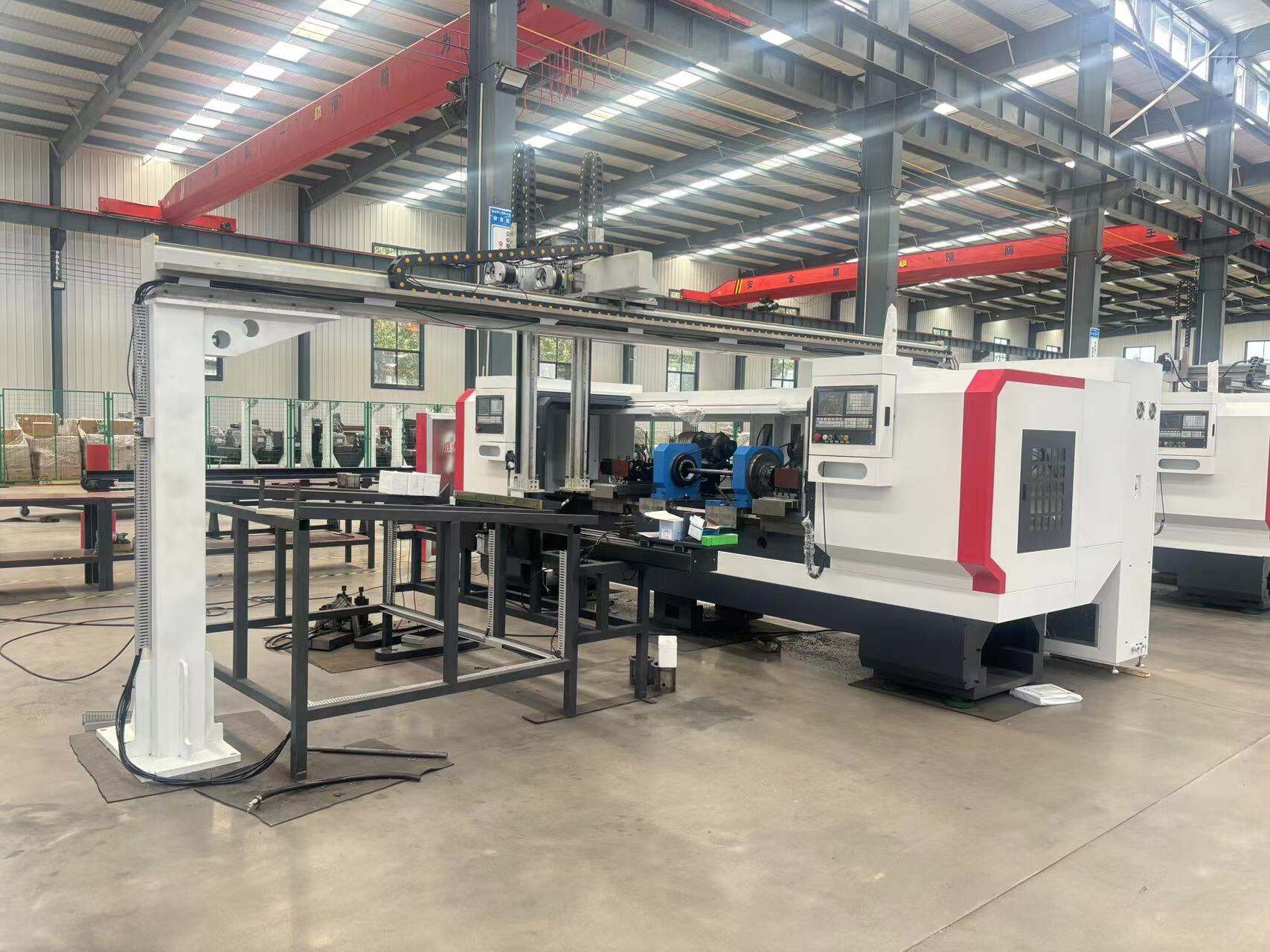
Critical Technology Requirements for Reliable Dual-Spindle CNC Lathe Performance
Thermal Compensation Protocols and Live Tooling Density Optimization
Getting consistent results at the micron level with dual-spindle CNC lathes really comes down to how well heat is managed during operation. When these machines run for long periods, the difference in temperature between spindles and ball screws can sometimes hit over 20 degrees Celsius. Without proper correction, this creates positional drift exceeding 40 micrometers which ruins precision work. That's why modern equipment now includes thermal sensors connected across the machine along with smart algorithms that tweak tool paths as needed while cutting happens. These adjustments happen fast enough to counteract expansion issues before they actually mess up the shape of parts being made. For materials such as Inconel that react strongly to temperature changes, maintaining stable dimensions isn't just important it's absolutely necessary because even small deviations affect how long components will last under stress and whether they'll hold up reliably in service conditions.
The layout of live tools matters just as much as anything else in this process. Turret stations packed with high density can handle all sorts of movements at once radial, axial, angular stuff works on both main and sub spindles. No need to move the workpiece around during these operations. The really good setups put tools that work well together next to each other on neighboring stations. Think about cross drilling right beside thread milling for instance. This kind of smart arrangement reduces extra movements by roughly two thirds when compared to layouts where everything is spread out. For parts with lots of features and complicated geometry, this means real improvements in production speed that anyone can measure on the shop floor.
Real-World Validation: Dual-Spindle CNC Lathe Implementation in Aerospace Manufacturing
Aerospace demands sub-0.8 μm tolerances (FAA regulations). dual spindle CNC lathe meets this need.Dual-end machining in one setup cuts alignment errors. Aerospace bearings use these systems widely.Slant bed designs suit airplane turbine shafts. Quality issues dropped by 40% since 2018.
Live tooling integrates flange milling and groove cutting. Turning operations run concurrently.Critical flight components see 50% production time savings. Older multi-step methods are outperformed.Shandong Hengxing Heavy Industry Science&Technology Co.,Ltd. delivers aerospace-grade dual spindle CNC lathe solutions.
Table of Contents
- How Dual-Spindle CNC Lathes Enable Simultaneous Complex Turning Operations
- Precision Engineering: Swiss-Type and Powered Turret Dual-Spindle CNC Lathes
- Critical Technology Requirements for Reliable Dual-Spindle CNC Lathe Performance
- Real-World Validation: Dual-Spindle CNC Lathe Implementation in Aerospace Manufacturing