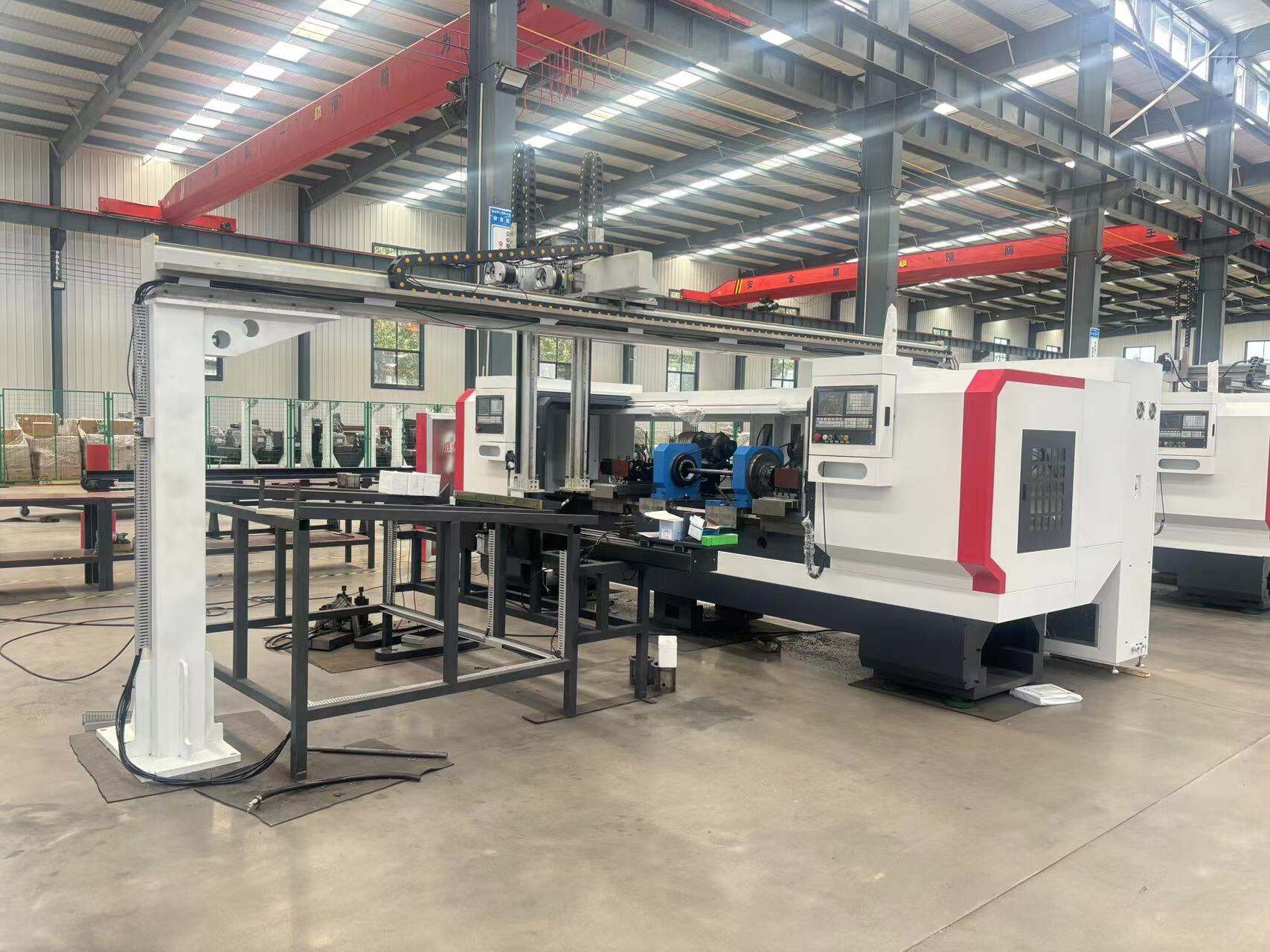
Dual-Spindle CNC Lathe : Main and Sub-Spindle Coordination
Synchronized vs. Independent Motion Control for Simultaneous Machining
A dual spindle CNC lathe uses two motion control modes. Both target specific manufacturing needs. Shandong Hengxing Heavy Industry Science&Technology Co.,Ltd. optimizes these for efficiency.Synchronized mode enables real simultaneous operations. Main spindle turns outer diameters.
Sub-spindle handles internal threading concurrently. Cycle times drop 40–60% on busy floors.Independent control suits imbalanced workloads. Main spindle does heavy roughing.Sub-spindle performs fine finishing. Rigidity and surface quality are maintained.
Fanuc/Siemens systems auto-switch modes. Tool paths align to avoid collisions.No manual supervision is needed. Processes run smoothly unattended.
Thermal Management and Load Balancing for Sub-Micron Repeatability
Thermal drift causes 70% of ±5μm dimensional errors. Sub-micron precision needs dual adjustments.Active cooling keeps spindle temps within ±0.5°C. Load sensors distribute cutting forces evenly.
Bearings avoid uneven wear. High-res encoders correct position shifts during transfers.These measures cut scrap rates by 98%. Ignoring thermal balance risks big losses.Ponemon 2023 data cites $740k/year in shutdown costs. Thermal imbalance drives these expenses.
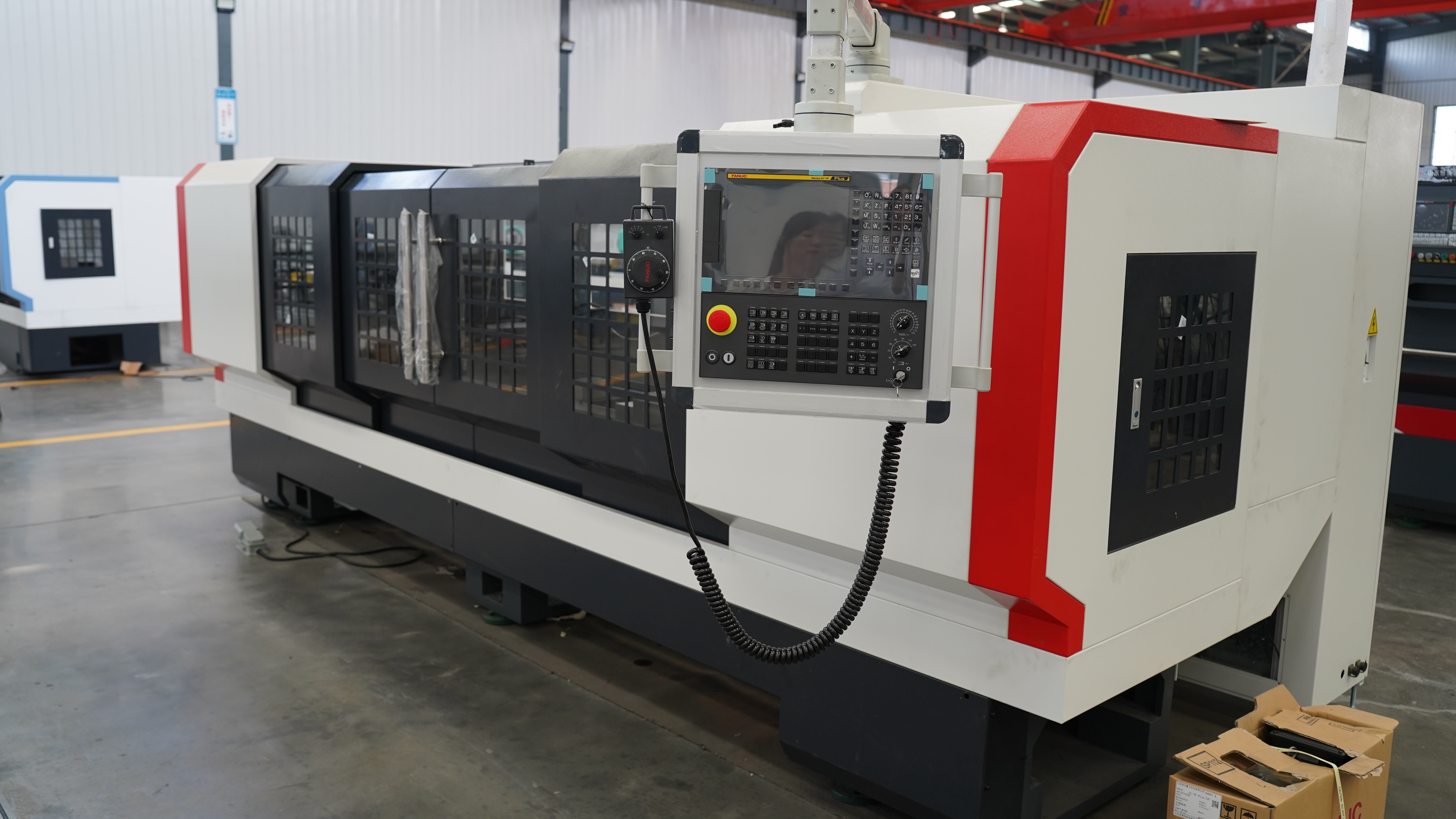
Integrated Tooling System: Turret Design and Adaptive Tool Management
Servo-Driven Turret Indexing and Its Impact on Dual-Spindle CNC Lathe Cycle Efficiency
The servo driven turret systems really boost efficiency for dual spindle CNC lathes, indexing tools in less than half a second with around 0.001 degree repeatability. These systems are different from older hydraulic or pneumatic options because they have direct drive architecture that gets rid of backlash issues and reduces vibrations during those tricky interrupted cuts on hardened materials. Surface finish quality stays well below Ra 0.8 microns even under these conditions. Shops report cutting idle time down somewhere between 15 to maybe 20 percent when working on complicated components such as aerospace turbine shafts. This allows smoother switching between spindles and opens up the possibility for true simultaneous machining operations without interruptions.
Real-Time Tool Wear Compensation for Unmanned, High-Accuracy Production
Adaptive tool management keeps parts dimensionally accurate even during those long overnight production runs. The system uses laser or acoustic sensors to spot when tool flanks start wearing down at the micron level. Once wear hits around 0.2 mm, the CNC machine adjusts the tool offsets automatically and shares this compensation info between both spindles. For medical implant makers who need tolerances within plus or minus 0.005 mm, this means they can run machines nonstop for over 30 hours straight without anyone needing to check in on things. When paired with thermal drift compensation features, manufacturers get consistently good results down at sub-micron levels from one batch to the next, which is critical for high precision applications where every tiny measurement matters.
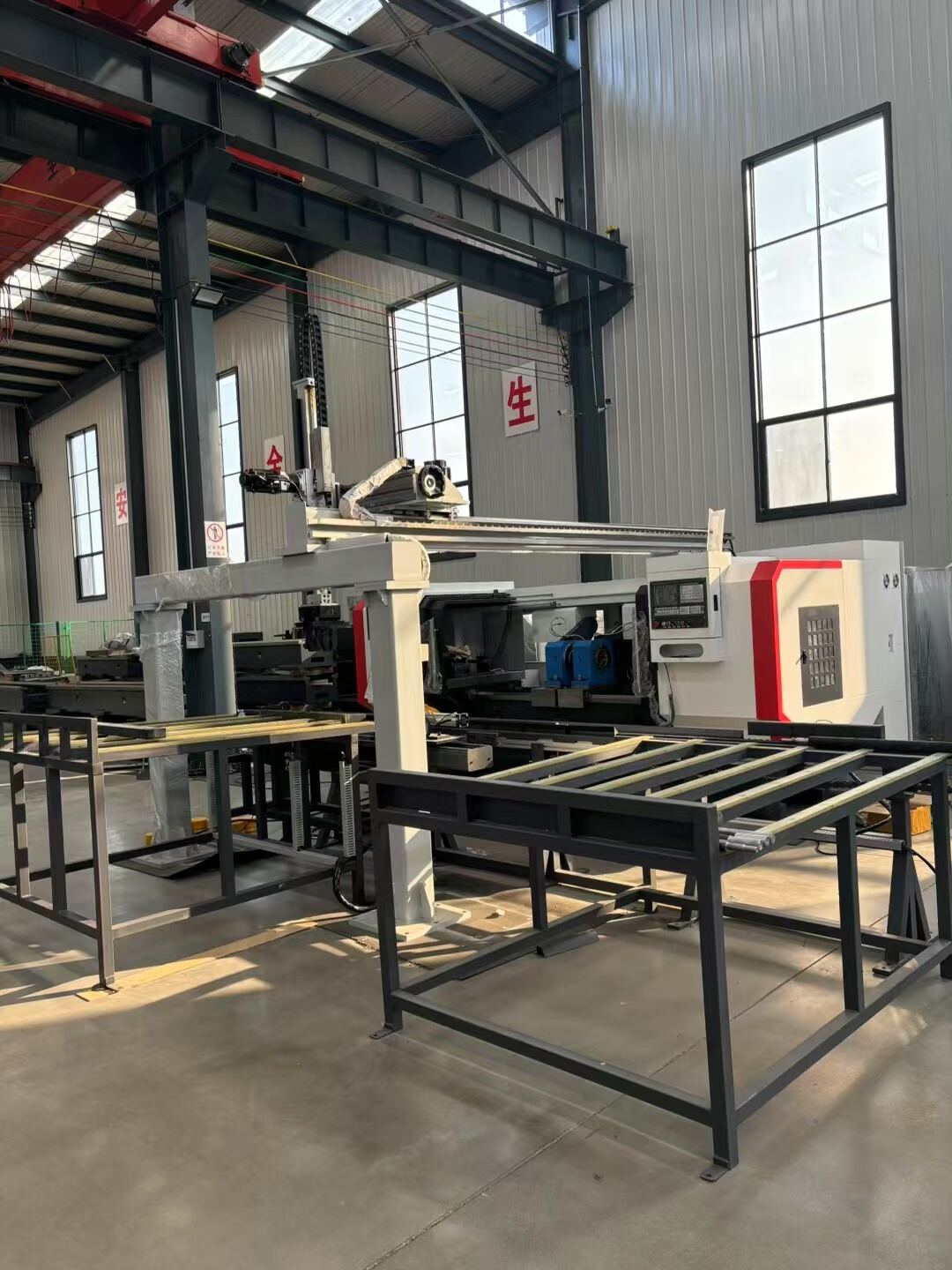
Automated Workpiece Transfer: Precision Handling Between Spindles
Chuck-to-Chuck Transfer Accuracy (<0.01 mm) and Bar Feed Synchronization
Sub-0.01mm transfer accuracy defines dual spindle CNC lathe performance. Servo alignment enables this.Linear encoder feedback ensures precision. Concentricity stays intact post-transfer.
Re-chucking tolerance drift is eliminated. Closed-loop bar feeders sync with spindles.Feed rates and stock position adjust via sensor data. Cycle times speed up 15–20%.Material jams and collisions are avoided. Overnight unattended runs are reliable.
Key advantages of this system:
- Zero rechucking tolerance drift for multi-axis, multi-operation parts
- Collision avoidance protocols powered by integrated proximity sensors
- Material waste reduction through precise bar remnant utilization
This automated handoff transforms the dual-spindle lathe into a unified, self-contained production cell—where transfer fidelity directly governs scrap rates, tool life, and throughput consistency.
Intelligent CNC Control and High-Performance Coolant Integration
Multi-Channel Interpolation (Fanuc 31i-B5 / Siemens Sinumerik 840D sl) for True Dual-Spindle CNC Lathe Coordination
The Fanuc 31i-B5 and Siemens Sinumerik 840D sl controllers use something called multi-channel interpolation to get those two spindles working together as if they were one big machining unit. What really makes these systems stand out is how they handle real time data sharing between tools. This lets them run complex cutting paths at the same time, making adjustments to position offsets while the machine is actually running. Thermal expansion? No problem. These controllers can compensate for it down to around plus or minus 2 microns. Manufacturers have found that getting rid of those annoying transfer pauses and breaking free from strict step-by-step operation sequences cuts cycle times anywhere from 25 to 40 percent. And here's the kicker—they still maintain that super tight micron level accuracy needed for parts in aerospace applications and engine components where tolerances are basically non-existent.
70–100 bar High-Pressure Coolant Delivery for Interrupted Cutting in Hardened Alloys
Coolant systems operating at pressures between 70 and 100 bar play a vital role when machining tough materials like Inconel and titanium where productivity matters most. These systems deliver streams of coolant at high speed that reach right into the heart of the cutting area, quickly pulling away heat generated during those brief moments of contact before things get too hot.
This kind of precise cooling can actually double or even triple tool lifespan in many cases, while also allowing operators to push feed rates higher without compromising quality. Plus, it helps clear chips efficiently so surfaces stay intact throughout the process.
When we're talking about parts that really count—think aerospace turbine blades or medical implants—this isn't just nice-to-have equipment anymore. It's absolutely necessary if manufacturers want to maintain dimensional accuracy when working with these demanding materials under intense conditions. This is especially critical for maximizing the productivity and precision of advanced equipment like a double spindle cnc machine.