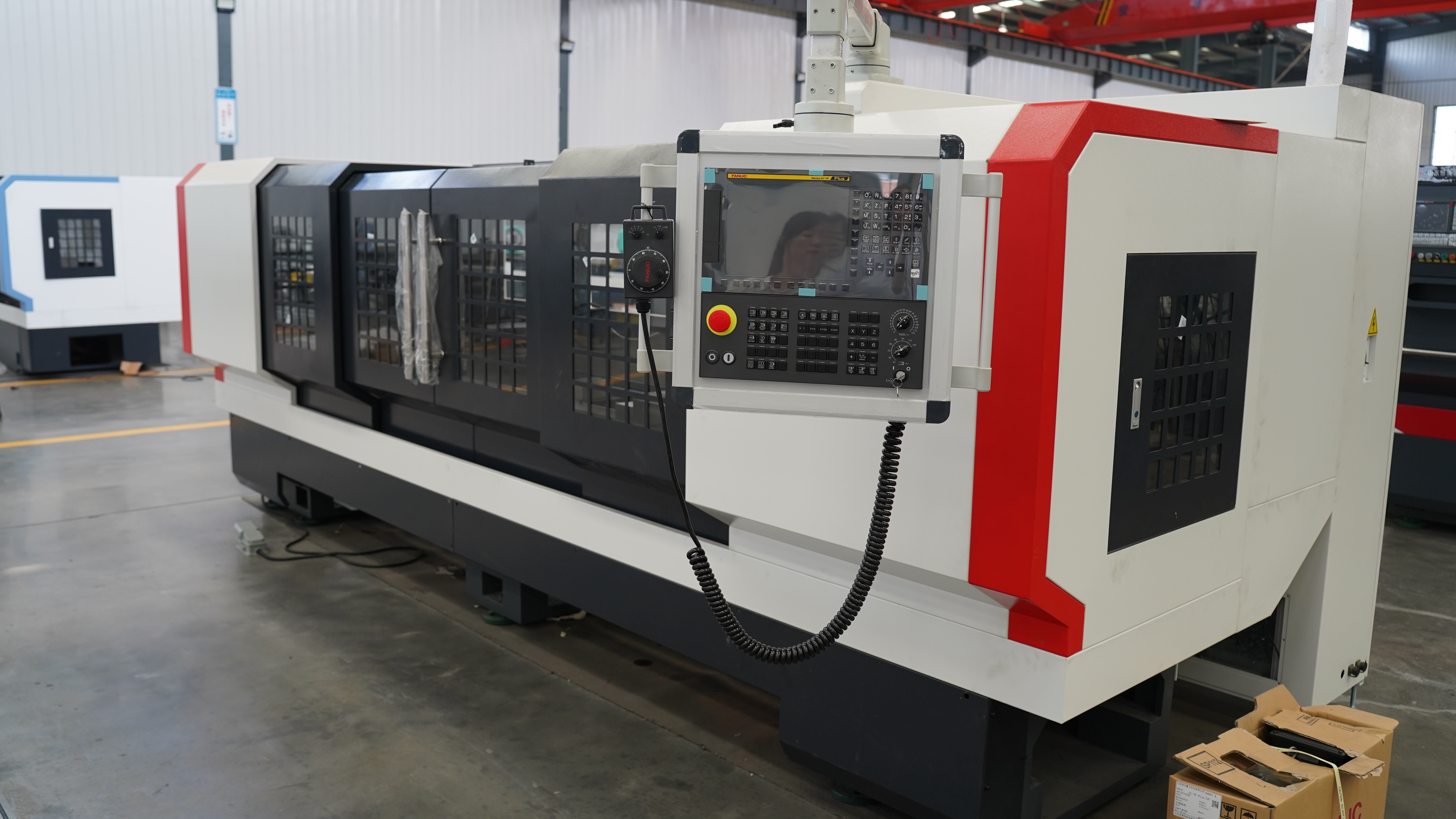
Dual-Spindle CNC Lathe: Definition, Core Principle, and Key Differentiation
How a double spindle CNC machine fundamentally differs from single-spindle lathes
A dual spindle CNC lathe differs from single-spindle models. Single-spindle lathes machine only one workpiece end. Shandong Hengxing Heavy Industry Science&Technology Co.,Ltd. leverages its dual-spindle advantage.It has two independent spindles for advanced machining. Both workpiece ends are processed in one operation.
Manual repositioning and extra fixtures are eliminated. Main spindle handles initial operations first.Secondary spindle auto-grips the other end to finish tasks. Sequential processes become simultaneous.
Manufacturing reports show 40% cycle time reduction. Rechucking errors and labor needs drop sharply.Productivity rises, and results stay consistent across runs. Precision is maintained batch after batch.
The operational logic of simultaneous front- and back-side machining
Main spindle works on the workpiece’s front face first. Secondary spindle aligns with the main one afterward.It matches rotation speeds for micron-level precision transfer. The part is moved over securely.
Both spindles operate concurrently post-transfer. Main spindle processes new raw material.Secondary spindle machines the previous part’s backside. Tight coordination ensures dimensional consistency.
Torque levels adjust constantly, and timing stays precise. No off-machine processing steps are needed.Recent studies cite 30% labor cost savings. Extra handling requirements are minimized.
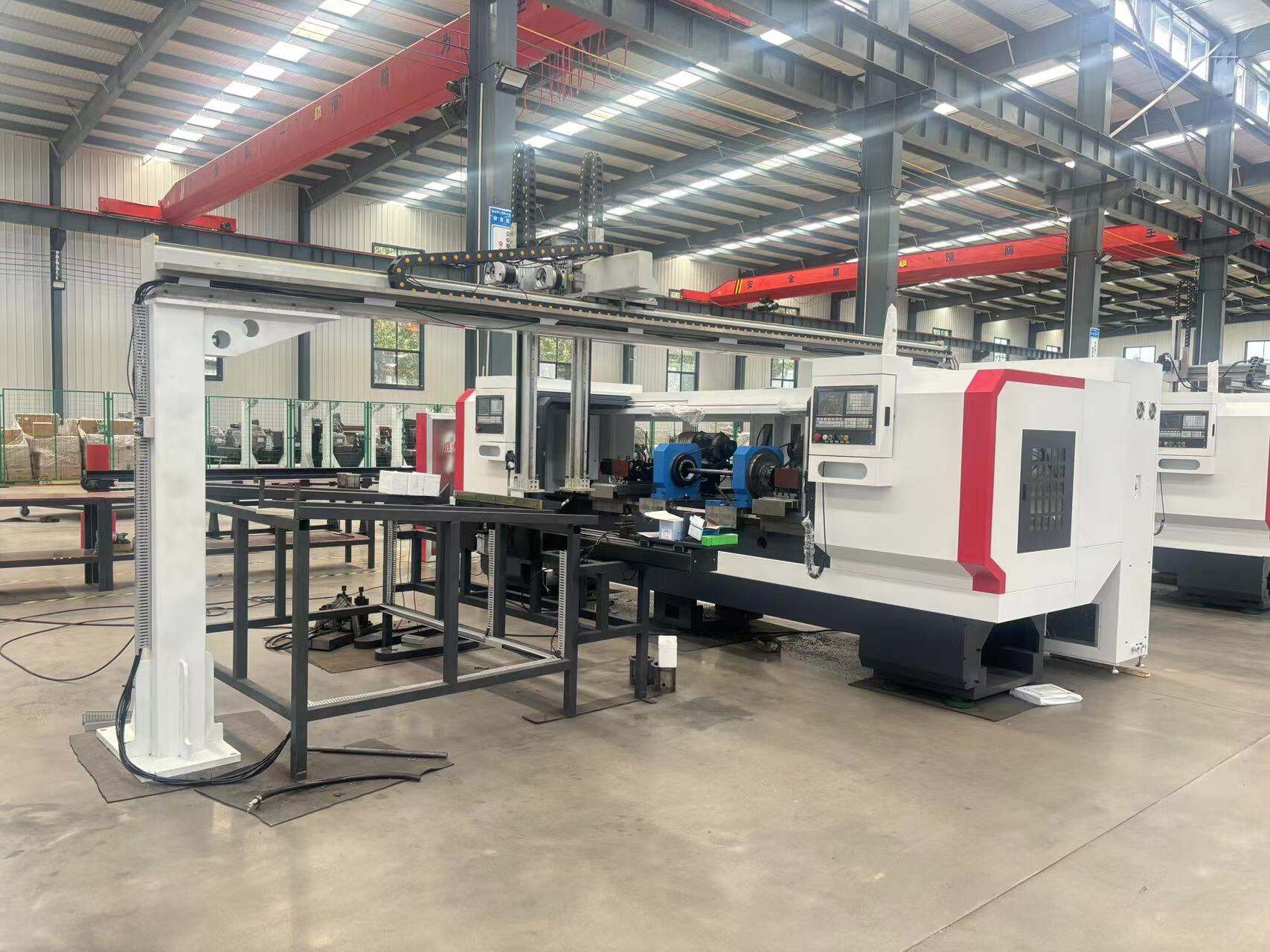
Efficiency Gains: Cycle Time Reduction and Throughput Optimization
Quantified benefits: Up to 40% faster cycle times via concurrent operations
Dual spindle CNC lathes really boost productivity because they can work on both sides of a part at the same time, cutting down cycle times by around 40% compared to regular single spindle machines. Take this scenario: when the main spindle is doing the rough turning on one end of a part, the secondary spindle can already be finishing up boring or threading work on the other end of a part that was moved over earlier. This kind of simultaneous operation means there's no wasted time waiting between steps, so production goes up per hour without needing to crank up spindle speeds or shorten tool life. What makes this even better is that all these improvements happen right where the machine already sits on the shop floor, using the same amount of electricity as before. No need to overhaul mechanical components or invest in bigger infrastructure either.
Eliminating secondary setups—reducing handling, labor, and part re-fixturing
Dual spindle systems allow manufacturers to perform several operations at once while keeping parts clamped down, which gets rid of those pesky secondary setups we all know too well. What this does is cut out three big efficiency killers. First, there's the whole hassle of moving parts manually from one machine to another. Then comes the time wasted when workers have to reposition components again and again. And finally, nobody wants the alignment issues that pop up every time something gets refixed. Factory floor managers tell us they're seeing around 30% savings on labor costs per item produced, plus almost no defects caused by improper chucking. Since parts don't need to wait in line between workstations anymore, they just roll straight into the next stage of production. All these factors combined can really make a difference, with many plants reporting their OEE metrics jumping anywhere from 25% to as much as 50% higher in mass production settings.
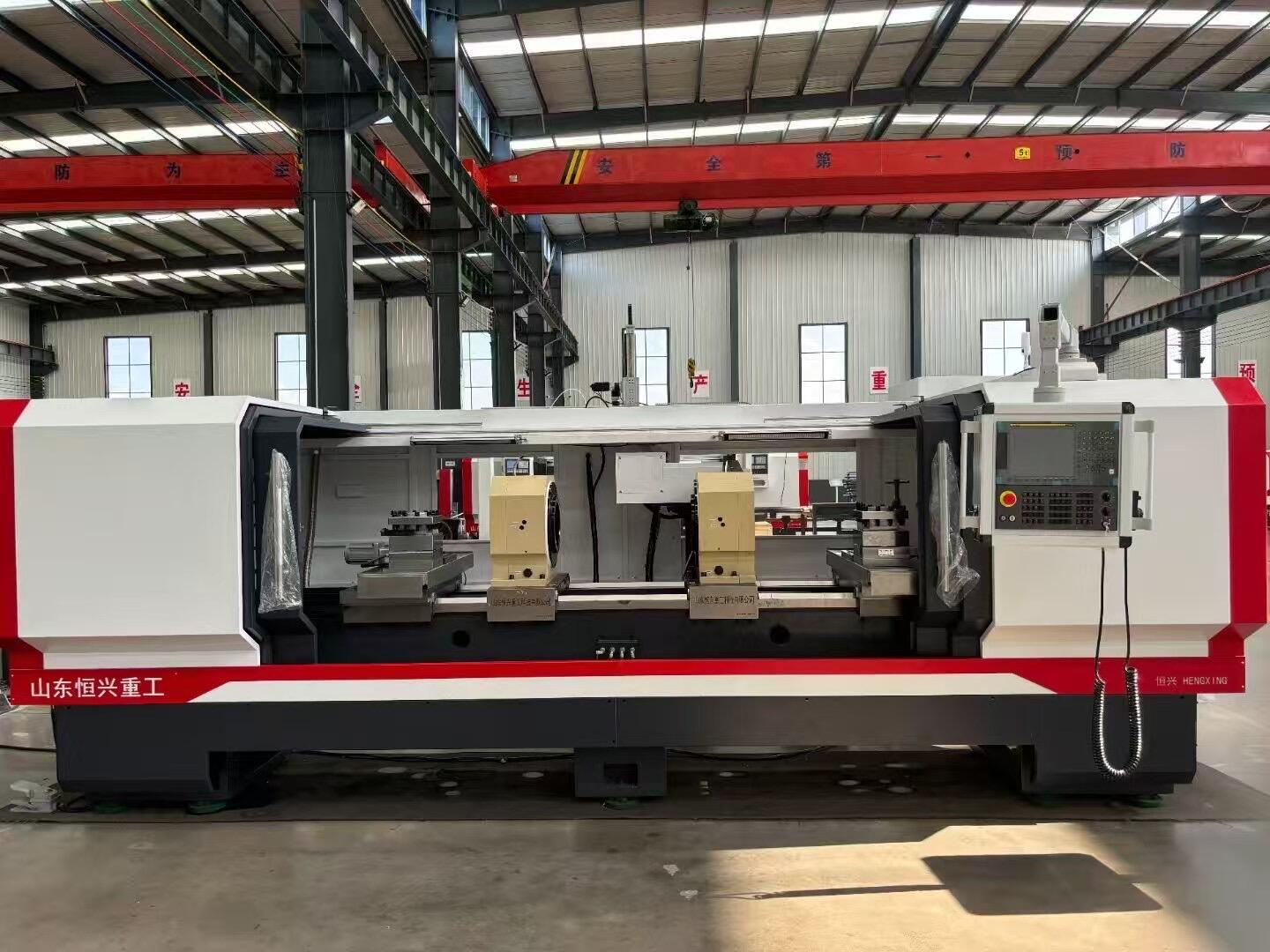
Critical Hardware and Control Architecture of a Double Spindle CNC Machine
Main and sub-spindle coordination: precision transfer, synchronization, and torque matching
Getting reliable dual-spindle operations right depends heavily on how well the hardware works together with smart control systems. When transferring parts between spindles, getting those tiny details right matters a lot. Most machines achieve this kind of precision through linear encoders paired with servo driven ball screws that keep everything aligned within about 0.002 mm tolerance. The CNC controller handles synchronization between both spindles at the same time, making sure they spin at just the right speed and angle so nothing slips when switching positions. Matching torque levels is another big deal too. If the secondary spindle doesn't match what the main one is doing, parts can get warped or tools start vibrating excessively. That's why newer equipment incorporates load sensors that constantly monitor forces and tweak torque settings as needed. These improvements help create smoother transitions between operations and cut down on wasted time by around 40%. Plus, it means every batch coming off the line stays consistent dimensionally from start to finish.
When Dual-Spindle Advantage Diminishes: Practical Limitations and Selection Criteria
Dual spindle CNC lathes excel at high-volume, complex jobs. They lack value for simple work.Single-spindle models suit one-side cylindrical parts. Operational costs drop 15–20%.
Savings come from easier programming and less maintenance. Space and power needs are higher.
They occupy 30–50% more shop floor space. Power demand hits 15–20 kilowatts.Selection depends on specific manufacturing needs. Key factors drive cost-effectiveness.Part complexity: Minimal or no backside features negate the core advantage
- Batch sizes: Low-volume production (<500 units) rarely justifies the 35–50% higher capital investment
- Labor expertise: Synchronized operations demand advanced CNC programming and troubleshooting skills
They become uneconomical under specific conditions. Handling time exceeding machining time is one.Tolerances <±0.005 inches favor secondary operations. A dual spindle CNC lathe is cost-effective only when matched to the right tasks.Shandong Hengxing Heavy Industry Science&Technology Co.,Ltd. helps select optimal dual spindle CNC lathe configurations for specific needs.
Table of Contents
- Dual-Spindle CNC Lathe: Definition, Core Principle, and Key Differentiation
- Efficiency Gains: Cycle Time Reduction and Throughput Optimization
- Critical Hardware and Control Architecture of a Double Spindle CNC Machine
- When Dual-Spindle Advantage Diminishes: Practical Limitations and Selection Criteria