
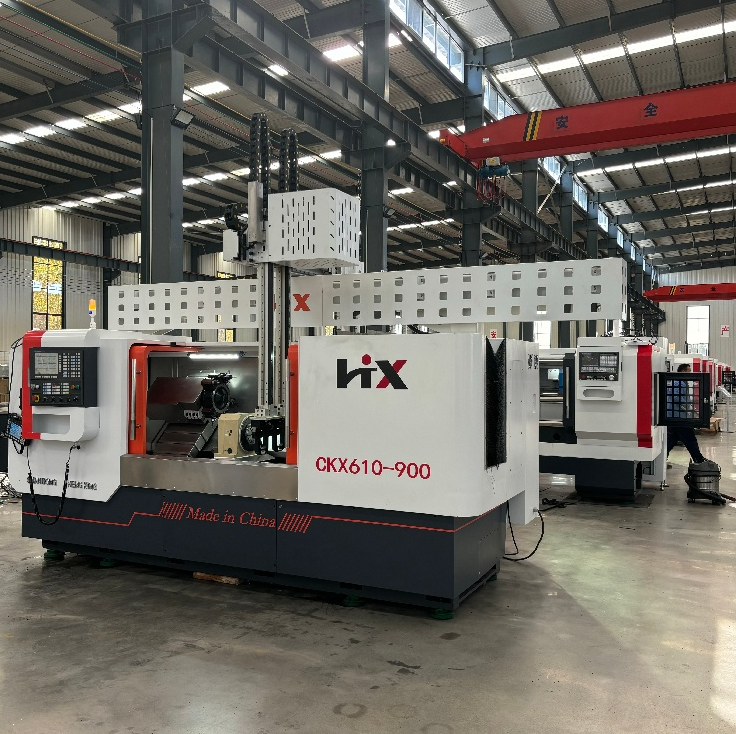
The Real Reasons a China CNC Turning Machine Keeps Showing Up on Shop Floors
Walk through any mid-sized job shop in the U.S. or Europe these days and there is a decent chance you will spot a china cnc turning machine sitting right next to a brand-name Japanese or German unit. That is not a coincidence. It is not just about price either. Over the past decade, the gap in build quality between top-tier Chinese machine tools and their international counterparts has narrowed in ways that matter on the floor, not just on a spec sheet.
The shift is worth understanding, especially if you are weighing a capital purchase for shaft work, roller components, or high-volume turning jobs. What follows is a grounded look at what actually drives the decision, backed by shop-floor experience rather than brochure claims.
What a Double-Spindle Layout Actually Does for Cycle Times
The biggest structural difference between a standard CNC lathe and a modern dual-spindle or double-end machine is not the control system. It is how the part moves through the work envelope. On a conventional single-spindle lathe, one end gets machined, the part comes out, gets flipped, re-chucked, and then the second end gets worked. That flip introduces two problems: lost time and lost concentricity.
A double-spindle configuration eliminates the flip. Once the workpiece is clamped, both ends can be machined simultaneously, often with different tool sets doing different operations. For a roller shaft that needs a bearing journal on one end and a threaded section on the other, this means one setup instead of two. The concentricity stays tighter because the part never leaves the spindle axis. On a mining equipment rebuild project in the Upper Midwest, a shop running dual-spindle machines cut a family of hydraulic cylinder rods from a two-machine, three-operator process down to one machine and one operator. The cycle time dropped by roughly 38 percent, but the bigger win was scrap rate, which fell from 4.1 percent to under 1.5 percent because the second-op misalignment issue disappeared entirely.
That is the kind of gain that does not show up in a simple price comparison, but it absolutely shows up in the monthly P&L.
Precision and Rigidity: Where Chinese Builds Have Caught Up
There is an old assumption that Chinese machines are lighter, less rigid, and therefore less accurate over long production runs. That was fair fifteen years ago. It is not fair now, at least not across the board.
The better Chinese manufacturers have adopted several practices that directly address rigidity. Bed castings go through a second quenching process, which relieves internal stress and reduces long-term deformation. Imported bearings, ballscrews, and linear guides from known suppliers are now common even on mid-range models. The result is a machine that holds tolerance through a full shift, not just on the first ten parts.
A quick comparison helps illustrate where the real differences sit:
| Feature | Typical Chinese Dual-Spindle CNC | Typical Entry-Level Japanese CNC | Typical High-End German CNC |
|---|---|---|---|
| Bed construction | Cast iron, second quenching | Cast iron, stress-relieved | Polymer concrete or cast iron |
| Spindle bearing source | Imported (NSK, SKF, etc.) | In-house or imported | In-house premium |
| Control options | GSK, Kaindi, Fanuc | Fanuc, Mitsubishi | Siemens, Heidenhain |
| Setup time for two-end part | One clamping, both ends | Two setups typical | Two setups typical |
| Relative price index | 1.0 | 2.4 | 4.1 |
The takeaway is not that a Chinese machine beats a German machine in every category. It does not. But for the vast majority of turning work in mining, wind energy, automotive parts, and agricultural machinery, the precision ceiling is high enough that the operator skill and tooling matter more than the machine's country of origin.
The Hidden Cost of Tool Rotation vs. Workpiece Rotation
Here is a technical point that often gets glossed over. Many older lathe designs rotate the tool around a stationary workpiece. That works fine for simple geometries, but it introduces a centripetal error that grows with spindle speed. When the workpiece rotates instead, the tool stays fixed and the part spins on its own axis. Concentricity becomes a function of spindle bearing quality and chuck repeatability, not tool turret positioning.
For parts like sleeves, bushings, and long shafts, this distinction is not academic. A wind energy component supplier in Texas running workpiece-rotation machines reported holding 0.0006 inch TIR on bearing journals without a secondary grinding operation. That is not a claim that every shop will hit that number. It depends on material, tooling, and thermal management. But it shows the ceiling is higher than many buyers assume.
The trade-off is that workpiece-rotation designs are less flexible for certain milling operations. If a job requires a lot of cross-drilling or milling on the same setup, a tool-rotation machine with live tooling might still be the better fit. Honest assessment matters more than blanket recommendations.
Why Automation and Loading/Unloading Change the Labor Equation
One person running multiple machines is not a fantasy. It is standard practice on well-configured Chinese turning centers with automatic loading and unloading. The key is not just the automation itself, but how well it integrates with the control system and the part transfer mechanism.
GSK, Kaindi, and Fanuc controls are all common options on these machines. Fanuc is the most familiar to Western operators, which reduces training time. GSK and Kaindi are widely used in Asia and have a strong track record in high-volume production. The choice often comes down to whether the shop already has a Fanuc ecosystem or is willing to train on a different interface.
The labor savings are real, but they need to be calculated honestly. A single operator can tend three or four machines if the cycle times are long enough and the part transfer is reliable. If cycle times are short or the loading mechanism jams frequently, the labor advantage evaporates. The machines that work best in this model are the ones with robust auto-loading and a control system that gives clear fault codes without requiring a service call.
Supply Chain and Support: The Question Everyone Asks
The most common objection to buying a Chinese CNC turning machine is not about the machine itself. It is about what happens when something breaks. Lead times for spare parts, availability of service technicians, and language barriers in technical support are all legitimate concerns.
The situation has improved substantially. Major Chinese builders now stock common wear parts in regional warehouses, and third-party service networks have grown in North America and Europe. Fanuc-controlled machines have a particular advantage here because the control system is identical to what Western service techs already know.
That said, due diligence still matters. A buyer should verify the specific model's parts availability, ask for references from shops in the same region, and confirm whether the supplier has a local service partner or only remote support. The machines themselves are reliable, but reliability is not the same as zero downtime.
What to Look for When Evaluating a China CNC Turning Machine
Not all Chinese turning machines are created equal. The range in quality is wider than what you would find among Japanese or German brands. That means the evaluation process needs to be more careful, not less.
A few practical filters:
Ask about the bed casting process. Second quenching is a meaningful indicator of long-term stability.
Confirm the source of spindle bearings, ballscrews, and linear guides. Imported components from known brands are a positive signal.
Request a test cut with your material and your tolerance requirements. A machine that holds tolerance on aluminum may behave differently on 4140 steel.
Check the control system compatibility with existing shop programming and operator familiarity.
Verify spare parts lead times and service response commitments in writing.
The goal is not to find the cheapest machine. It is to find the machine that fits the work, the operators, and the support infrastructure available in the region.
For operations that need efficient, precise, and cost-conscious dual-spindle or double-end machining, Hengxing Heavy Industry has built a product line around exactly that brief. The company's fully automatic double-head CNC lathes, double-head drilling machines, and double-sided milling machines are independently developed for roller shafts, pipes, sleeves, and a range of shaft parts. With over two decades of manufacturing experience and a focus on high-rigidity, high-efficiency designs, Hengxing Heavy Industry serves mining, wind energy, new energy, automotive parts, and agricultural machinery sectors with equipment that prioritizes practical shop-floor results over spec-sheet superlatives.
Table of Contents
- The Real Reasons a China CNC Turning Machine Keeps Showing Up on Shop Floors
- What a Double-Spindle Layout Actually Does for Cycle Times
- Precision and Rigidity: Where Chinese Builds Have Caught Up
- The Hidden Cost of Tool Rotation vs. Workpiece Rotation
- Why Automation and Loading/Unloading Change the Labor Equation
- Supply Chain and Support: The Question Everyone Asks
- What to Look for When Evaluating a China CNC Turning Machine