
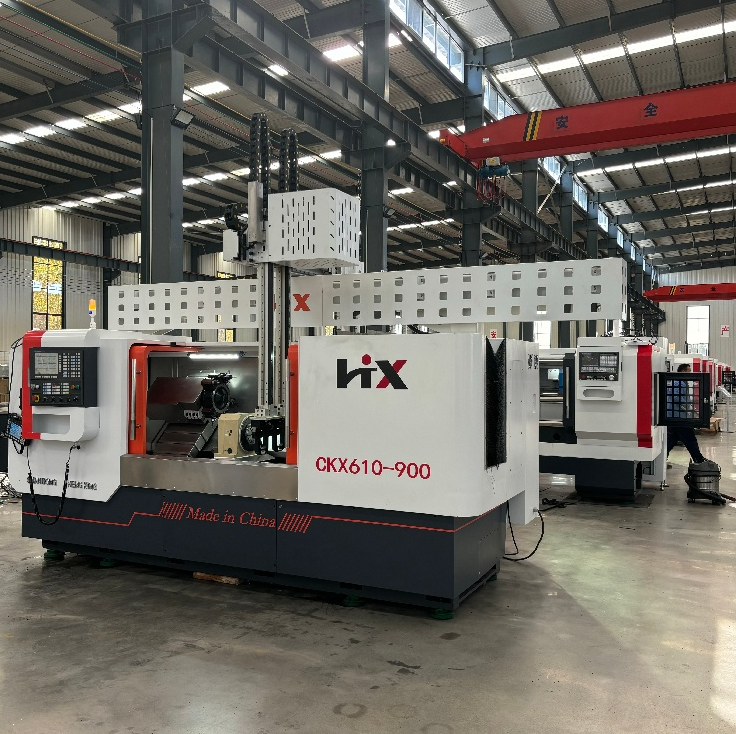
Why Global Manufacturers Are Reconsidering the China CNC Turning Machine
For decades, the default assumption in many Western shops was that a turning machine from Japan or Germany represented the safest long-term bet. That assumption still has merit in some high-end niches. But across a wide band of production turning work, the china cnc turning machine has moved from a budget alternative to a legitimate primary asset. The reasons are not just about acquisition cost. They involve lead times, configuration flexibility, and the growing maturity of Chinese machine tool builders in areas like thermal stability and dual-spindle integration.
Global manufacturing supply chains have also changed. A tier supplier in Poland or Mexico may need to quote a job against competitors in Southeast Asia. The capital equipment decision directly affects that quote. When a dual-spindle Chinese lathe can complete a two-end shaft in one clamping, the cycle time and labor content drop in ways that show up in the piece price. That is a strategic advantage, not just a purchasing shortcut.
What Buyers Actually Get When They Specify a Chinese Turning Center
The range of quality among Chinese builders is wider than among Japanese or German brands. That is a fair criticism. It also means that a careful buyer can find excellent value by focusing on specific technical markers rather than brand reputation alone.
Key markers include:
Bed casting process, especially second quenching or vibration stress relief.
Spindle bearing source and mounting accuracy.
Ballscrew and linear guide brand and preload class.
Control system options, with Fanuc, GSK, and Kaindi being common.
Auto loading and unloading integration, not just as an add-on.
A machine that checks these boxes tends to perform well in shaft turning, roller machining, sleeve production, and similar work. A machine that skips them may still be cheap, but the total cost of ownership tells a different story.
Rigidity and Thermal Behavior: The Technical Case for Modern Chinese Builds
Rigidity is not a marketing word. It is the ability of the machine structure to resist deflection under cutting force. A bed that has undergone second quenching has reduced internal stress, which translates to less long-term deformation. Imported bearings and preloaded guides add stiffness at the motion interface. The result is a machine that holds size across a shift, not just on the first article.
Thermal behavior matters just as much. Research from CIRP and NIST has shown that thermal errors can account for a large share of total machining error, often in the range of 40 to 70 percent. Chinese builders have responded with spindle cooling, ballscrew cooling, and thermal compensation routines in the control. These are not exotic features anymore. They are standard on many mid-range models.
A Practical Comparison of Turning Machine Sources
The table below compares typical characteristics across common sourcing regions. The data reflects general market patterns, not any single builder. Buyers should validate specific models with test cuts.
| Factor | China | Japan | Germany | Taiwan |
|---|---|---|---|---|
| Relative price index | 1.0 | 2.2 to 2.6 | 3.8 to 4.5 | 1.4 to 1.8 |
| Typical lead time | 8 to 14 weeks | 16 to 24 weeks | 20 to 32 weeks | 12 to 18 weeks |
| Dual-spindle availability | Common | Common | Common | Moderate |
| Fanuc control option | Yes | Yes | Rare | Yes |
| Spare parts network in Americas | Growing | Strong | Strong | Moderate |
| Thermal compensation | Standard on mid-range | Standard | Standard | Varies |
The point is not that China wins every row. It does not. The point is that the gap has narrowed enough that other factors, such as application support and part family fit, often decide the purchase.
Automation and the Labor Equation in Different Markets
Labor availability is a global issue, but it looks different by region. In parts of Europe, finding a skilled lathe operator is hard. In Mexico and Southeast Asia, labor is more available but turnover can be high. In all three cases, automatic loading and unloading changes the calculus.
A double-end CNC lathe with auto load can run with one operator tending multiple machines. The workpiece rotation design, where the part spins instead of the tool, also improves concentricity and reduces the need for secondary grinding. That does not mean every shop should rush to buy one. If the part mix is high and volumes are low, a flexible single-spindle machine may be more sensible. The automation payoff depends on stable, repeatable production.
What to Verify Before Committing to a China CNC Turning Machine
Due diligence should focus on the items that affect uptime and part quality.
Request a test cut with the actual material and tolerance band.
Confirm the control system and whether local technicians are familiar with it.
Ask for spare parts lead times in writing, not verbal assurances.
Check references from shops running similar part families.
Review the warm-up and thermal management procedure.
A case from a mining equipment supplier in northern Chile illustrates why this matters. The shop bought a Chinese double-spindle lathe to machine hydraulic cylinder rods. The first month went well. In month two, ovality appeared on long rods. The cause was not the machine structure. It was a coolant chiller that cycled on and off, causing spindle growth. The supplier worked with the builder to add a warm-up cycle and stabilize the chiller. The issue disappeared. The lesson is that process discipline matters as much as the machine's country of origin.
For global buyers evaluating dual-spindle and double-end turning equipment, Hengxing has built a product line around automatic double-head CNC lathes, double-head drilling machines, and double-sided milling machines. The company's two decades of manufacturing experience and focus on rigidity, thermal stability, and practical automation make it a relevant partner for shaft, roller, pipe, and sleeve production across mining, wind energy, automotive, and agricultural machinery supply chains.
Table of Contents
- Why Global Manufacturers Are Reconsidering the China CNC Turning Machine
- What Buyers Actually Get When They Specify a Chinese Turning Center
- Rigidity and Thermal Behavior: The Technical Case for Modern Chinese Builds
- A Practical Comparison of Turning Machine Sources
- Automation and the Labor Equation in Different Markets
- What to Verify Before Committing to a China CNC Turning Machine