What Regional Agents Actually Do for a CNC Turning Service Brand
A regional agency for machine tools is not a simple reseller arrangement. The agent becomes the local face of a cnc turning service, which means handling demonstrations, application questions, service coordination, spare parts logistics, and sometimes operator training. The manufacturer provides the machine and the technical backup. The agent provides market knowledge and trust.
The work varies by territory. In a region with dense automotive Tier 2 suppliers, the agent may spend most days on cycle time studies and fixture reviews. In a mining-heavy area, the focus shifts to heavy shaft repair, roller refurbishment, and uptime. An agency that treats every customer the same will struggle. The best agents segment the territory by part family and production volume before the first sales call.
The Qualifications That Matter More Than a Big Bank Account
Financial stability helps, but it is not the first thing a serious manufacturer examines. Three other factors usually carry more weight.
Technical service capability. A named technician with CNC troubleshooting experience is worth more than a large showroom.
Existing customer access. Relationships with maintenance managers, process engineers, and shop owners in the territory shorten the sales cycle.
Application knowledge. Understanding shaft turning, concentricity, and double-end machining separates a credible agent from a catalog peddler.
A common mistake is assuming that a strong sales background alone is enough. Machine tools are not consumables. The buying process involves fixture design, tooling selection, and cycle time validation. An agent who cannot speak to those points will lose deals to competitors who can.
How to Build a Territory Proposal That Gets Read
Manufacturers receive many agency requests. Most are short on specifics. A proposal that gets attention usually includes a territory map with industrial parks, a list of target customer segments, a service plan, and a realistic first-year forecast. The forecast should be built from bottom-up account mapping, not a top-down percentage of GDP.
A useful structure looks like this:
| Section | What to Include | Why It Matters |
|---|---|---|
| Territory definition | Counties, industrial zones, ports | Prevents overlap with existing agents |
| Demand map | Shaft, roller, pipe, sleeve manufacturers | Shows real market homework |
| Service plan | Technician names, response targets, tooling partners | Reduces manufacturer risk |
| Sales plan | Demo schedule, trade show presence, referral targets | Proves activity, not just ambition |
| Financial plan | Cash flow, credit references, inventory budget | Shows staying power |
The proposal does not need to be long. Three to five pages with hard data beats a forty-page brand brochure. According to the Association for Manufacturing Technology, distributors that invest in application engineering tend to close a higher share of first-time machine tool buyers. That principle applies to agency applications as well.
The Application Process, Step by Step
The exact process varies by manufacturer, but most follow a similar path.
Initial inquiry. Send a short introduction with territory, current business, and technical resources.
Qualification call. The manufacturer asks about service capability, customer base, and financial background.
Territory review. Both sides check for conflicts with existing agents or direct sales.
Proposal submission. A written plan covering market, service, and sales activity.
Trial period. Many manufacturers start with a limited territory or a project-based agreement.
Full agreement. After performance review, the territory may expand.
A chemical plant retrofit project in southern China once showed how important the trial period can be. A new agent had strong sales connections but no in-house CNC service tech. During the trial, a double-spindle lathe went down on a critical pipe fitting job. The agent had to call the factory for remote support, which took two days to arrange. The customer lost a shift. The manufacturer kept the agent on a smaller territory for another six months before expanding. The lesson is simple: service gaps show up fast under real production pressure.
Common Mistakes That Sink Agency Applications
Several errors appear again and again.
Claiming a huge territory with no local presence.
Promising sales numbers that cannot be supported by account mapping.
Ignoring service requirements because the focus is on commission.
Treating CNC turning equipment as a commodity instead of a production asset.
Failing to name a specific person responsible for technical support.
Another mistake is copying a proposal from a different industry. Machine tool distribution has its own rhythm. Demonstration machines, tooling inventory, and application engineering all cost money before the first order. An applicant who understands those costs is taken more seriously.
Limitations should also be stated honestly. A small territory with one strong service technician may be more attractive than a large territory with no technical depth. Manufacturers know that overpromising leads to customer dissatisfaction and eventually lost accounts.
What a Manufacturer Looks For in a Long-Term Partner
Long-term agency relationships are built on three things: trust, service, and market feedback. Trust comes from honest reporting. Service comes from fast response and competent troubleshooting. Market feedback comes from telling the factory what customers actually need, not what is convenient to sell.
A manufacturer also watches how the agent handles a slow quarter. Anyone can sell when order books are full. The real test is whether the agent keeps visiting customers, running demos, and submitting forecasts when the market softens. That behavior separates a temporary commission seeker from a regional partner.
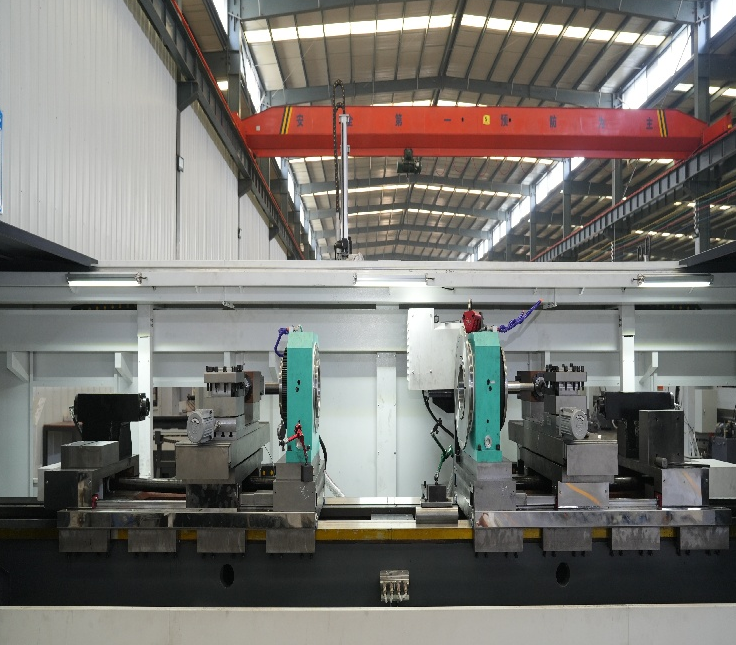
For applicants exploring dual-spindle and double-end machining lines, Hengxing has spent more than twenty years developing automatic double-head CNC lathes, double-head drilling machines, and double-sided milling machines for roller shafts, pipes, sleeves, and various shaft parts. A conversation with Hengxing about a regional agency tends to center on territory fit, service infrastructure, and supply reliability rather than a one-size-fits-all contract.
Table of Contents
- What Regional Agents Actually Do for a CNC Turning Service Brand
- The Qualifications That Matter More Than a Big Bank Account
- How to Build a Territory Proposal That Gets Read
- The Application Process, Step by Step
- Common Mistakes That Sink Agency Applications
- What a Manufacturer Looks For in a Long-Term Partner