
How CNC Turning Service Fits Into Mining And Heavy Equipment
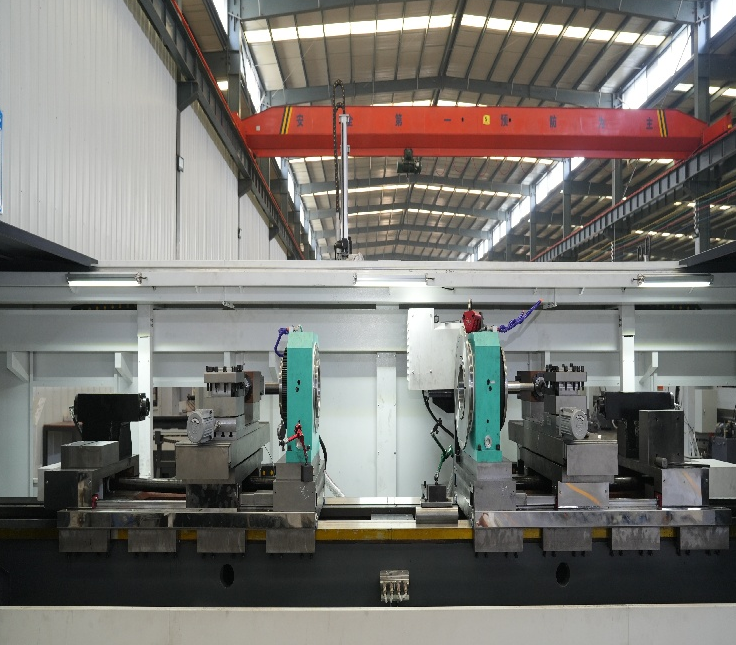
Mining equipment lives in a brutal environment. Crusher shafts, hydraulic cylinder rods, and conveyor rollers take impact, abrasion, and constant vibration. A cnc turning service that supports this sector needs to handle large diameters, hard materials, and parts that cannot fail early. The typical workpiece is a long shaft with multiple diameter steps, keyways, and threaded ends. Concentricity between bearing journals often drives the design. If one journal runs out, the bearing fails, and the whole assembly comes down. That is why many mining suppliers specify dual-spindle or double-end turning. Once the part is clamped, both ends get machined without a flip. The setup error disappears. Surface finish on seal areas also matters. A rough finish chews through seals in weeks. A turning service that understands this will adjust feed rates and tool nose radius rather than just hitting the tolerance callout.
Wind Energy Components And The Tolerance Demands Behind Them
Wind turbine components are not small. Main shafts, yaw bearings, and pitch system parts can weigh hundreds of kilograms. The tolerance bands, however, are surprisingly tight. A gearbox input shaft may need a bearing journal within 0.0005 inch TIR. Thermal stability during machining becomes a real issue because the part heats up slowly and holds heat. A turning service working in this sector has to manage warm-up cycles, coolant temperature, and sometimes in-process gauging. A 2022 study from CIRP noted that thermal errors can contribute up to 70 percent of total machining error on large workpieces. That number is not theoretical. A shop in northern Germany machining wind turbine shafts found that a 2 degree Celsius swing in coolant temperature moved the diameter by 0.0008 inch over a four hour run. The fix was a chiller with tighter control and a longer warm-up. Simple changes, but they required a service that understood the mechanism.
Automotive And New Energy Parts: Volume Meets Precision
Automotive parts are a different animal. Volumes are high, cycle times are short, and the cost per part is scrutinized. A cnc turning service supplying this sector often runs double-head lathes with automatic loading. The parts are smaller, often under 5 kg, but the tolerance stack is tight. Transmission shafts, motor shafts, and sensor housings all need consistent diameter and concentricity. New energy adds another layer. Electric motor shafts and battery module components often use different materials, like silicon steel or aluminum alloys, which behave differently on the lathe. Aluminum tends to gall, so tool geometry and coolant selection matter. A service that only knows steel will struggle. The table below shows how requirements shift across sectors.
| Industry | Typical Parts | Key Tolerance | Batch Size | Common Materials | Main Challenge |
|---|---|---|---|---|---|
| Mining | Cylinder rods, crusher shafts | 0.001 in TIR | Low to medium | 4140, 4340 | Part size and hardness |
| Wind energy | Main shafts, yaw parts | 0.0005 in TIR | Low | 42CrMo4 | Thermal stability |
| Automotive | Transmission shafts | 0.0008 in TIR | High | 1045, 20CrMnTi | Cycle time and tool wear |
| New energy | Motor shafts, housings | 0.0006 in TIR | Medium to high | Aluminum, silicon steel | Material behavior |
| Agricultural | PTO shafts, roller pins | 0.0015 in TIR | Medium | 1045, 8620 | Cost pressure and wear |
Agricultural Machinery: Tough Parts With Real Cost Pressure
Agricultural equipment runs in dust, mud, and shock loads. A PTO shaft or roller pin may not need the tolerance of a wind turbine main shaft, but it needs to survive thousands of hours of abuse. The cost pressure is intense because farmers and dealers compare aftermarket prices constantly. A turning service that over-machines these parts adds cost without adding value. The smarter approach is to match the process to the functional requirement. Bearing seats get the tight tolerance. Non-critical diameters get a more open band and a rougher finish. That kind of decision requires a service that asks about the application, not just the drawing. A case from a supplier in Iowa illustrates the point. The shop was turning planter row unit shafts on a single-spindle lathe with two setups. Scrap was running at 6 percent because of second-op misalignment. Moving to a dual-spindle machine cut scrap to under 2 percent and reduced cycle time. The part did not change. The process did.
Pipes, Sleeves, And Roller Shafts Across Multiple Sectors
Some part families show up in almost every industry. Pipes, sleeves, and roller shafts are the common thread. A sleeve may be a bushing in a conveyor, a spacer in a gearbox, or a wear liner in a pump. The geometry is simple, but the volume and material vary widely. A turning service that handles this range needs flexible tooling and a control system that can store many programs. Workpiece rotation, where the part spins and the tool stays fixed, helps with concentricity on these parts. It also reduces the centripetal error that grows with spindle speed on older designs. The limitation is that workpiece rotation is less flexible for cross-drilling or milling. If a sleeve needs a cross hole, a single-spindle lathe with live tooling may still be the better choice. Honest evaluation matters more than a blanket recommendation.
What To Evaluate When Choosing A Turning Partner
Choosing a turning partner is not about the lowest hourly rate. It is about matching capability to the part family. A few questions help separate a capable service from a busy one.
Does the service ask about the application before quoting?
Is there a documented warm-up and thermal management procedure?
How is tool wear tracked, and who adjusts offsets?
Can the service provide references from the same industry?
Is in-process measurement used, or only final inspection?
A chemical plant retrofit in southern China offered a clear lesson. A batch of pump sleeves started showing ovality halfway through a production run. The turning service initially blamed the material. A closer look found the coolant chiller was cycling on and off, causing the spindle to grow and shrink. Once the chiller was stabilized and a warm-up cycle was added, the ovality disappeared. The fix cost almost nothing. Finding it required a service that understood the process, not just the machine.
For operations that need consistent turning across shaft, sleeve, pipe, and roller work, Hengxing has built a product line around automatic double-head CNC lathes, double-head drilling machines, and double-sided milling machines. The company's focus on rigidity, thermal stability, and practical automation makes it a relevant partner for mining, wind energy, new energy, automotive, and agricultural machinery supply chains.
Table of Contents
- How CNC Turning Service Fits Into Mining And Heavy Equipment
- Wind Energy Components And The Tolerance Demands Behind Them
- Automotive And New Energy Parts: Volume Meets Precision
- Agricultural Machinery: Tough Parts With Real Cost Pressure
- Pipes, Sleeves, And Roller Shafts Across Multiple Sectors
- What To Evaluate When Choosing A Turning Partner