
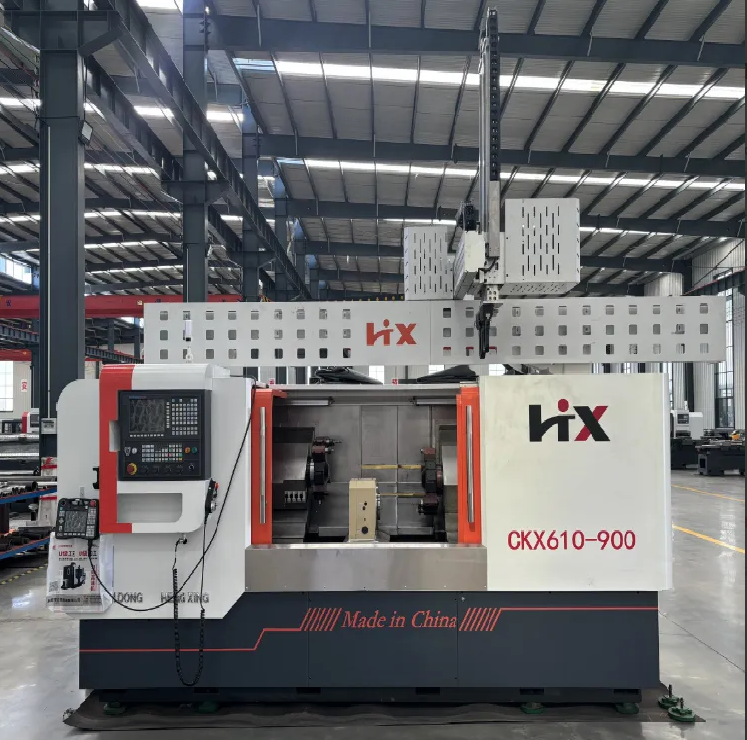
When a Hot Spindle Bearing Changes Everything on the Shop Floor
A machinist starts the morning shift by loading a proven program and measuring the first part off the slant bed lathe. The diameter is dead on, the surface finish is clean, and production rolls forward without interruption. By early afternoon, the same program and the same insert are producing parts that have drifted a couple of microns off nominal, and the surface finish has developed a subtle chatter pattern that was not there at eight in the morning. The operator compensates by adjusting the tool offset, but the real problem is not in the tool path. It is in the spindle housing, which has been absorbing heat for six straight hours. The spindle bearings have expanded, the headstock casting has shifted microscopically, and the machine's geometry has wandered just enough to eat up the tolerance band. This scenario is the reason a slant bed CNC lathe's cooling and lubrication system deserves as much attention as its spindle speed or turret configuration. Thermal stability is not a bonus feature. It is what separates a machine that holds size all day from one that chases its own heat.
Why the Slanted Bed Design Demands a Specific Cooling Strategy
The slanted bed architecture of a modern CNC lathe is not just about chip evacuation. It fundamentally shapes how heat moves through the machine structure. In a slant bed configuration, the cutting zone sits above an inclined casting that directs hot chips and heated cutting fluid downward into a collection tray or conveyor. This is an advantage for chip management, but it also means the bed casting itself is exposed to a continuous bath of warm coolant cascading over its surface. At the same time, the spindle motor and bearings generate their own substantial thermal load, which conducts into the headstock and from there into the bed casting. The ball screws that drive the X and Z axes are working continuously under load, generating frictional heat that must be dissipated to prevent pitch error from distorting the positioning accuracy. An effective cooling system for a slant bed lathe must address all three thermal inputs simultaneously: the cutting zone heat, the spindle drive heat, and the axis drive heat. It does this through a combination of coolant volume, directed flow to the cutting edge, and in some configurations, a separate oil chiller circuit for the spindle bearings that maintains a stable temperature regardless of production intensity.
The Difference Between Wet, Dry, and Mist Lubrication for Guideways and Ball Screws
Lubrication is the quiet partner to cooling, and the method chosen for delivering oil to the machine's sliding and rolling elements has a direct impact on both longevity and precision. Modern slant bed lathes typically employ one of three lubrication strategies for their linear guideways and ball screws. Centralized automatic grease systems use a pump to deliver measured doses of grease to each lubrication point on a timed cycle. This approach is clean, minimizes waste, and works well for moderate axis speeds. Oil mist systems atomize lubricating oil into a fine fog that is carried by compressed air to the guideways and ball nuts, providing continuous lubrication while also creating positive pressure that helps exclude contaminants from entering the bearing circuits. This method is often preferred for high speed machines where rapid axis motion generates more frictional heat. Oil bath spindle designs immerse the spindle bearings directly in a controlled volume of oil, which provides both lubrication and cooling in a single system. The choice among these methods depends on the machine's speed envelope, the expected production duty cycle, and the thermal stability targets the builder has set for the finished machine.
How Coolant Cleanliness Standards Directly Affect Surface Finish and Tool Life
Cutting fluid is not simply a liquid that pours over the tool. In a precision turning environment, it functions as a hydrodynamic film at the tool chip interface, a thermal transfer medium, and a debris transport system all at once. When the coolant becomes contaminated with fine metal particles, those particles circulate through the pump and are blasted directly into the cutting zone. The result is a micro abrasive slurry that scours the cutting edge, degrades the surface finish on the workpiece, and accelerates wear on the machine's guideway wipers and seals. The machining industry recognizes general filtration standards that define acceptable particulate levels for different classes of work, and a slant bed lathe designed for precision turning should be equipped with a multi stage filtration system. A coarse chip basket catches the large swarf, a magnetic separator or paper band filter removes ferrous fines, and for the highest precision applications, a bag filter or cartridge system polishes the coolant down to a specified micron rating before it returns to the cutting zone. Clean coolant is an investment in tool life, surface finish consistency, and the long term geometric accuracy of the machine.
A Transparent Maintenance Routine That Protects Your Investment
A well designed cooling and lubrication system still requires disciplined maintenance to deliver its intended performance over the machine's service life. The most common point of neglect is coolant concentration. Running a water soluble coolant too rich wastes product and leaves sticky residue on the machine. Running it too lean invites bacterial growth that produces the rotten egg smell no shop wants and acids that corrode guideways and seals. A refractometer check should be part of the weekly routine, along with skimming tramp oil from the coolant tank surface. Tramp oil, which is hydraulic oil and way oil that leaks into the coolant, forms a floating seal that blocks oxygen from reaching the fluid, creating the anaerobic conditions where bacteria thrive. On the lubrication side, the metering units in an automatic system must be inspected periodically because a single blocked metering valve starves one guideway while the rest of the system appears to be functioning normally. The result is localized wear that cannot be reversed. These maintenance tasks are not time consuming, but ignoring them converts a precision machine tool into a gradual precision loss machine tool.
Engineering a Cooling System That Ships Ready for Production
The cooling and lubrication system on a slant bed CNC lathe is not a collection of generic off the shelf components bolted on after the machine is built. It is an integral part of the machine's engineering, designed in parallel with the spindle, the axis drives, and the bed casting to achieve a specific thermal stability target. The coolant tank capacity must match the pump output to prevent cavitation. The filtration stages must be sized to handle the material removal rate the machine is capable of. The lubrication distribution network must deliver consistent flow to every axis regardless of its position in the travel envelope. HXCNCMT approaches slant bed lathe manufacturing with this integrated engineering perspective, building machines where the cooling and lubrication systems are designed as part of the complete machine architecture rather than treated as afterthoughts. When a machine arrives at a customer's facility, the thermal management system is already tuned for production, allowing the shop to focus on making parts instead of debugging a cooling system that should have been sorted out at the factory.
Table of Contents
- When a Hot Spindle Bearing Changes Everything on the Shop Floor
- Why the Slanted Bed Design Demands a Specific Cooling Strategy
- The Difference Between Wet, Dry, and Mist Lubrication for Guideways and Ball Screws
- How Coolant Cleanliness Standards Directly Affect Surface Finish and Tool Life
- A Transparent Maintenance Routine That Protects Your Investment
- Engineering a Cooling System That Ships Ready for Production