
When a Job Shop Faces the Wrong Machine for the Part
A production manager stands on the shop floor holding a new part print. The component is a small diameter titanium screw for a medical device implant kit. The length to diameter ratio is extreme, and the tolerance callout on the shank is tight enough to make even an experienced machinist pause. The shop's current slant bed CNC lathe is a capable machine, rigid and accurate for the work it normally handles, but clamping this slender part in a standard chuck and expecting it to survive a turning pass without deflection is wishful thinking. This moment of truth plays out regularly in precision machine shops. A machine that performs beautifully on one part family becomes a bottleneck or a scrap generator on another. The choice between a slant bed CNC lathe and a Swiss type lathe is rarely about which machine is better in absolute terms. It is about which architecture matches the geometry, tolerance, and volume of the part that needs to be made.
Where the Cutting Happens and Why It Changes Everything
The fundamental difference between these two machine types is not the spindle speed or the control system. It is where the cutting action occurs relative to the workpiece support. A slant bed CNC lathe belongs to the fixed headstock family. The workpiece is clamped in a chuck or collet at the spindle nose, and the cutting tool approaches from the turret mounted on the angled bed. The entire length of the part extends outward from the clamping point, unsupported except for the occasional steady rest or tailstock. This architecture provides tremendous rigidity for short, stout workpieces and allows aggressive material removal rates with excellent chip flow down the slanted bed into the conveyor. A Swiss type lathe operates on a fundamentally different principle. The headstock itself moves longitudinally on linear guideways, feeding the bar stock through a guide bushing that supports the material within millimeters of the cutting edge. The tool does not travel to the part. The part travels through a fixed cutting zone. This sliding headstock design means the workpiece is continuously supported at the point of cutting, which effectively eliminates the deflection that would otherwise limit precision on long, slender components.
The Length to Diameter Ratio That Separates These Two Machines
Experienced process engineers use the length to diameter ratio as a quick sorting tool when routing a new part to the appropriate machine. A part with a modest L over D ratio, think a brake piston, a flange, or a short shaft, will run efficiently and accurately on a slant bed lathe. The unsupported length is short enough that cutting forces do not induce meaningful deflection, and the slant bed's rigid box way or linear guide construction absorbs the tool pressure. When the ratio climbs into territory common for bone screws, miniature hydraulic spools, or electronic contact pins, the physics changes. The same cutting force applied at a distance from the chuck creates a lever arm that bends the workpiece away from the tool. The result is a tapered cut, poor surface finish, or a broken insert. A Swiss type lathe solves this by keeping the cutting zone immediately adjacent to the guide bushing face. The bar stock is supported at the exact point where the tool engages, so the length extending beyond the bushing is functionally zero during the cut. This architectural difference is why a Swiss lathe can hold single digit micron tolerances on a part that a slant bed lathe would struggle to rough to a consistent diameter.
Tolerance Capability and the Standards That Define Precision Machining
International tolerance standards provide a useful framework for understanding where each machine type performs best. Parts machined on a quality slant bed lathe can routinely achieve IT6 or IT7 grade tolerances on diameters and excellent cylindricity on short features, provided the part geometry respects the machine's rigidity envelope. The slant bed excels at producing fine surface finishes because the rigid tool mounting and linear guide system minimize vibration. Swiss type lathes operate in a different tolerance band entirely. The guide bushing support allows these machines to hold tolerances in the IT4 to IT5 range over production runs measured in the tens of thousands of pieces, and they maintain that precision from the first part in the morning to the last part before tool change. The trade off is that a Swiss machine is a more complex system. The guide bushing itself is a consumable precision component that must be matched to the bar stock diameter, and the sliding headstock introduces additional sources of geometric error that must be compensated in the control. Understanding these capability differences is essential, because quoting a job assuming one machine's tolerance band while running it on the other is a direct path to rejected parts and lost margin.
The Honest Math Behind Setup Time, Tooling, and Throughput
A transparent cost comparison must acknowledge that the purchase price of the machine is only the first line of the spreadsheet. A slant bed lathe typically offers faster changeover between dissimilar parts, making it the more flexible choice for a job shop that handles a wide variety of short run work. The turret can be loaded with a diverse set of tools, and the programming tends to be more straightforward for conventional turned profiles. A Swiss type lathe requires more discipline in setup. The guide bushing must be sized to the bar stock, the bar loader must be adjusted, and the programming logic for the sliding headstock and sub spindle synchronization adds complexity. The economic payoff comes in unattended production. A Swiss machine paired with an automatic bar feeder can run lights out through a weekend, producing thousands of finished parts without operator intervention. For a dedicated production cell making high volumes of the same precision component, the Swiss lathe's higher setup cost is amortized over an enormous throughput advantage. The honest recommendation depends entirely on the mix of work flowing through the shop.
Partnering with a Manufacturer That Understands Your Production Goals
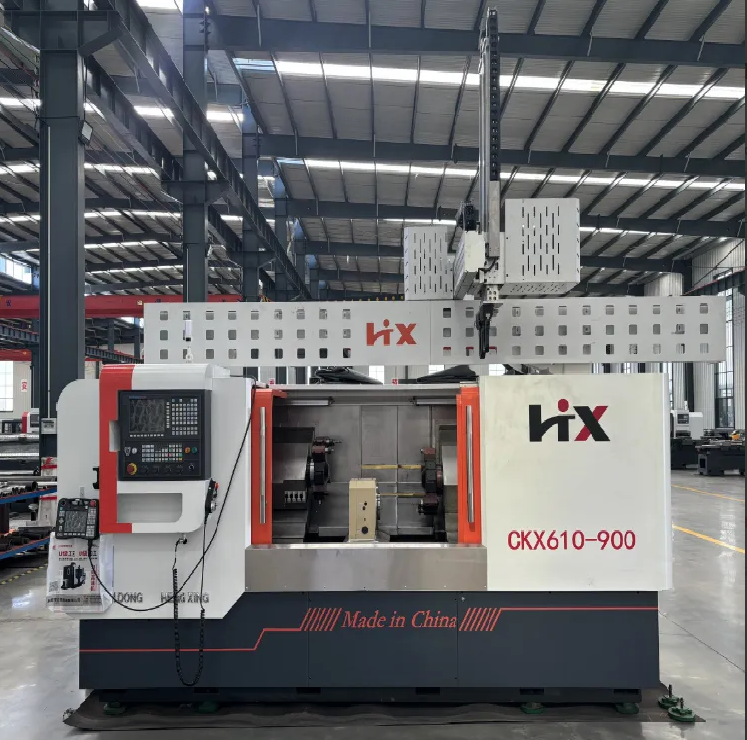
A CNC lathe represents a significant capital commitment, and the return on that investment depends on the machine delivering its rated accuracy and uptime across years of production. The difference between a machine that holds its original alignment and one that drifts after the first year often traces back to the manufacturing discipline of the builder. A slant bed lathe built on a properly stress relieved cast bed, with precision ground linear guideways, a thermally stable spindle assembly, and a thoroughly tested control integration will repay its initial cost with consistent output. HXCNCMT engineers and manufactures slant bed CNC lathes with this understanding, controlling the production process from casting inspection through final geometric verification so that the machine arriving on a customer's floor is ready to hold the tolerances it was specified to achieve. When a shop invests in a slant bed platform, the quality of the build determines whether that machine becomes the reliable workhorse of the turning department or a maintenance headache that never quite performs to expectation.
Table of Contents
- When a Job Shop Faces the Wrong Machine for the Part
- Where the Cutting Happens and Why It Changes Everything
- The Length to Diameter Ratio That Separates These Two Machines
- Tolerance Capability and the Standards That Define Precision Machining
- The Honest Math Behind Setup Time, Tooling, and Throughput
- Partnering with a Manufacturer That Understands Your Production Goals