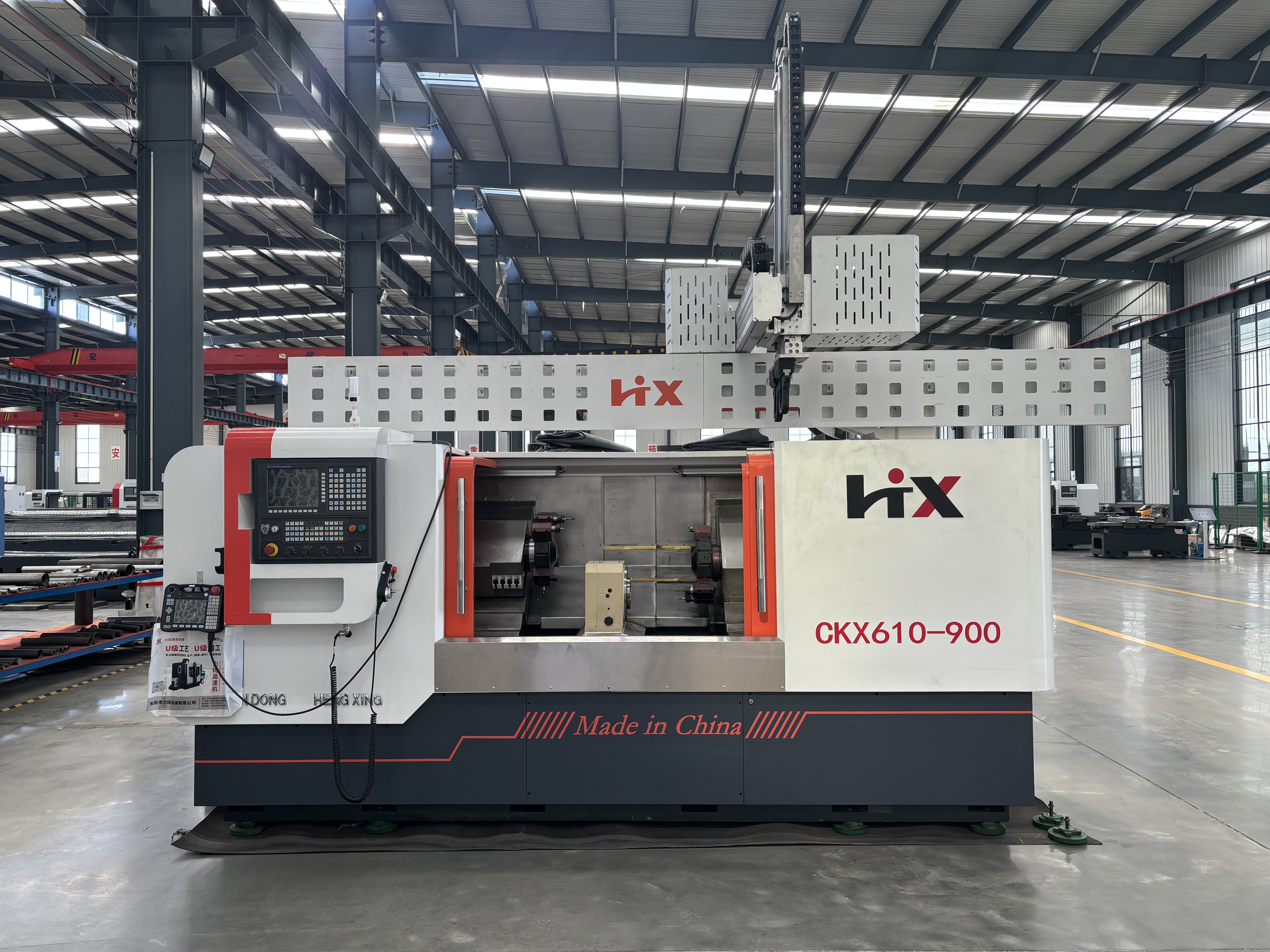
Core Components and Synchronized Functionality of a Dual-Spindle CNC Lathe
Main Spindle, Sub-Spindle, and Axis Coordination Architecture
Dual-spindle CNC lathes come equipped with two separate workholding spindles. The main one typically does the heavy lifting for basic operations like facing, turning both outer and inner diameters, and cutting grooves. Then comes the sub-spindle into play after parts get automatically transferred from the first spindle. These machines need really tight coordination between their axes. We're talking about X and Z movements for the main spindle, plus X2 and Z2 for the secondary one. All these motions are controlled by matching servo motors that keep everything aligned within just 0.001 inches of accuracy. The machine also has thermal compensation built in. This system constantly makes small adjustments as the metal expands or contracts during long production runs, so nothing gets out of whack and dimensions stay consistent throughout. For manufacturers running large batches, this setup can cut down cycle times by anywhere from 40 to 50 percent when compared to traditional single-spindle machines. No more stopping the process to manually move parts around or set up additional operations separately.
Integrated Automation: Bar Feeders, Part Catchers, and Live Tooling Interfaces
Automation subsystems enable true lights-out operation:
- Bar feeders deliver continuous raw stock, supporting unattended machining for 4+ hours
- Part catchers remove finished components mid-cycle without interrupting spindle rotation
- Live tooling, enabled by C- and Y-axis interpolation, performs milling, drilling, and tapping concurrently with turning
Together, these systems reduce non-cutting time by up to 60%. Robotic part transfer achieves handoff cycles under 0.5 seconds, while encoder-synchronized motion planning ensures collision-free transitions—even at full speed. This level of integration transforms the machine into a complete, self-contained manufacturing cell.
Step-by-Step Dual-Spindle CNC Lathe Setup for Optimal Performance
Pre-Operation Safety Protocols and Mechanical Calibration
Always start with proper lockout/tagout procedures when getting ready to power things up. Workers need to wear their ANSI approved PPE too - face shields and hearing protection are must haves for safety. Check the alignment between main and sub spindles mechanically using those dial indicators. We're looking for readings under 0.0005 inches total indicator runout here. The lubrication system needs to be topped off with ISO VG 32 hydraulic fluid right at the levels specified by the manufacturer. Don't forget to do some ballbar testing first to make sure everything's square, then go ahead and adjust for backlash on all axes. Let the machine run for about 30 minutes at 2,000 RPM before doing any serious work or calibration. This warm up period really helps stabilize temperatures throughout the system, which makes all the difference in achieving consistent results day after day.
Workpiece and Tool Offset Setup: G54–G59 Work Coordinate Systems and Geometry Compensation
Establish consistent work coordinate systems (G54–G59) via probe-based touch-offs on machined datum surfaces. For dual-spindle workflows, synchronize Z-zero positions between spindles using calibrated gauge blocks to ensure seamless part transfer. Tool geometry compensation follows three key steps:
- Measure nose radius and insert geometry with an optical presetter (accuracy to 0.001 mm)
- Enter X/Z offsets directly into the CNC control's tool registry
- Apply dynamic wear compensation variables during finishing passes
Validate setup by machining test rings and checking runout; use G68 coordinate rotation only when fixture angles demand it. Final verification against the printed setup sheet is mandatory before launching production.
Precision Workpiece Transfer Between Spindles: Timing, Alignment, and Error Prevention
Chuck-to-Chuck Transfer Sequence: Air, Clamp, and Synchronization Logic
The workpiece transfer process starts with careful timing. First off, the main spindle pulls back just enough to leave about half a millimeter to a full millimeter air space between components. This keeps things from touching when the secondary spindle comes into position. Then the sub-spindle moves forward and grips the part using hydraulic pressure that needs to stay within certain limits. If it drops below 100 psi there's a real risk of slippage, but crank it up past 150 psi and even delicate parts might get damaged. Getting everything synced properly matters a lot at this point. Both spindles need to spin pretty much exactly the same speed, give or take around 2%, which the system confirms through those built-in encoders. The ATS system then double checks where everything lines up, looking for alignment within thousandths of an inch before letting go of the main spindle grip. Special sensors monitor things while they're happening, catching any misalignments early on. This has actually cut down on scrap rates by nearly 30% across large scale manufacturing runs. Before making the actual transfer, several key checks need confirmation including:
- Chuck concentricity verification using dial indicators
- Clamp-force monitoring via pressure sensors (abort triggered at 5% deviation)
- Spindle orientation matching within 0.5 degrees
Most failed transfers stem from overlooked synchronization parameters—not mechanical faults—underscoring the need for disciplined validation before each batch.
Maximizing Sub-Spindle Utilization in Dual-Spindle CNC Lathe Operations
The sub-spindle isn't just some extra part hanging around on the machine tool it actually makes possible what we call full part machining all in one go. When operators really get good at using it, they can work on both sides at once. The main spindle gets busy roughing out a shaft while the sub-spindle handles finishing touches on the other end or does things like drilling across from the side or shaping contours. No need to take parts off and put them back again which means fewer mistakes from misalignment. Workers spend less time moving stuff around between machines too. And best of all, production cycles shrink significantly compared to older techniques maybe somewhere between forty to sixty percent faster depending on the job specifics.
Strategic utilization hinges on three practices:
- Programming interleaved tool paths—e.g., main-spindle roughing concurrent with sub-spindle finishing or threading
- Automating part transfer with sub-millimeter alignment verification via proximity sensors or laser metrology
- Assigning complex live-tooling tasks (such as off-center milling or angular drilling) to the sub-spindle while primary turning continues
The real money makers come when these features are applied to longer parts that require multiple operations at once. This is particularly true for industries like medical devices and automotive manufacturing, where everything has to be spot on. We're talking about situations where tolerances are razor thin, production runs are massive, and customers expect nothing but perfection. When set up right with good calibration and solid programming practices, the sub spindle becomes something special. It basically takes those complicated rotating components straight from raw material all the way through to final product, no need for anyone to step in during the process. Just watch it work its magic.
FAQ
What are the core components of a dual-spindle CNC lathe?
The core components include the main spindle, the sub-spindle, and the axis coordination system, which includes X, Z, X2, and Z2 movements controlled by servo motors.
Why is synchronization important in dual-spindle CNC lathes?
Synchronization is crucial for accurate timing in part transfers between spindles, ensuring high precision, reducing errors, and optimizing cycle times.
What safety protocols are essential before operating a CNC lathe?
Key safety protocols include lockout/tagout procedures, using ANSI approved PPE like face shields and hearing protection, and performing mechanical calibration checks.
How does integrated automation benefit CNC lathe operations?
Automation reduces non-cutting time, supports unattended machining, and ensures efficient part transfer and tooling tasks, thus increasing productivity.
What is the significance of the sub-spindle in CNC lathe setups?
The sub-spindle allows for simultaneous machining on both sides of the workpiece, optimizing cycle time and reducing the chances of errors due to part rehandling.
Table of Contents
- Core Components and Synchronized Functionality of a Dual-Spindle CNC Lathe
- Step-by-Step Dual-Spindle CNC Lathe Setup for Optimal Performance
- Precision Workpiece Transfer Between Spindles: Timing, Alignment, and Error Prevention
- Maximizing Sub-Spindle Utilization in Dual-Spindle CNC Lathe Operations
- FAQ