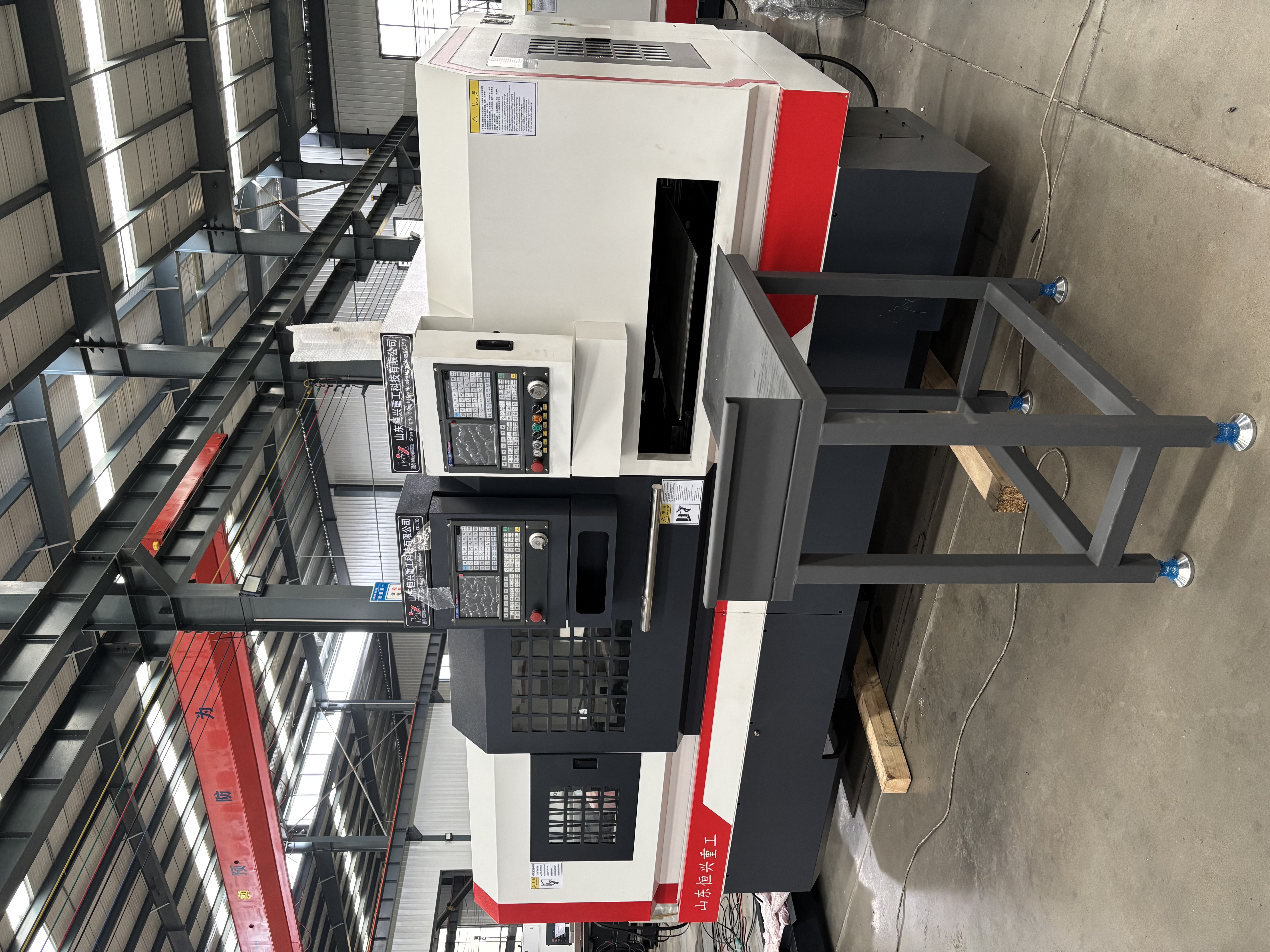
Thermal Stability: Managing Heat-Induced Errors in Dual-Spindle CNC Lathes
Spindle Synchronization Drift Under Thermal Load
When heat builds up, it causes problems with how dual spindles stay synchronized because the materials expand at different rates when they get warm. This thermal growth messes with the alignment between components, sometimes creating misalignment of around 15 micrometers after prolonged operation according to various studies on thermal deformation. Different materials expand differently too. For example, steel expands roughly 11 micrometers per meter per degree Celsius. This means spindle bearings and their housing parts grow out of sync over time, leading to tiny but significant position shifts measured in microns. Some modern machines fight back against this issue using real time compensation systems that watch temperature changes through built-in sensors and then tweak servo settings accordingly. But there are still challenges. Uneven cooling or poor heat distribution remains a problem, particularly when cutting hard alloys at high speeds where friction can push temperatures past 80 degrees Celsius. These conditions often result in angular errors that creep above 0.005 degrees, which might not sound like much but can really impact precision work.
Bedway Expansion Mismatch Between Primary and Secondary Spindles
When heat builds up unevenly along the lathe bed, it causes parts to expand at different rates. The area around the main spindle tends to get hotter much quicker than other sections because it handles more intense cutting operations, often running 20 to 30 percent warmer. A simple rule of thumb is that for every 5 degree Celsius difference across a meter long bed, we see about 55 micrometers worth of positioning problems. To combat this issue, manufacturers now incorporate several smart design features. They use special casting materials like polymer concrete blends that expand very little when heated, sometimes as low as 0.5 micrometers per meter per degree Celsius. Some machines also include built-in cooling systems that keep temperatures stable within just 1.5 degrees above or below what's needed. Computer programs help too by tracking how different parts grow when warm and making tiny adjustments to where things are positioned during operation. If none of these methods were used, small errors would pile up throughout an 8 hour shift until they reach over 40 micrometers total, which is way beyond what's acceptable for making precision parts required in aviation or healthcare industries.
Structural Rigidity and Vibration Control in Dual-Spindle CNC Lathe Designs
Cross-Beam vs. Tandem Mounting: Impact on Modal Stiffness and Damping
The cross beam setup gives around 30 to 40 percent better stiffness compared to the tandem layout. This happens because the beams form a triangle shape that helps control vibrations when doing heavy cuts. Pairing this with polymer concrete foundations and cast iron beds that have been treated to reduce internal stresses brings down unwanted vibrations by about 60 to 70 percent. On the flip side, tandem mounting might lose about 15 to 20 percent in rigidity but works much better for getting chips out from under the machine. That makes it a good choice for shops running nonstop production lines where being able to access the work area matters more than having maximum stiffness at all times.
Symmetrical Layout Trade-offs: When Rigidity Conflicts with Thermal Symmetry
When spindles are arranged symmetrically, they do help spread out forces better, but this setup actually makes problems with temperature differences worse. Running at around 2,500 RPM continuously causes uneven cooling in what should be balanced machine frames, leading to position shifts between spindles somewhere between 0.01 and 0.03 millimeters per hour. Smart engineers tackle these issues through several methods. They install cooling channels that aren't lined up straight across hot spots, pick composite materials that expand similarly when heated, and build in software that constantly adjusts for stiffness changes as temperatures fluctuate. These fixes keep the system synchronized within plus or minus 5 micrometers accuracy, which is pretty impressive considering some modern frames have managed to cut down their weight by as much as 20% while still maintaining thermal performance.
Synchronization Precision: The Core Stability Enabler for Dual-Spindle CNC Lathes
Encoder Resolution, Phase Lag, and Real-Time Twin-Axis Compensation
Getting synchronization right depends on three main factors working together: how detailed the encoder readings are, managing phase lag issues, and compensating both axes at the same time in real conditions. Encoders that can pick up sub-micron details actually spot tiny position differences down to about plus or minus 0.5 microns between spinning parts while doing heavy cuts. This level of detail shows those small timing delays where one spindle falls behind the other, leading to gradual misalignment problems over time. Today's control systems check position every 0.1 milliseconds and adjust power output constantly to fight against heat expansion and vibrations. This keeps everything aligned within just 0.001 degree accuracy even when machines aren't balanced properly. If these corrections aren't made though, vibrations get way worse - around three times stronger when the timing difference goes past half a degree, which really messes up the final surface quality of whatever is being manufactured.
Dynamic Load Management During Simultaneous Machining Operations
Asymmetric Cutting Forces and Torsional Twist in Common-Bed Dual-Spindle CNC Lathes
When running both spindles at once on a common bed CNC lathe, problems arise because the cutting forces become unbalanced. This happens when one spindle works on harder material while the other deals with softer stock, or when tools engage at different angles. The resulting imbalance creates twisting forces along the shared bed, which messes up how round the finished parts actually are. Studies indicate that if these uneven loads go beyond about 15% of what the machine is rated for, angular deflection increases anywhere from 0.02 to 0.05 degrees per meter of bed length. That might not sound like much, but it translates into size errors of around 20 microns in high precision components. To fix this issue, manufacturers need to monitor load distribution as it happens and adjust feed rates accordingly to control those annoying vibrations that happen out of sync. Special sensors placed across axes help spot tiny differences in torque between spindles during rough machining operations. These sensors allow for quick adjustments before any dimensional changes slip past acceptable limits.
FAQ
What is spindle synchronization drift?
Spindle synchronization drift refers to the misalignment of dual spindles in CNC lathes caused by thermal expansion. When different materials in the machine expand at varying rates due to heat, it leads to synchronization issues.
How can thermal growth affect CNC lathe precision?
Thermal growth causes materials within a CNC lathe to expand at different rates, leading to misalignments and positioning errors. These errors can impact the precision of the machine, especially in high-speed operations.
What is the difference between cross-beam and tandem mounting?
Cross-beam mounting provides better stiffness due to a triangular formation that controls vibrations, while tandem mounting, though slightly less rigid, is better for accessibility in nonstop production lines by allowing easier chip removal.
How does dynamic load management work in dual-spindle CNC lathes?
Dynamic load management involves monitoring and adjusting load distribution between the spindles in real-time. This helps to manage the imbalance in cutting forces, prevent torsional twists, and maintain component precision.
Table of Contents
- Thermal Stability: Managing Heat-Induced Errors in Dual-Spindle CNC Lathes
- Structural Rigidity and Vibration Control in Dual-Spindle CNC Lathe Designs
- Synchronization Precision: The Core Stability Enabler for Dual-Spindle CNC Lathes
- Dynamic Load Management During Simultaneous Machining Operations
- FAQ