
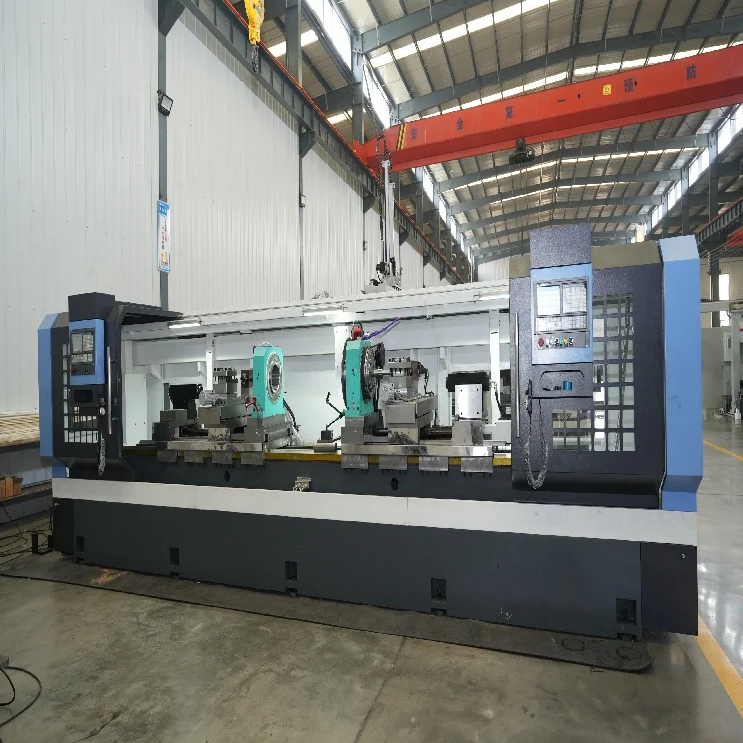
CNC Milling Machine Applications in Manufacturing
When people first encounter CNC machining, they often picture simple brackets or flat plates. The reality is far more extraordinary. Modern CNC milling machines have become the universal problem solvers of industrial production, capable of creating geometries that range from massive engine blocks to microscopic medical components. The technology has quietly dissolved the traditional boundaries between separate manufacturing trades. A single milling platform can now produce intricate mold cavities, structural aircraft ribs, and custom orthopedic implants, all within the same dimensional accuracy. This remarkable versatility stems from a fundamental truth: if a shape can be modeled digitally, and if the right cutting tool can reach it, that shape can be milled. The real fascination lies not in the machine's capability in theory, but in how different industries have harnessed this capability to solve their most stubborn production challenges.
The Aerospace Imperative
Walk into any aerospace machine shop and you will immediately notice the scale of ambition. Massive billets of aluminum alloy, sometimes weighing several tons, are loaded onto five axis milling machines. Over hours or even days, these blocks are transformed into wing ribs, fuselage frames, and bulkheads. The driving philosophy here is monolithic design, replacing assemblies of dozens of sheet metal parts riveted together with a single, solid piece carved from billet. The payoff is immense. Every rivet hole eliminated is a potential fatigue crack avoided. Every bolted joint removed lightens the aircraft and simplifies assembly. The challenge, however, is terrifyingly complex. These parts require deep pocket milling with long reach tools that chatter if the machine lacks absolute rigidity. Thin wall sections, sometimes thinner than a few millimeters, must be machined without distortion. Coolant delivery through the spindle becomes mandatory to evacuate chips from deep cavities. A programmer once described the process as reverse sculpting, you start with a block that weighs several hundred kilograms and you remove most of it until only the structural skeleton remains. The machine must hold positional accuracy across its entire work envelope, because a thermal drift in the Y axis over a multi hour cycle translates directly into a scrapped part worth tens of thousands of dollars.
Life Saving Precision in Medical Devices
If aerospace demands scale and structural integrity, the medical sector demands biocompatibility and microscopic precision at the other end of the spectrum. Orthopedic implants like knee joints, hip stems, and spinal cages are milled from cobalt chrome alloys, medical grade titanium, and ultra high molecular weight polyethylene. These materials are notoriously difficult to cut. Titanium work hardens if you look at it wrong, as one old toolmaker used to say, meaning that a momentary dwell in the toolpath can instantly harden the surface and destroy the cutting edge. The surface finish requirements are equally unforgiving. A roughened texture might be needed on a bone ingrowth surface to promote osseointegration, while the articulating bearing surface must be polished to a mirror finish measured in nanometers. The same milling machine that roughs out the implant shape also executes these delicate finishing passes. Beyond implants, surgical instruments like rasps, reamers, and cutting guides are produced on smaller, high speed mills. Traceability is absolute here. Every part carries a unique serial number, laser marked and linked back to the specific machine, tooling batch, and even the operator who set up the job. This level of accountability demands that the milling platform itself be metrologically stable, with predictable thermal behavior documented and compensated through the control system.
The Backbone of Heavy Industry
Moving from the surgical suite to the factory floor, we find CNC milling playing an equally critical, if less glamorous, role. Heavy machinery, construction equipment, and power generation systems rely on massive cast iron or steel fabrications that require precision machining on mating surfaces. Consider a large pump housing. The raw casting arrives at the machine shop with its internal passages already formed, but every flange face, bearing bore, and sealing surface must be milled to exacting geometric tolerances. Flatness, perpendicularity, and concentricity are not abstract concepts here. They determine whether the pump leaks, vibrates, or fails catastrophically under pressure. Large horizontal boring mills or bridge type milling machines handle these components. The setup itself is a skill. A heavy casting must be supported and clamped without inducing distortion, often using jack screws and dial indicators to qualify the part before a single cut is made. The mill then performs circular interpolation to bore large diameters, face mills to flatten gasket surfaces, and drills to create tapped holes in precise patterns. The business value is straightforward. A machine that can maintain parallelism between two bearing bores over a meter apart ensures the gearbox it serves runs quietly and lasts for decades. Downtime on a mining dump truck or a power plant turbine costs far more than the machining center that built its components.
Molds, Dies, and the Consumer World
Almost every plastic object you touch, from the dashboard of your car to the casing of your smartphone, owes its existence to a CNC milled mold. Injection mold making is perhaps the most demanding application for precision milling. The core and cavity blocks, typically made from hardened tool steel, must fit together with a parting line so fine that molten plastic cannot flash into it. Achieving this involves hard milling, cutting steel already heat treated to high hardness levels directly, rather than machining in a soft state and then heat treating with associated distortion. High speed spindles, small diameter ball nose end mills, and trochoidal toolpaths are the weapons of choice here. The mill traces millions of tiny stepovers, leaving a cusp height so small that hand polishing is either dramatically reduced or eliminated entirely. This is a competitive advantage that mold shops fiercely protect. The same principles apply to die casting dies for aluminum and zinc components. The hot work tool steels used here are equally unforgiving. A mold maker once told me that the true test of a milling machine is not how fast it roughs, but how smoothly it finishes a steep vertical wall in hardened steel without leaving witness marks. Those marks translate directly to expensive bench polishing time, and polishing removes material unevenly, killing the geometric accuracy the mill worked so hard to achieve.
The Enabling Platform
Scanning across these vastly different applications reveals a common thread. The CNC milling machine is never just a commodity. It is the enabling platform that makes aerospace safety, surgical outcomes, industrial uptime, and consumer product quality physically possible. The machine's ability to hold tolerances across temperature swings, to dampen vibrations that cause chatter, and to execute complex multi axis moves smoothly determines the ultimate success of the part. This is where the manufacturer behind the machine becomes critically important. A builder like HXCG understands this responsibility because their own foundation lies in heavy duty precision machining. They know what happens when a spindle bearing preload is wrong or a guide way alignment drifts, because they have been on the user side of that equation. This embedded knowledge of real manufacturing requirements shapes how they engineer their milling platforms. When HXCG designs and assembles a machine, they are not guessing what an aerospace or mold shop needs. They have lived those demands. That practical heritage translates into milling machines that arrive with a fundamental honesty, a mechanical integrity that you can feel when you push the cycle start button and listen to the cut.