
What Is CNC Milling and How It Works
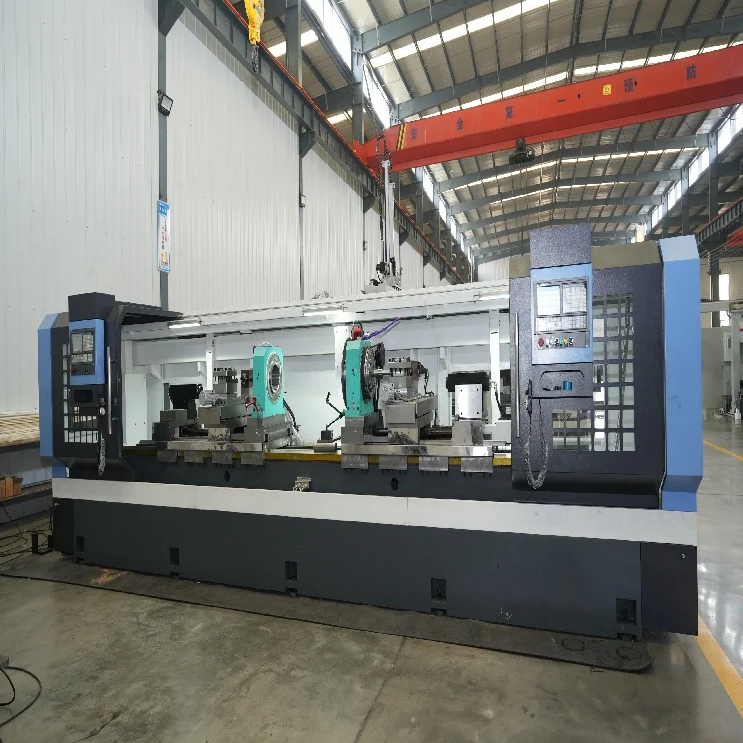
Walking into a modern machine shop, you might expect deafening noise and showers of sparks. Instead, you often find a quiet hum punctuated by the rhythmic hiss of coolant. At the center of this controlled environment sits the CNC milling machine, a device that has fundamentally reshaped how humans carve metal. At its simplest, CNC milling is a subtractive manufacturing process. Unlike 3D printing, which adds material layer upon layer, milling starts with a solid block of metal, plastic, or wood and uses a rotating cutting tool to carve away everything that is not part of the final design. Think of it as a sculptor with a motorized chisel, guided not by a human hand but by a precise stream of mathematical code. The real magic lies in the fact that once programmed, this process can be repeated indefinitely with identical results, making it the beating heart of modern mass production.
The Silent Language of Coordinates and Axes
To understand how this automated sculpture happens, you need to grasp the machine's language. Every CNC mill operates on a Cartesian coordinate system. The spindle moves left to right along the X axis, front to back along the Y axis, and up and down along the Z axis. Every single point in the cutting envelope can be mapped to a unique set of three numbers. When you watch a complex contoured surface emerge from a rough block, you are witnessing thousands of these tiny coordinate movements executed per second. More advanced machines introduce rotary axes, commonly called the fourth and fifth axes, which tilt the tool or the workpiece itself. This allows an end mill to reach undercuts and curved surfaces that a simple three axis machine could never touch in a single setup. A shop supervisor once told me that watching a five axis machine carve a helical impeller is like watching a choreographed dance, where the tool never quite moves in a straight line but always finds the perfect cutting angle.
The Marriage of Cutting Science and Material Artistry
The brain of the machine sends commands, but the real physical work happens at the cutting edge. This is where science meets something close to intuition. A carbide end mill spinning at tremendous rotational speed hammers its sharp flutes into the workpiece, shearing away tiny crescent shaped chips. The art lies in matching the cutting parameters to the material. Aluminum, being soft and gummy, demands high speeds and polished flutes to prevent the material from welding itself to the tool. Stainless steel, on the other hand, requires slower speeds, heavier feeds, and a rigid setup to avoid work hardening the surface. Experience teaches a machinist to listen. A steady, crackling sound often indicates a good cut, while a high pitched squeal screams that something is rubbing and about to fail. Coolant plays a dual role here, flooding the cutting zone to evacuate those hot chips while simultaneously keeping the tool and workpiece thermally stable. Without this thermal management, a part that measures perfectly on a hot machine will fall out of tolerance once it cools to room temperature.
From CAD Dream to Machined Reality
Before a single chip flies, the part exists entirely in the digital realm. The journey begins with a CAD model, a three dimensional solid representation of the desired part. This model then enters CAM software, where a programmer strategically assigns toolpaths. They select the appropriate roughing strategy to hog out the bulk of material quickly, then switch to finishing strategies that leave behind a smooth, dimensionally accurate surface. The CAM system then posts this toolpath data into G code, the alphanumeric language that CNC controls understand. This is a critical handshake moment. A reliable machine manufacturer ensures their control systems have mature, bug free post processors that translate toolpaths without dangerous errors. Once loaded into the machine, a responsible operator runs a dry simulation, watching the tool move through empty space on the screen to catch potential collisions before they become costly crashes. This entire digital thread, from design intent to machine motion, is what separates CNC manufacturing from manual guesswork.
Where Precision Meets Industrial Versatility
The applications of CNC milling are so pervasive that most people interact with its products daily without realizing it. The mold that shaped the plastic shell of your computer monitor was cut on a CNC mill. The titanium bone screws used in orthopedic surgery were machined on a multi axis mill capable of carving complex threads on a tiny scale. In the aerospace industry, structural ribs for aircraft wings are carved from solid aluminum billets, removing over ninety percent of the original material to achieve a strength to weight ratio that forging alone cannot provide. The heavy machinery sector relies on this process to produce large bearing housings and gearbox casings where flatness and parallelism between mating surfaces must be held to tolerances thinner than a human hair. This breadth of capability makes the milling platform one of the most versatile tools ever invented.
The Machine Behind the Movement
All the clever code and sharp tooling in the world mean nothing if the machine itself is not built like a metrology instrument. The foundation of any capable CNC mill is its frame, typically a massive casting designed to absorb vibration and resist deflection. Mineral filled or heavily ribbed cast iron structures dampen the high frequency chatter that ruins surface finishes. The quality of the linear guides and ball screws directly dictates whether the machine can execute those smooth arc movements the CAM software requested. This is where the machine builder's own manufacturing heritage becomes paramount. An enterprise like HXCG, with deep roots in heavy duty precision machining, understands this relationship implicitly. They know that a spindle cartridge must be assembled with obsessive concentricity because they have built the critical mechanical components that demand it. This internal supply chain mastery and hands-on machining background translates into milling platforms that are not just assembled from catalogs but engineered from real world experience. When you invest in such a machine, you are not simply buying a piece of equipment. You are buying the accumulated decades of knowing how metal behaves under a cutter, and that quiet confidence keeps production lines running profitably for years.