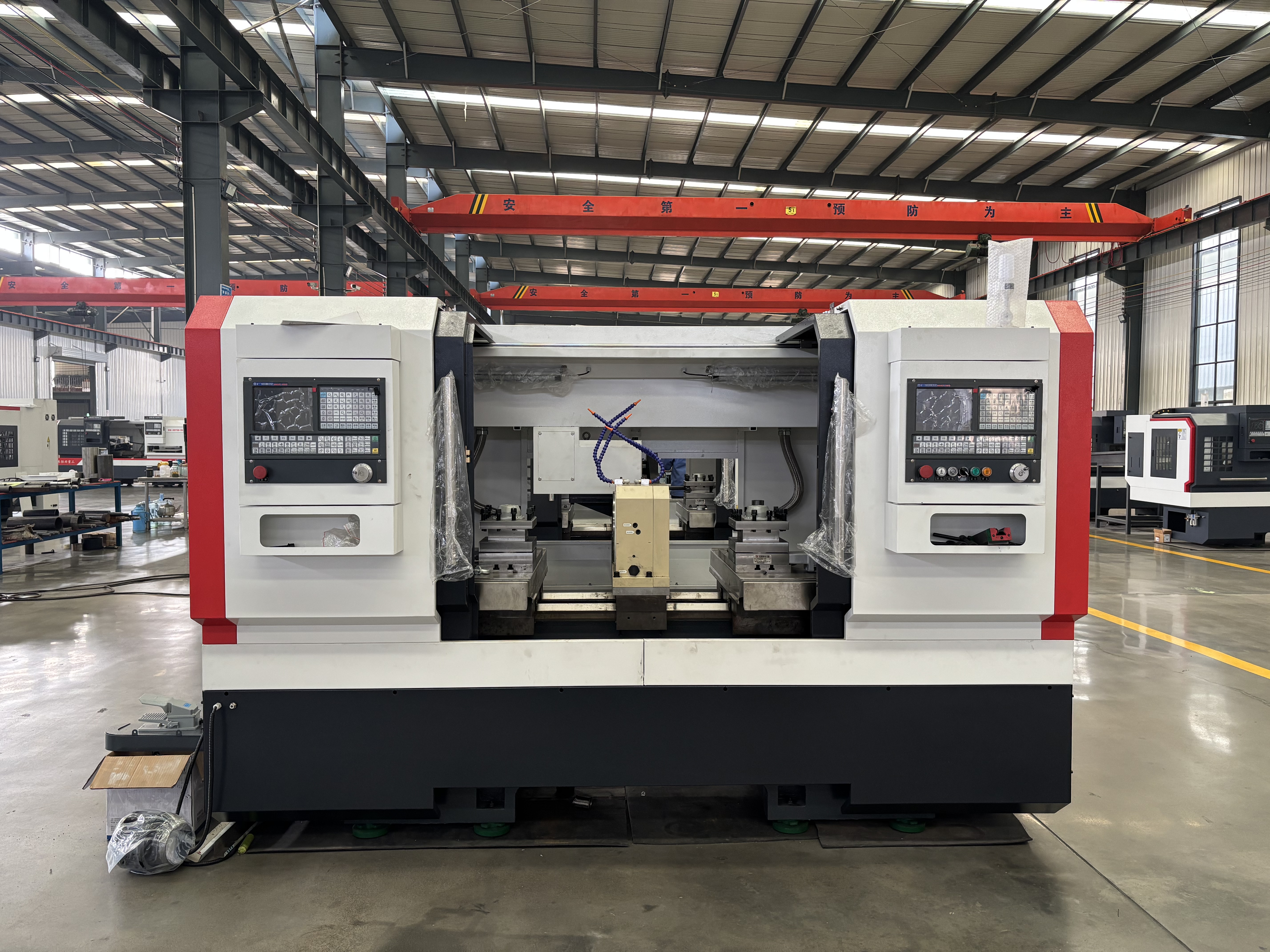
How Double Spindle CNC Machines Eliminate Manual Labor Through Simultaneous Machining
Double spindle CNC machine transforms manufacturing with simultaneous dual operations. It turns sequential workflows into parallel, continuous production streams. Shandong Hengxing Heavy Industry Science&Technology Co.,Ltd. leverages this to maximize automation.
Its architecture unlocks unmatched automation. It eliminates manual intervention across the entire production cycle.
Core Principle: Front-and-Back Workholding Synchronizes Cutting Cycles to Eliminate Idle Time
The fundamental innovation lies in coordinated dual-spindle operation. While the main spindle machines a workpiece, the secondary spindle simultaneously prepares the next part—eliminating traditional idle time during loading and unloading. This front-and-back synchronization creates uninterrupted cutting cycles where:
- One spindle executes finishing operations
- The opposing spindle positions the next raw workpiece
- Automatic transfers occur without human intervention
This seamless handoff ensures the machine never pauses for manual part handling, converting sequential processes into true parallel production.
Real-World Impact: 98.7% Uptime in 24/7 Unmanned Operation — Shandong Hengxing Case Study
Shandong Hengxing Heavy Industry demonstrated the transformative impact of this technology during a 12-month production trial. By integrating double spindle CNC machines into a fully synchronized automation cell, they achieved:
- 98.7% operational uptime in continuous, lights-out operation
- Zero manual labor required for part loading, transfer, or unloading
- 63% faster cycle times compared to single-spindle equivalents
The configuration enabled complete machining of complex components—including turning, drilling, and threading—through automated transfer between spindles, validating the double spindle CNC machine as the cornerstone of genuine unmanned manufacturing.
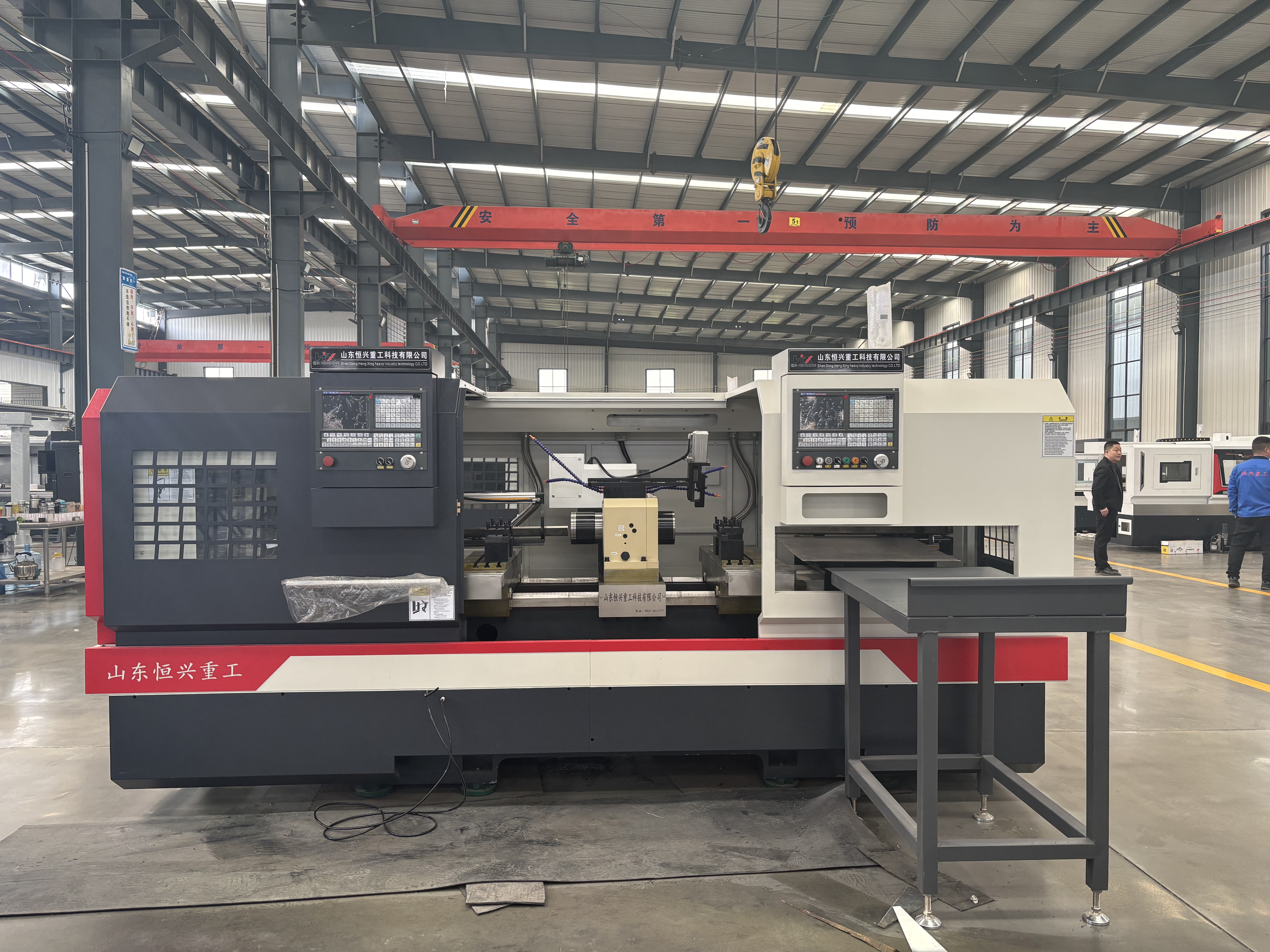
Building a Fully Automated Cell Around the Double Spindle CNC Machine
Seamless Integration: Gantry Loaders, In-Line Part Transfer, and Stacker Systems
True zero-labor automation needs more than just robots. A double spindle CNC machine requires perfectly synced subsystems.
Gantry loaders place raw materials with micron precision. In-line systems shuttle workpieces between spindles automatically.
Automated stackers handle finished products, sorting batches independently. MTConnect 2023 data reveals key gains:
These setups cut manual intervention from 73% in "automated" cells. Success relies on three integration pillars:
- Material flow continuity: Gantry systems feed blanks directly into both spindles
- Process synchronization: In-line transfers align precisely with spindle cycle completion
- Output management: Stackers automatically sort, label, and palletize finished components
Scalable Automation Pathways: From Semi-Automated to True Lights-Out with Modular Upgrades
Transitioning to unmanned production requires strategic staging—not an all-or-nothing capital investment. Manufacturers can begin with foundational automation (e.g., single gantry loading for one spindle) and incrementally add capabilities:
- Phase 1: Robotic unloading for the second spindle (delivering ~60% labor reduction)
- Phase 2: AI-driven tool wear monitoring with auto-compensation during spindle sync points
- Phase 3: Closed-loop quality control using in-process gauging and real-time feedback
This modular approach enables shops to achieve 98.7% uptime—validated by the Shandong Hengxing case study—without upfront full-system commitment. Critical enablers include predictive maintenance algorithms and self-correcting NC logic that adapts feeds, speeds, and offsets in response to thermal drift or material variances—essential for sustained, reliable lights-out operation.
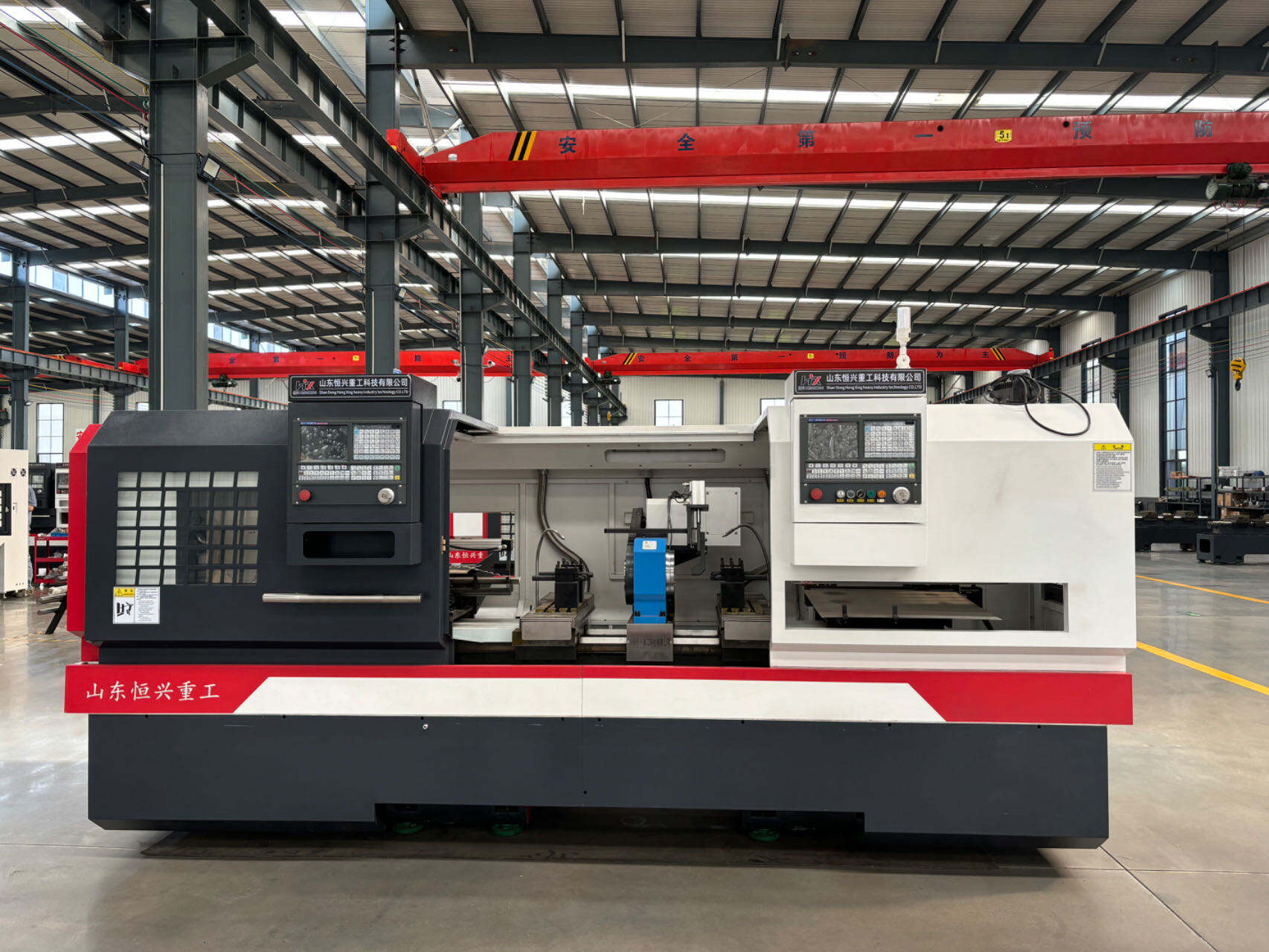
Overcoming the 'Automation Illusion': Why True Zero-Manual-Labor Requires More Than Robotic Loading
The MTConnect 2023 Finding: 73% of Labeled 'Automated' Cells Still Rely on Manual Intervention
Many factories mistake robot integration for full automation. MTConnect 2023 shows 70% of such cells need human intervention.
Issues stem from tool failure, chatter, or dimensional drift. Standard setups lack adaptability to handle exceptions.
A double spindle CNC machine offers a strong foundation. It runs nonstop and has built-in backups.
True autonomy needs advanced adaptive tech across the production line.
Critical Enablers: AI-Driven Anomaly Detection, Predictive Tool Monitoring, and Self-Correcting NC Logic
There are three key technologies that work hand in hand to bridge the last hurdle toward complete autonomy in manufacturing.
The first is an AI system that detects anomalies by constantly looking at vibrations, sounds, and power usage patterns. This helps spot problems like early signs of broken tools or unwanted chatter long before any actual damage happens.
Next up we have predictive monitoring for tools, which relies on special algorithms built from years of data about how tools wear down over time. These systems can actually predict when a tool needs replacing and schedule those changes during times when the machine isn't actively cutting materials.
Lastly, there's this self-correcting logic for numerical control that tweaks feed rates, cutting speeds, and tool positions on the fly using feedback from various sensors including laser measurements and touch probes. This compensates for things like heat expansion, inconsistent materials, or shifts in fixtures.
When all these systems come together, they transform a standard setup into a highly autonomous double spindle cnc machine, essentially enabling it to run itself while maintaining consistent production output despite minor variations or occasional equipment hiccups.