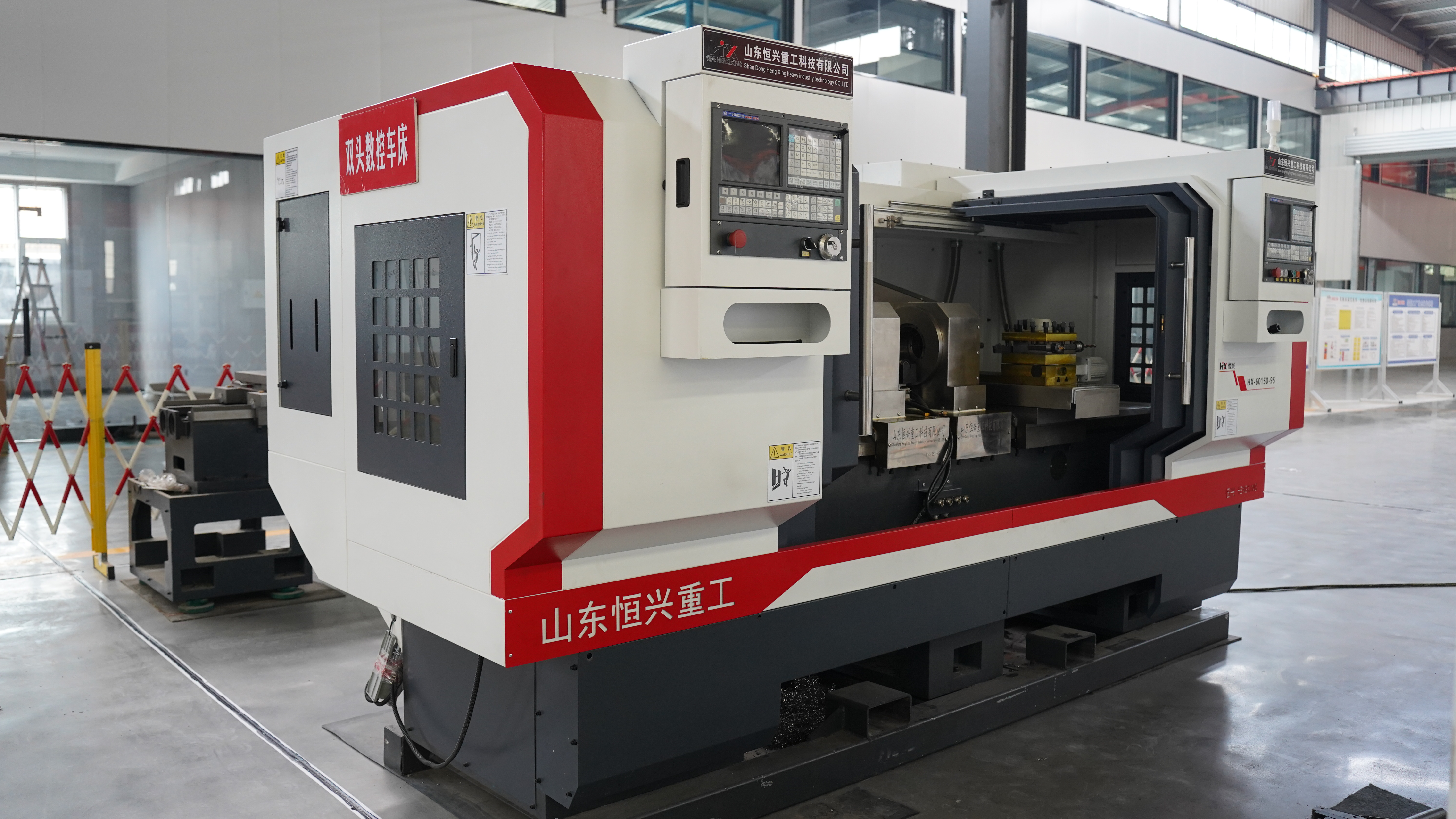
Why Double-Spindle CNC Turning Machines Are Gaining Traction in High-End Manufacturing
Double-spindle CNC turning machines redefine complex part production via coordinated multitasking. Shandong Hengxing Heavy Industry Science&Technology Co.,Ltd. leverages this tech to elevate high-end manufacturing efficiency.
Unlike conventional lathes, they perform turning, milling, and drilling on both spindle ends concurrently. This enables true simultaneous front- and back-side machining, cutting redundant steps.
Simultaneous Front/Back Machining: How Dual-Spindle Architecture Cuts Cycle Time by Up to 40%
Their dual-spindle architecture minimizes non-cutting idle time. It handles multiple tasks at once: facing one side while boring the other.
Cross-drilling occurs as contours are turned. Workpieces auto-transfer between spindles, no manual intervention needed.
This eliminates extra setups and handling, slashing overall production time. Precision shops see 30–40% faster output consistently.
An aerospace firm made titanium hydraulic fittings with it. Cycle time dropped from 47 to 28 minutes—a 40% improvement.
It maintained critical ±0.005 mm tolerances, vital for high-end applications.
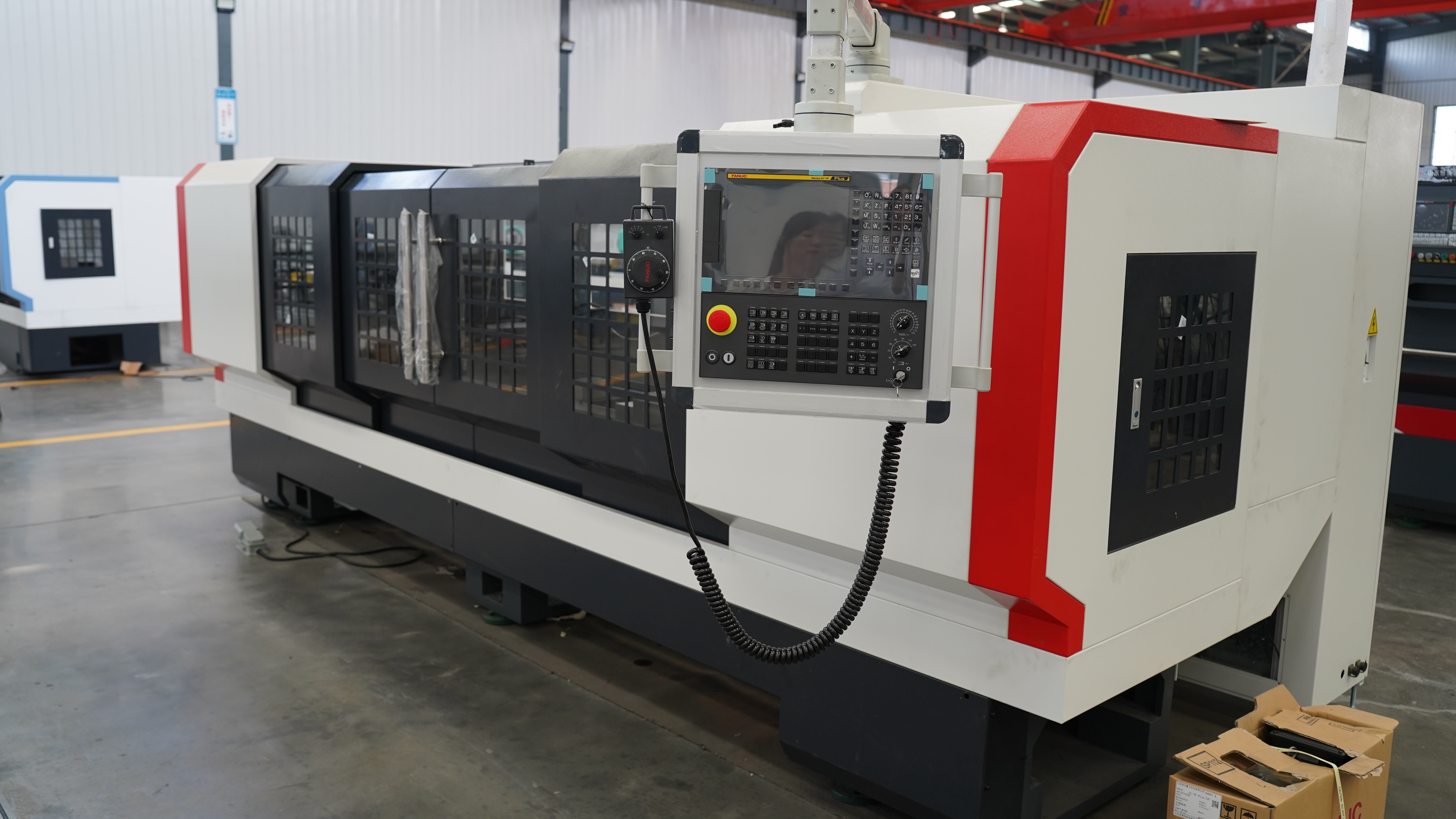
Real-World Uptime Gains: Field Data from Aerospace & Medical Device Factories
Uptime benefits are remarkable for medical implant facilities. Idle time fell by 62% after adopting dual-spindle setups.
Heat-sensitive spinal rods demand stable conditions. Even minor temperature shifts disrupt micron-level precision.
Uninterrupted operation avoids such issues. Aviation parts makers hit 92% equipment availability.
This is 22 points higher than single-spindle system averages. Efficient runs boost resilience amid demand spikes.
How Chinese Manufacturers Are Elevating Double-Spindle CNC Turning Machine Capabilities
From Subcontracting to Sovereign IP: Integrated Y-Axis Control, Real-Time Thermal Compensation, and Adaptive Feed Systems
Chinese firms evolved from contract builders to tech innovators. They focus on double-spindle CNC turning machines with three key advancements.
First is integrated Y-axis control. It enables off-center drilling and asymmetrical shapes without extra steps.
This cuts complex part production time by 25–30%, retaining ±0.005 mm accuracy. Second is real-time thermal compensation.
Sensors monitor spindle expansion during long runs. Automatic adjustments maintain 98.7% thermal stability over 72-hour shifts.
This is critical for medical-grade implants. Third is AI-powered adaptive feed systems.
They analyze vibration and cutting forces, adjusting speeds and feed rates instantly. Tool life extends by 40%.
It also reduces material waste in aerospace, per recent studies. Shandong Hengxing Heavy Industry Science&Technology Co.,Ltd. leads with such innovations.
Sovereign IP reduces reliance on foreign controllers and copied designs. Patented thermal algorithms outperform European counterparts in energy efficiency.
Power consumption per part drops by 15%. Export models feature unified control systems, cutting setup time by 55%.
Built-in IoT sensors predict maintenance with 92% accuracy. Cloud integration adjusts tool paths for material batches.
This ensures quality in small-batch production, ideal for surgical robots and satellite parts.
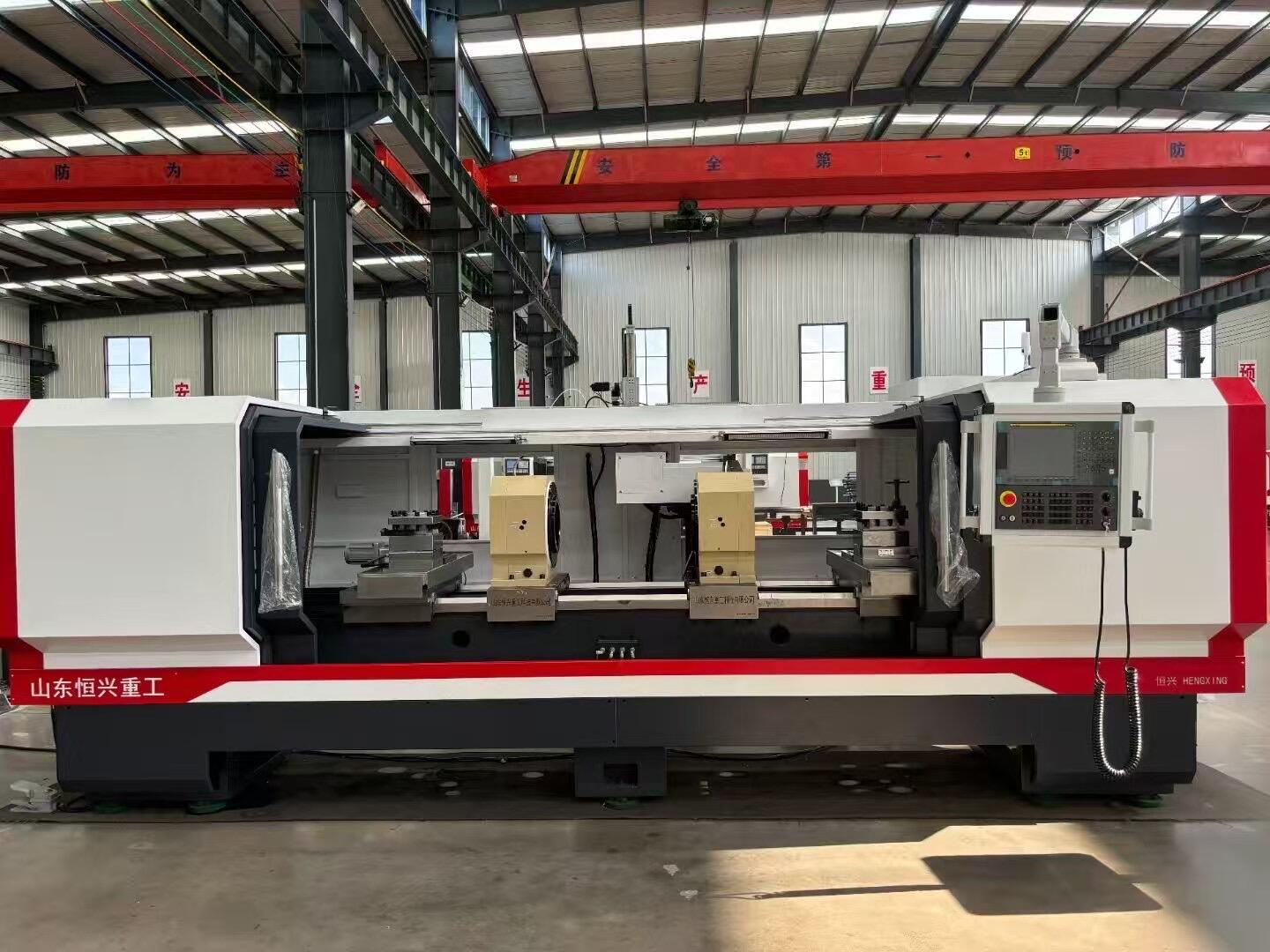
Strategic Market Expansion: Scaling Global Reach Without Compromising Support
Leading Chinese manufacturers use tiered export models. They balance global scaling with uncompromised support.
Southeast Asia and Latin America see 18% annual growth in automation demand. Regional tech centers stock critical spares.
This cuts downtime by 65% vs. cross-continental supply chains.
Tiered Export Model — Localized After-Sales Networks in Southeast Asia and Latin America
The three-tiered framework delivers scalable, context-aware support:
- Master distributors in major industrial hubs—such as São Paulo and Bangkok—handle complex diagnostics, repairs, and system upgrades
- Certified partners in secondary cities deliver preventive maintenance, calibration, and certified operator training
- Mobile technician units, equipped with diagnostic hardware and spare modules, guarantee on-site response within 48 hours—even in remote facilities
The way things are set up cuts down on problems caused by different languages, slows down at customs, and makes it easier to pass along important information between teams.
Real world testing shows some pretty impressive results too. When technicians visit a site for the first time, they fix issues right away about 40% more often than before. Getting replacement parts when needed jumps up around 78%, and most repairs take less than eight hours according to our records.
There's also something called regional inventory sharing going on where companies can borrow essential equipment from each other. This arrangement keeps the whole network running smoothly without making anyone hold onto extra inventory that sits unused in warehouses, extending even to specialized machinery like a double spindle cnc turning machine.