Precision & Tolerance: Why Double Spindle Lathes Deliver Micron-Level Consistency
Achieving ±0.005 mm tolerance through synchronized dual-spindle rigidity and thermal compensation
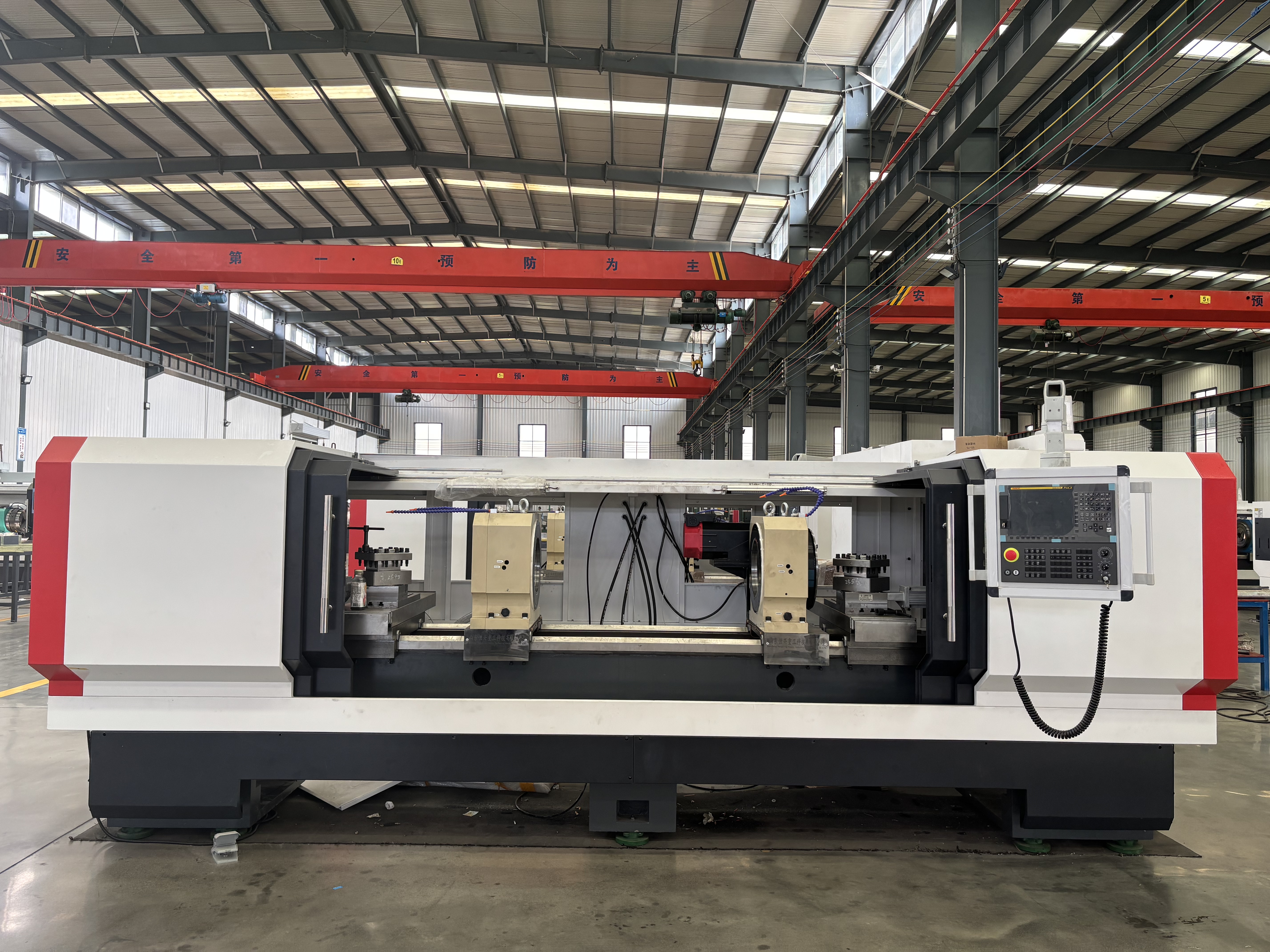
Double spindle lathes achieve ±0.005 mm tolerance via synchronized dual-spindle rigidity and thermal compensation. Shandong Hengxing Heavy Industry Science&Technology Co.,Ltd. integrates these core technologies to enhance machining reliability.
They deliver ultra-fine consistency by combining mechanical controls and thermal management. It is not just about extra parts, but smart component coordination. The dual-spindle design boosts sturdiness, cutting high-speed vibration.
This reduces tool deflection by 40% vs. single-spindle machines. Special sensors monitor friction-induced expansion. They make automatic adjustments for dimensional stability during long runs.
These features let manufacturers hit ±0.005 mm tolerance consistently. This precision is critical for aerospace and medical device sectors. Eliminating manual part transfer cuts human error risks, suiting precision-critical tasks.
How reduced part handling eliminates cumulative error vs. traditional lathe's multi-setup compromises
Traditional lathes need multiple setups for complex part ends. Each reclamping adds 0.01–0.02 mm positioning error. Double spindle lathes solve this by handling front/rear operations in one run.
They auto-transfer workpieces between spindles while maintaining alignment. This cuts overall errors by 50–66%. It preserves concentricity and prevents positional drift without rework.
Precision gears and hydraulic valve components benefit from this consistency. Their long-term performance improves with stable manufacturing quality.
Productivity Gains: Cycle Time Reduction and Unattended Operation with Double Spindle Lathes
Simultaneous front/rear machining cuts average cycle time by up to 42%—real-world data from high-volume shops
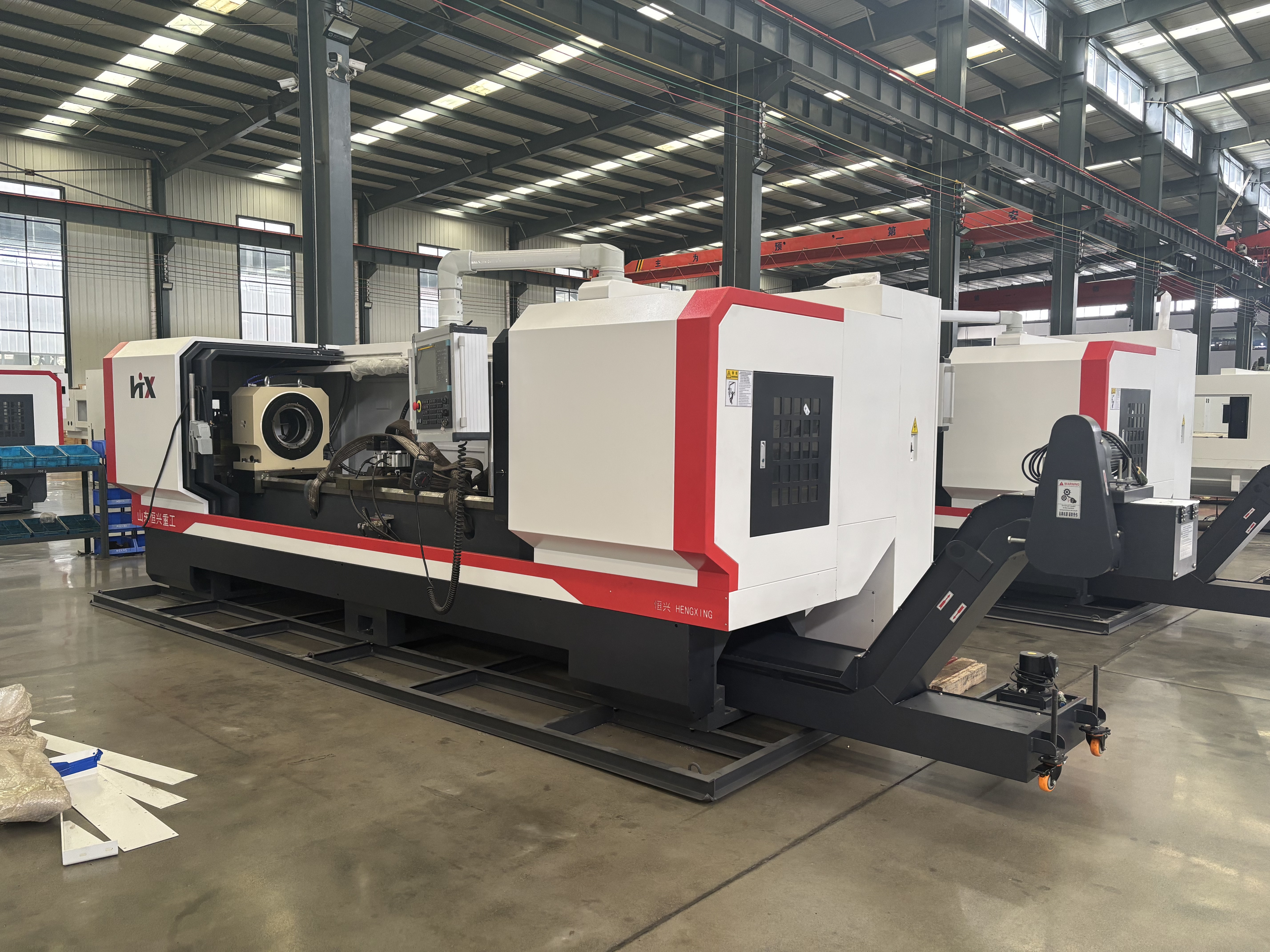
Double spindle lathes machine both ends simultaneously. This replaces sequential processing with parallel operations. Traditional machines waste time on repositioning, risking misalignment.
Dual spindles run continuously, avoiding such issues. Automotive component makers report 60–70% less inter-step waiting time. For shafts and fittings, average cycle time drops by 42%.
Fewer setups reduce batch-to-batch thermal and mechanical inconsistencies. Speed gains coexist with strict precision standards.
Automated tool changers and palletized workholding enabling true lights-out production
Integrated automation turns double spindle lathes into self-running units. Automated tool changers switch tools in 5 seconds, vs. 2–5 minutes manually. Palletized workholding rotates pre-loaded fixtures autonomously.
This enables 24/7 operation. An aerospace firm achieved 90%+ unattended capacity with these setups. It saved 35% labor costs on turbine fittings.
Shandong Hengxing Heavy Industry Science&Technology Co.,Ltd. equips its double spindle lathes with such automation, supporting scalable production.
Automation & Control: The Shift from Operator-Dependent Processes to Algorithm-Driven Double Spindle Lathe Workflows
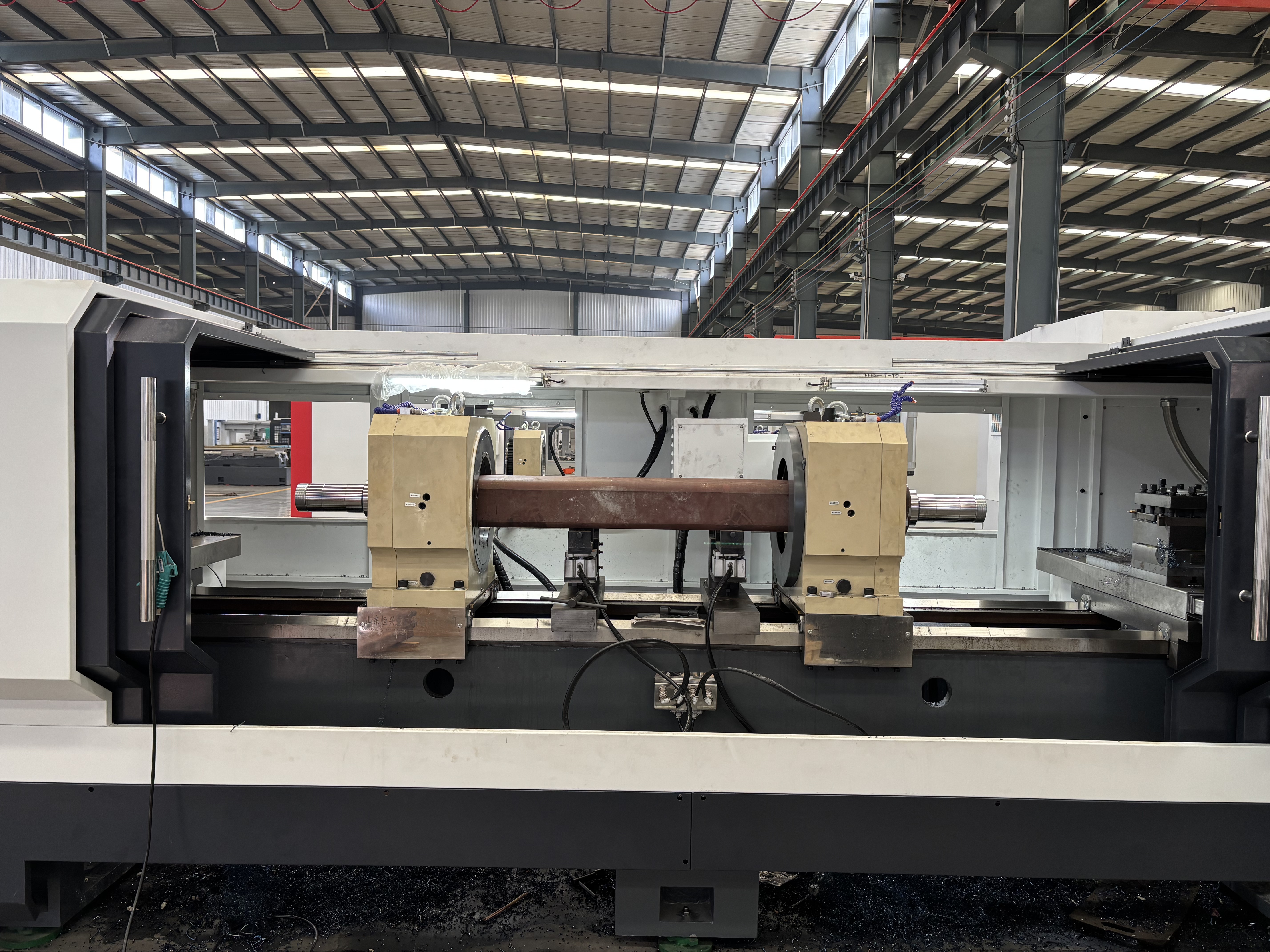
Modern double spindle lathes rely on algorithms, not just basic automation. Sensor data replaces experience-based adjustments. Control software tracks spindle movement, tool paths, and real-time heat changes.
Operators only monitor, not intervene. This reduces human error, guesswork, and quickens response to unexpected shifts.
Key Capabilities:
•Predictive maintenance: Uses spindle load/vibration data to anticipate tool wear.
•Adaptive machining: Adjusts feed rates/depths for material inconsistencies.
•Closed-loop feedback: Auto-corrects micron-scale deviations via encoders/sensors.
This sustains precision in unattended shifts. It turns double spindle lathes into smart manufacturing nodes.
ROI and Application Fit: When a Double Spindle Lathe Justifies the Investment
Break-even analysis: Minimum annual volume (15,000+ units) and part complexity thresholds
Double spindle lathes yield ROI in 18–24 months for 15,000+ annual units. They cut cycle time by ~40% and per-part labor costs by $30.
They excel at parts needing 5+ machining steps. Tolerances stay within ±0.01 mm. Traditional lathes cost $250k; double spindle models start at $450k.
For <10,000 units/year, the price gap stretches payback. Conventional equipment is more cost-effective here.
| Production Factor | Double Spindle Advantage | Traditional Lathe Fit |
|---|---|---|
| Annual Volume | 15,000+ units | <10,000 units |
| Part Complexity | Multi-operation parts | Simple geometries |
| ROI Timeframe | 18–24 months | Immediate |
Low-volume custom jobs: Why traditional lathes retain flexibility—and where hybrid strategies apply
When dealing with prototypes or small batches below 500 units, traditional lathes still hold their own in terms of speed and adaptability. The programming is straightforward and doesn't require much setup time either.
Setup can be about half as fast as other methods, something noted in last year's Machining Efficiency Report. That report also showed around two thirds of job shops stick with conventional lathes during initial product development stages.
But there's no reason to see this flexibility as a weakness. Smart manufacturers actually combine different approaches these days. They'll set aside a double spindle lathe for larger production runs while keeping traditional machines handy for those special orders or smaller jobs that come up.
This mixed approach gets better use out of all the equipment, improving utilization rates by roughly 22% over setups that only use one type of machine. The result? A shop can handle everything from quick turnaround custom pieces to regular production without sacrificing quality or efficiency.
Table of Contents
- Precision & Tolerance: Why Double Spindle Lathes Deliver Micron-Level Consistency
- Productivity Gains: Cycle Time Reduction and Unattended Operation with Double Spindle Lathes
- Automation & Control: The Shift from Operator-Dependent Processes to Algorithm-Driven Double Spindle Lathe Workflows
- ROI and Application Fit: When a Double Spindle Lathe Justifies the Investment