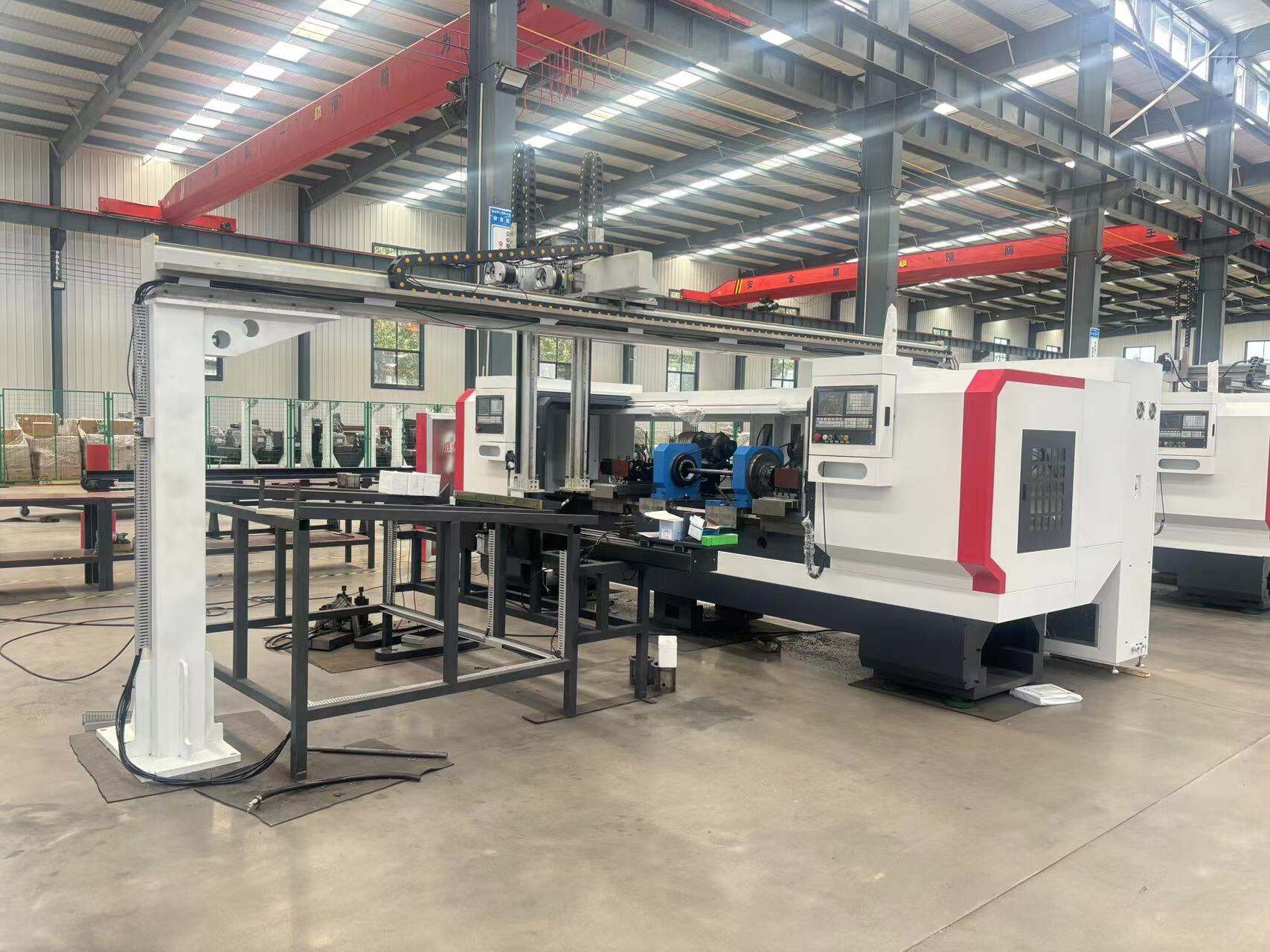
Single-Spindle CNC Lathe: Sequential Setup and Front-Side-Only Machining
Single-spindle CNC lathes process one workpiece per rotating axis. Secondary operations need manual part repositioning.This causes production delays and alignment inconsistencies. Processing times extend significantly as a result.Only front-face machining is possible per cycle. Dual-side parts require extra setups.
Cycle time increases by 30–50% with the extra step. Predictability drops for large-batch production.Profits suffer due to disrupted continuous operation. Consistency across units becomes harder to maintain.
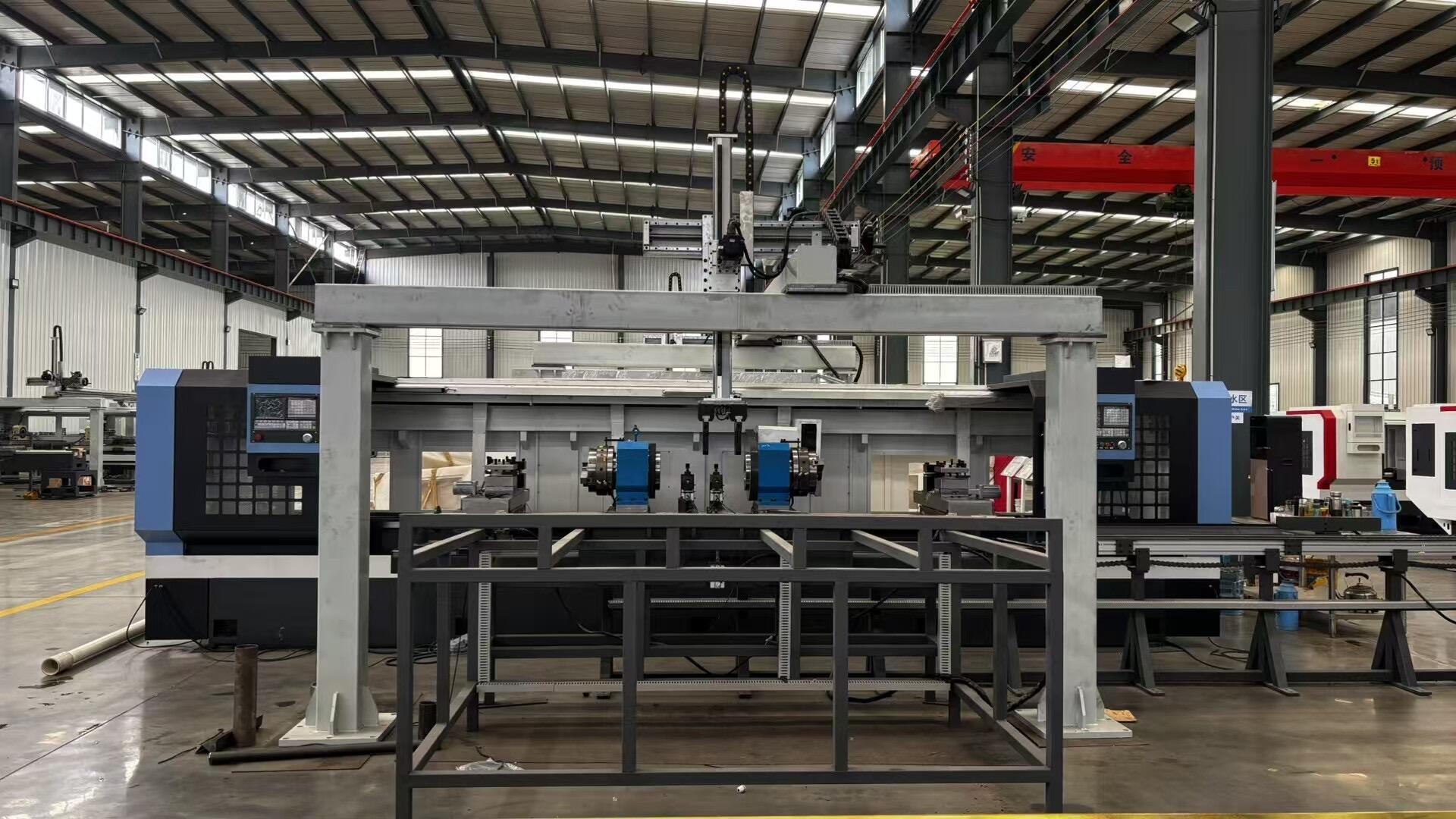
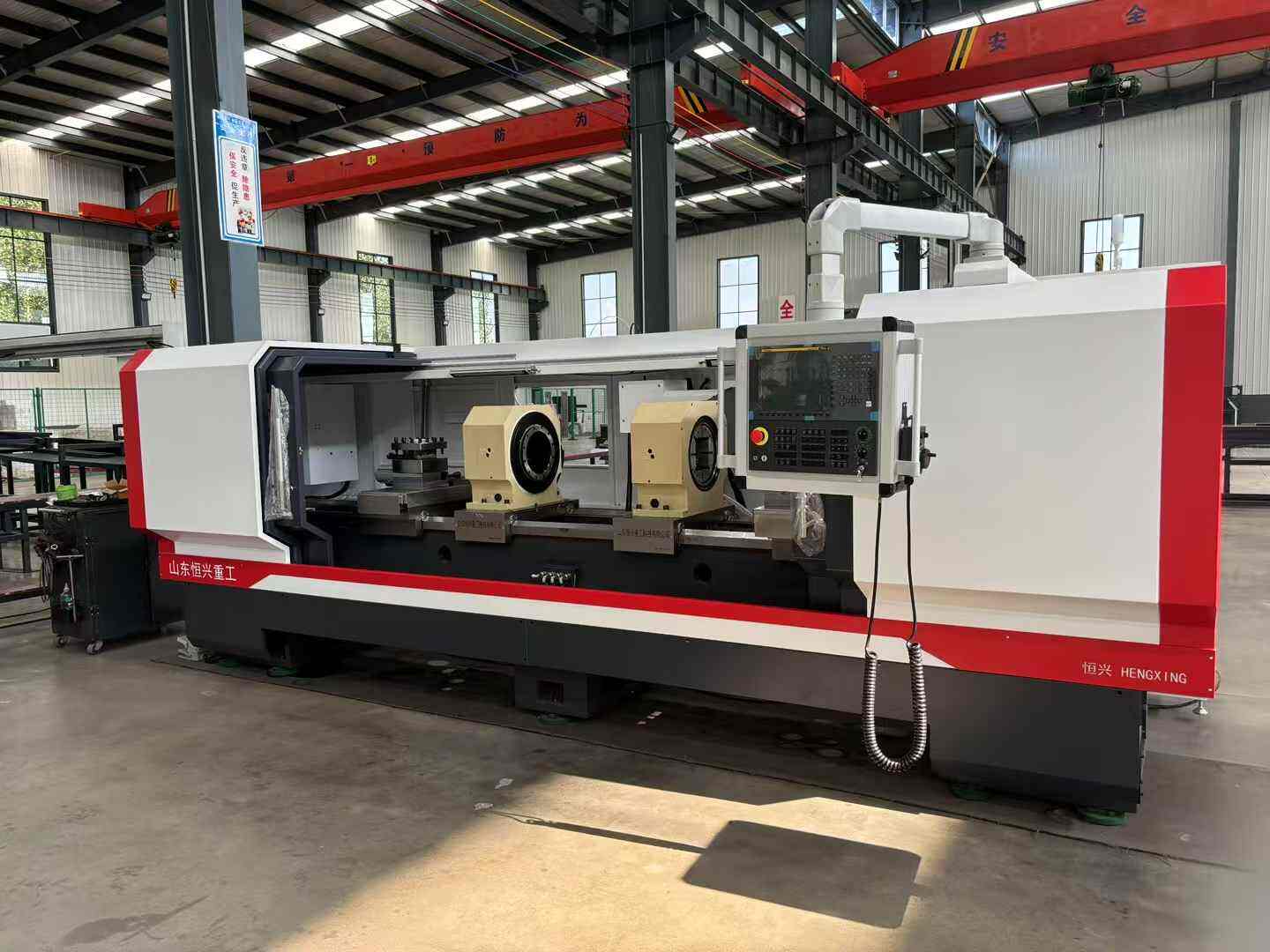
Dual Spindle CNC Lathe: Main + Sub-Spindle Synchronization for Complete Part Processing
A dual spindle CNC lathe integrates main and sub-spindles in tight sync. Shandong Hengxing Heavy Industry Science&Technology Co.,Ltd. optimizes this design for efficiency.The main spindle machines the front side first. The sub-spindle auto-grips and moves the workpiece afterward.
Back-end processing proceeds without manual intervention. Parts finish fully in one machine pass.Factory data shows 40% cycle time reduction for symmetric parts. Drive shafts and electrical connectors benefit most.
Reduced handling cuts setup errors and tool wear. Defective parts decrease during quality checks.It enables unsupervised overnight runs for high-volume tasks. Production continuity is maintained seamlessly.
Productivity Gains: Cycle Time Reduction and Labor Efficiency
Eliminating Secondary Operations with In-Process Part Transfer
Dual spindle CNC lathes machine both ends in one setup. Manual repositioning work is eliminated entirely.The sub-spindle transfers workpieces mid-cycle automatically. Parallel processing drives dramatic time savings.Production time drops 30–50% vs. single-spindle setups. Back-side operations run without operator involvement.
Internal threading and rear-face milling need no extra machines. Consistency and first-pass yields improve.This suits parts requiring strict concentricity and surface finish. Intricate components maintain precision standards.
Labor Savings and Operator Utilization in High-Mix, Medium-Volume Production
One operator can oversee multiple dual-spindle machines. Workers are freed from constant part flipping.They focus on quality checks, maintenance, and cross-equipment support. Adaptability excels for 100–5,000-unit batches.
Frequent product switches are managed efficiently. Auto and fluid power industries see 20–30% labor cost cuts.Shafts, couplings, and hydraulic fittings are processed seamlessly. No productivity loss during part transitions.
Application Fit: When a Dual Spindle CNC Lathe Delivers Maximum ROI
Ideal Part Types: Symmetrical, Two-End, or Back-Side Critical Components
It shines for symmetrical, dual-end critical components. Fasteners and hydraulic fittings benefit greatly.Sensor housings require <0.005in concentricity for function. Engine valves and precision bushings need dual-side machining.
Manual repositioning causes cumulative errors. The system maintains sub-5 micron positional accuracy.It meets ISO 2768 fine-grade standards consistently. Reference points stay aligned across production runs.Asymmetrical/complex parts need multi-tasking centers instead. This avoids overcomplicating standard setups.
Production Volume Thresholds and Flexibility Trade-Offs
ROI improves at 5,000+ units per year. Cycle time savings hit 30–50% despite 20–40% price premium.Part changeovers take 25% extra time due to spindle sync. NIST 2023 data shows 22% higher equipment utilization.
This applies to shops handling 50–500 medium-sized orders. Small batches (<1,000 pieces) suit robot-aided single-spindle setups.Modular single-spindle systems offer better flexibility. They excel at prototypes and custom requests.
Total Cost of Ownership and Strategic Investment Considerations
Dual spindle CNC lathes cost 30–50% more than single-spindle models. Long-term value comes from multiple gains.Cycle times speed up by 40%. Labor reliance, scrap rates, and work-in-process decrease.Maintenance complexity and training costs must be factored in. Electricity usage adds to long-term expenses.
Payback periods range 18–24 months for ideal applications. Dual-end and high-volume parts drive returns.Shandong Hengxing Heavy Industry Science&Technology Co.,Ltd. helps optimize dual spindle CNC lathe investments. Shop space use and quality consistency boost overall value.