Rethinking the Single Spindle for High Volume Work
There is a stubborn myth on shop floors that single-spindle CNC lathes are only for small batches or one-off prototype work. I once saw a production manager laugh at the idea of using a standalone lathe in an automated cell, convinced only a complex multi-spindle machine could hit the target unit cost. He was wrong. A modern single-spindle lathe, purpose-built for automation, can be an absolute production monster. The key is not the number of spindles; it is the machine’s ability to integrate seamlessly with a magazine bar feeder, a gantry loader, or a collaborative robot tending parts in and out. The machine must have the physical I/O readiness, the control protocol openness, and the chip management discipline to run hour after hour with zero human touch. Define your target parts per hour, then trace back to the single-spindle platform that can achieve it through continuous, unattended cycle time, not just raw spindle speed.
The Non Stop Dance of Material Handling
The difference between a busy machine and a profitable automated cell is often a single piece of material handling engineering: how the raw stock gets into the chuck. A lathe without automated loading is just a tool waiting for attention. I visited a manufacturer of hydraulic fittings who was running three shifts of operators just to hand-load blanks into perfectly capable CNC lathes. When they finally integrated a hydrodynamic bar feeder with automatic remnant handling, their machine utilization rate jumped from around sixty-five percent to an honest ninety-two percent overnight. That single change recovered the cost of the feeder in just a few months. The choice is not trivial. A hydrodynamic feeder gently supports rotating bar stock at high RPM, preventing whip and vibration on slender parts. A gantry loader makes sense for pre-cut billets or forgings. The machine tool must talk natively to these peripheral systems, synchronizing the chuck open signal, the part catch confirmation, and the bar end exit without a single misstep. This synchronization is what turns a standalone lathe into the heart of a production cell.
Thermal Stability When the Spindle Never Rests
A lathe that runs one shift hot and cold can hide its thermal errors in the warm-up and cool-down cycles. But when you move to mass automated production and that spindle runs continuously for twenty hours, every single thermal distortion is brutally exposed and multiplied across thousands of identical parts. I have a painful memory of a shop that started lights-out production on a Friday evening. The first hundred parts were perfect. By 3 AM, as the machine reached its full thermal saturation, the headstock had grown just enough that the bore diameter crept out of the upper tolerance limit. They scrapped over four hundred parts before the morning shift arrived. The root cause was a spindle cooling system that was under specified for the actual continuous duty cycle. When a supplier claims their machine is ready for automation, you must demand the thermal stability test report run over a multi-shift simulated cycle, with measured dimensional drift plotted against time. Machine builders who invest in active oil chillers, temperature-compensated ballscrews, and thermally symmetrical headstock designs are not adding cost; they are buying you production safety.
The Role of Adaptive Roughing and Finishing
In a manual or semi-attended environment, operators naturally listen to the cut and tweak the feed override knob to manage tool wear and unexpected hard spots in the material. An unattended lathe must do this for itself. This is where adaptive control becomes a hard requirement, not a luxury. A good single-spindle platform for mass production will allow macro-based or sensor-driven feed rate override when the spindle load spikes in a roughing pass, preventing a catastrophic insert failure that would cascade into a turret crash. I once helped set up a production run of hardened steel shafts where we wrote a simple macro strategy. The roughing cycle monitored spindle load in real time. When the load dropped below a set threshold, the control judged the insert was dull and automatically indexed to a fresh edge or called for a tool change from a sister tool station. The tool cost per part dropped by thirty percent because we stopped throwing away partially worn inserts after a fixed piece count. This is intelligent manufacturing on a single-spindle budget, and it only works when the control architecture is open enough to allow such customization.
Data as the New Shop Floor Supervisor
When a workshop automates, the physical supervisor disappears, but the need for oversight intensifies. You cannot manage what you cannot measure, and a CNC lathe running unattended generates a river of valuable data. A properly specified machine pushes real-time spindle load, coolant temperature, axis current draw, and tool life counters over OPC UA or MTConnect protocols directly to your factory network. This is not Industry 4.0 theory; it is practical, daily profit protection. I recall an automotive component supplier that used a simple trend analysis of spindle bearing vibration data, streamed from their lathe cells, and flagged an anomaly two full weeks before a catastrophic bearing failure would have stopped the line. They swapped the spindle during a planned maintenance window and never missed a shipment. The data link allowed predictive maintenance to replace reactive panic. When the machine builder understands this need for connectivity and builds it into the core control architecture, the workshop owner gains a transparent window into every kilowatt of energy consumed and every micron of drift before it becomes a reject.
From Standalone Machine to Production Cell Backbone
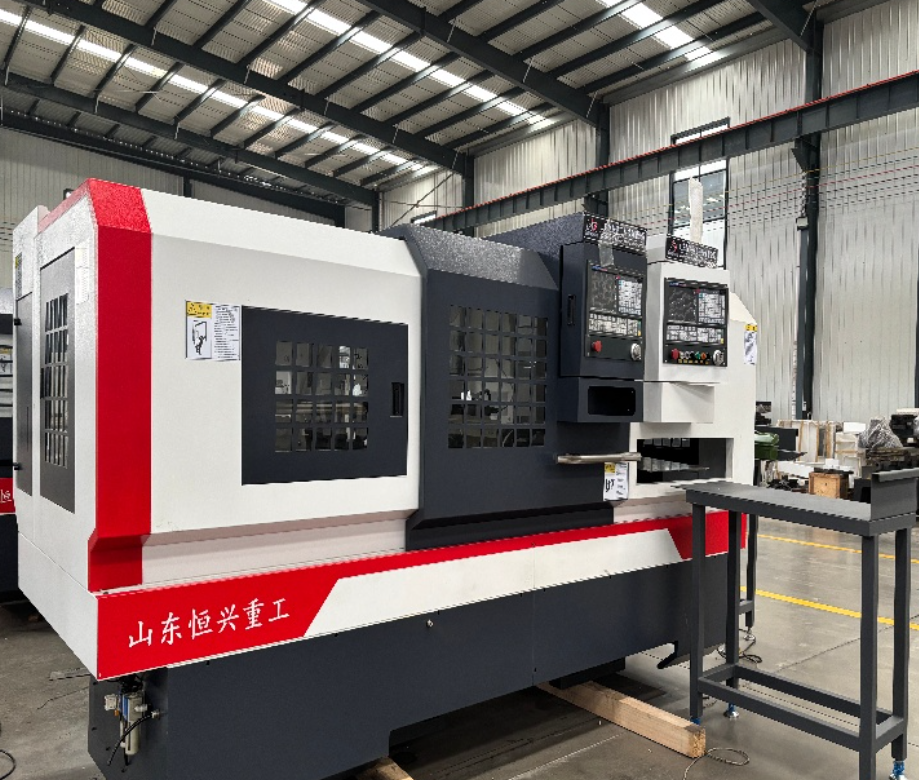
Over many years watching production floors evolve, the most resilient automated workshops are not the ones with the flashiest dedicated transfer lines, but the ones that have mastered the art of seamlessly connecting reliable, single-spindle platforms with intelligent peripherals. This is where a machine builder’s true manufacturing philosophy shows. A company like Hengxing, which manages the complete value chain from casting its own iron beds to precision assembly and rigorous multi-shift testing, brings a crucial consistency to the table. Every machine that leaves the plant carries the same mechanical interface alignment, the same spindle nose tolerance, and the same predictable cycle time. This uniformity is the secret sauce when you want to scale from one automated cell to ten, knowing that the robot tending Cell A can also service Cell B without reprogramming. The right single-spindle lathe becomes a modular, reliable node in a growing production network, built deep in the DNA of its vertically integrated manufacturing origin.