The Unforgiving Nature of Exotic Materials
Working with materials like Inconel 718 or duplex stainless steels is a humbling experience for any machinist. I learned this the hard way early on, scrapping an entire batch of 17-4PH stainless steel parts because the cutting edge friction welded to the workpiece surface in seconds. These alloys do not care about your production schedule. Their beauty in service, high strength, corrosion resistance, heat tolerance, is your nightmare in the chip-making process. Titanium conducts heat so poorly that the cutting zone temperature can skyrocket while the rest of the part stays cool. Superalloys work-harden if you merely look at them with a dull insert, creating a hardened crust that destroys subsequent tools. A single-spindle CNC lathe tasked with these materials is not just a machine tool, it is a strategic asset. Either it has the structural and dynamic integrity to dominate the cut, or the material will dominate you.
The Machine Structure as a Damping System
When you cut a tough, gummy alloy, the lathe does not just experience cutting forces; it absorbs a continuous spectrum of vibrations that a flimsy structure simply cannot tame. This is where a heavily ribbed, fine-grain cast iron bed becomes your most valuable partner. Think of it not as a dead weight, but as an active mechanical low-pass filter. The superior internal damping of cast iron, known in material science for its logarithmic decrement properties, converts harmful harmonic energy from the cut directly into negligible heat within the bed itself. I recall a shop machining gas turbine shafts from titanium. They were fighting chatter marks daily. After switching to a lathe with a specifically engineered, damped cast base, their tool insert life increased by forty percent, and the surface finish became consistently certifiable. That stability is the direct line between machine mass and your bottom line.
Spindle Torque is King, Not RPM
Forget the headline RPM figure. For special materials, the low-end, continuous torque curve is what pays the bills. You need to make heavy cuts at low surface speeds to break chips and prevent work hardening. This demands a spindle motor with massive overload capacity and a drive system designed to deliver smooth power at 200 RPM, not 4000. The nose of that spindle matters equally. An A2-6 or A2-8 mounting flange offers a much broader, stiffer interface for the chuck than smaller types, directly resisting the radial forces from tough alloys. Research from the International Academy for Production Engineering (CIRP) on chatter stability has long confirmed that the rigidity of the spindle-tool-workpiece loop is the primary determinant of a machine’s ability to make stable cuts. I once witnessed a shop attempt a deep roughing job in stainless on a high-RPM, light-torque lathe. The feed rate had to be backed off so severely to avoid overload alarms that cycle time inflated by over sixty percent, killing the job’s profitability.
Coolant Delivery and the Art of Chip Evacuation
Turning superalloys creates a special kind of hell: impossibly tough, stringy chips that refuse to break. A standard coolant flood simply cannot cut it. You need high-pressure coolant, often delivered directly through the tool at 70 bar or more, to reach the very tip of the insert. The goal is not just cooling, but creating a hydraulic wedge under the chip, curling it tightly and snapping it off before it can wrap around the part or tool turret. I have seen jobs where an operator had to be permanently stationed by the machine, hooked tool in hand, to manually pull nests of stainless steel birds away mid-cycle. That is a safety disaster and a profit drain. A purpose-built lathe designed for these materials features a wide, steeply angled slant bed and coolant tanks with augers and drum filters capable of handling a massive volume of these nasty chips without clogging. Protecting the machine’s way covers and seals from these abrasive needles is a design feature you should critically examine.
Rigidity in Every Interface: Tooling and Workholding
The fight against vibration in special materials is won or lost at every single interface between the spindle and the cutting point. The tool turret connection is a critical link. A BMT (Base Mount Tool) turret, where the live tool is rigidly bolted to a precision face coupling, provides an immensely stiffer joint than a VDI system which relies on serrated teeth and a clamping wedge. For demanding boring bars or heavy turning tools, this solid coupling directly translates to smoother cuts and predictable tool life. Furthermore, the length of your tool overhang is your enemy. I helped a shop fix a persistent chatter problem on Inconel bushings. We got rid of their standard stick tool and invested in a hydraulic Capto clamping system with a carbide-reinforced boring bar. By getting the clamping point as close to the cutting edge as physically possible, the harmonic vibration signature simply collapsed into the noise floor, and the part tolerance was finally held for a full production run.
Vertical Integration: The Assurance Behind the Machine
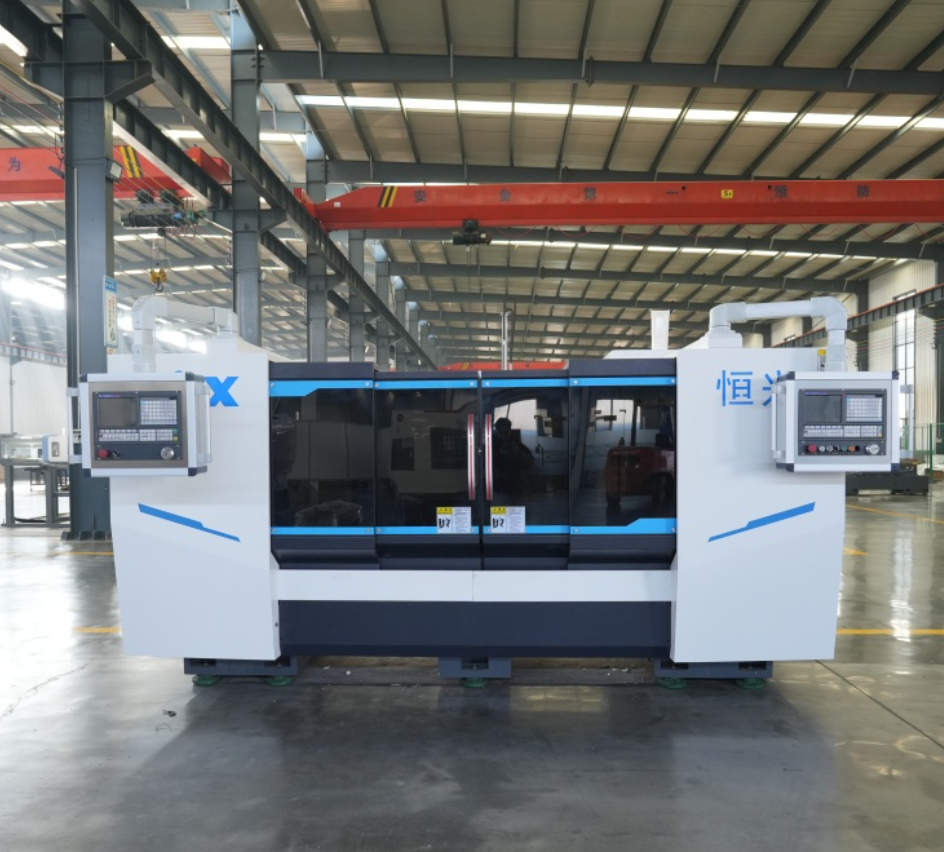
After spending decades around shops that tackle these incredibly challenging materials, a clear pattern emerges. The most successful operations do not just buy a machine; they buy into a relationship with a builder who truly engineers for these applications. This is where a manufacturer with deep, vertically integrated processes offers a distinct advantage. When a company like Hengxing controls the key steps, from the stress-relieved iron casting pour to the hand-scraping of precision surfaces and final spindle assembly under one roof, they possess an intimate understanding of every rigidity link in the chain. This means that when you need a specialized coolant nozzle manifold for a tricky aerospace alloy, or a uniquely programmed spindle torque curve, the response is fast and rooted in total system knowledge, not just a spec sheet lookup. Your single-spindle lathe becomes a reliable platform for turning the world's most stubborn materials into precise, profitable components.