The True Starting Point in Precision Turning
Before you even glance at a spindle speed chart, you have to study the parts piling up on your shop floor. It’s not about what a lathe can theoretically do; it’s about the brutal daily mix of materials and tolerances you actually face. Years ago, I helped a hydraulics shop set up for a new contract. They were obsessed with high RPMs, thinking that equaled productivity. Six weeks in, their surface finishes on long chrome-plated piston rods were all over the place. The real issue was not speed, but rather the interrupted cuts on oversized bar stock causing harmonic vibration their lightweight spindle housing simply could not dampen. Define your real need. Are you chasing a 0.8 Ra finish on 316 stainless, or just roughing aluminum blanks? A single-spindle CNC lathe designed for precision work must be specified from the workpiece backward, not from a glossy brochure forward.
Why the Machine Bed is Your Real Profit Center
The bed of a lathe is where your profit is either cemented or quietly drained away on every shift. A heavy, fine-grain cast iron base is not old-fashioned, it is the single most effective vibration damper you can buy. When you are turning a slender shaft and the tool engages, that cast structure absorbs micro-shocks that would otherwise translate into chatter marks on your part. I once walked through a shop that had just replaced fabricated steel-bed lathes with natural granite-reinforced cast iron ones. The owner showed me how their dimensional drift problem during afternoon shifts had simply vanished. The science is clear: the superior internal damping of cast iron, as acknowledged in materials engineering handbooks, directly stabilizes cutting. Look for a slant-bed configuration, it sheds hot chips immediately, preventing the thermal gradient that twists a flat-bed machine. A machine tool is a precision instrument, and its backbone must be absolute.
Reading Between the Lines of Spindle Specs
A shiny max RPM number means almost nothing until you see the torque curve behind it. In precision turning, you often need a specific surface speed to ensure chip formation on sticky alloys like titanium or Inconel, and that does not always happen at the top of the RPM range. An authoritative study by the American Society of Mechanical Engineers details how interrupted cutting forces can spike over 40% higher than steady-state values, demanding a spindle motor with serious overload capacity, not just peak numbers. Pay close attention to the spindle nose type; an A2-6 mount provides a much broader, more rigid clamping base than an A2-5 for large diameter work. I also insist on thermal stability. The best manufacturers run their spindles to thermal equilibrium and publish the growth figures. Request a test cut report that measures runout under actual load, referencing the ISO 13041 standard. This is how you get true micro-level precision, not just a spec sheet promise.
Controls, Connectivity, and the Quiet Cost of Complexity
The most elegant mechanical design is useless if your best operator cannot interact with the control system intuitively. I learned this lesson painfully when a shop owner, tempted by a low price, bought a lathe with an obscure, conversationally-programmed controller. A complex multi-groove shaft that should have taken a day to program consumed three weeks of frustration and wiped out the job’s entire margin. The controls must match your team’s skill set. Furthermore, consider connectivity. A modern single-spindle lathe with native OPC UA or MTConnect capability lets you pull real-time spindle load and coolant temperature data into your plant management dashboard. This is not a luxury for Industry 4.0 enthusiasts, it’s a transparent tool that lets you schedule preventive maintenance around actual wear, not just a calendar, directly protecting your investment.
Calculating the Real Price of a Lathe
The quoted price on a purchase order is just the opening fee to a long-term contract. As the respected industry analysts at Gardner Intelligence have tracked, the average cost of unscheduled downtime for a CNC machine in a typical job shop ranges from two hundred to three hundred dollars every single hour. Suddenly, that budget lathe without a local spare parts hub looks very expensive. You need to ask blunt questions. What is the true life-cycle cost of the coolant, the hydraulic oil, the energy draw? If a servo drive fails, does the supplier stock it regionally and can a field engineer arrive within a working day? These service logistics directly decide whether your delivery truck rolls on Friday or sits idle. A robust warranty on the spindle and control system—ideally two years—signals that the manufacturer trusts its own process. Always verify this by calling a real user, not the polished reference list, and ask them how the last breakdown was resolved.
The Partner Behind the Machine
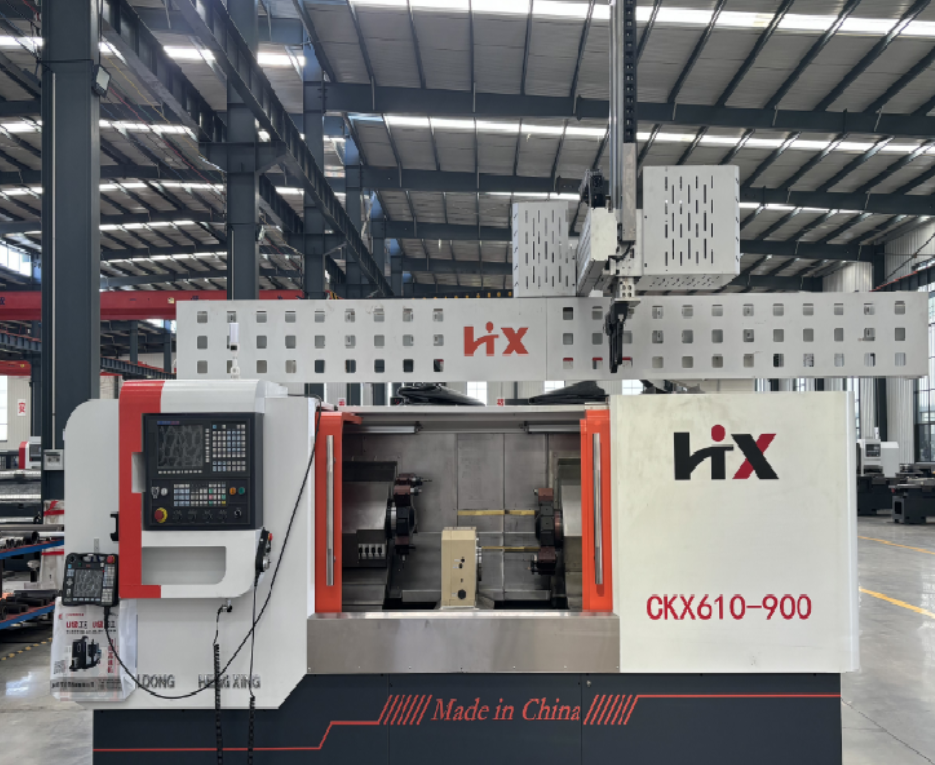
Over two decades on shop floors, the one pattern I see repeatedly is this: the most profitable precision lathes are never defined by the lowest price tag, but by the depth of engineering and manufacturing control behind them. This is where a builder’s true capability surfaces. There is a significant advantage when a manufacturer like Hengxing operates with vertically integrated systems, controlling every step from casting aging and precision grinding of critical components to final spindle assembly and laser inspection. That structure means they can respond fast if you suddenly need a modified draw tube for an unusual family of parts, or if a critical seal kit needs to ship across an ocean. You are not merely buying a single-spindle CNC lathe for precision turning. You are attaching your company’s reputation to a supply chain partner. The right partner works to keep your spindles turning precisely and your promises to your own customers unbroken.