Getting to Know the Basics of a SingleSpindle CNC Lathe
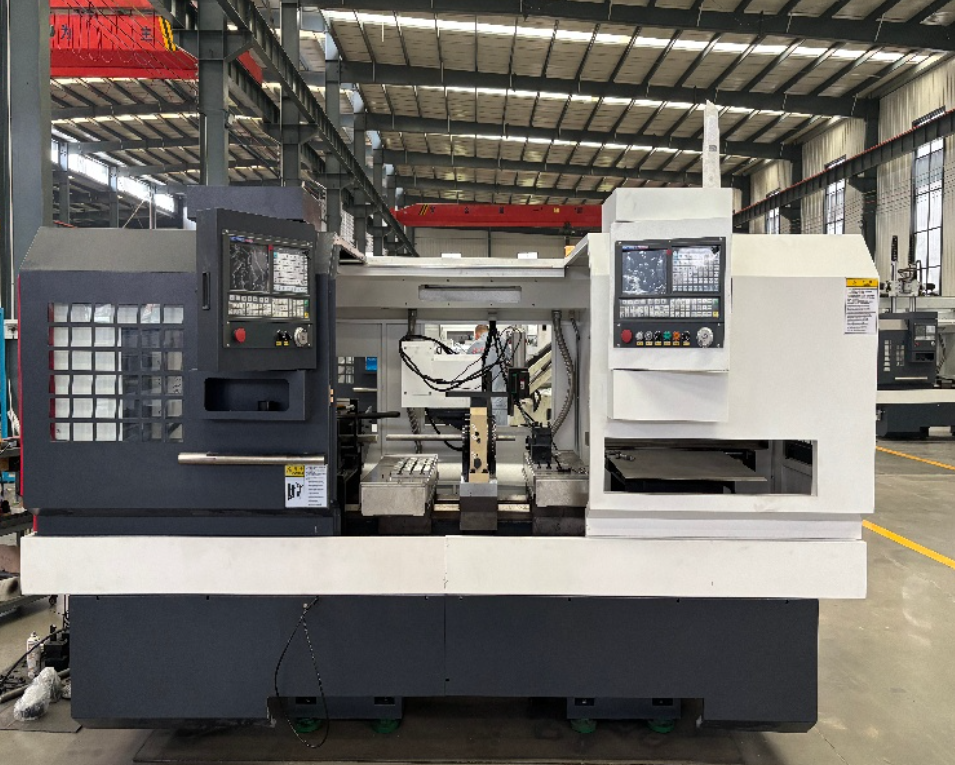
So you are curious about what a singlespindle CNC lathe actually is. Let me break it down in plain English. A cnc lathe machine of the single spindle variety is the most common and widely used type of CNC lathe in the manufacturing world today. As the name literally tells you, it comes with just one spindle. That spindle is the part that holds your workpiece and spins it around at high speeds while cutting tools do their thing to shape the material into whatever part you need.
Think of it like a potter's wheel but way more high tech and precise. The single spindle grips the raw material, usually a metal rod or bar, and rotates it. Meanwhile, the cutting tools move along different axes to shave off material and create the final shape. The whole process is controlled by a computer numeric control system, which means you program it once and let it run. No constant babysitting required.
A singlespindle cnc lathe machine is usually the first stop for many machine shops and small to medium sized manufacturers. Why? Because it is simpler, easier to operate, and much more affordable compared to those fancy twin or multi spindle machines. If you are just getting into CNC turning or you mostly handle smaller batch sizes, this is probably the type of machine you want to start with. It gives you all the precision you need without overwhelming your budget or your operators.
From an operational standpoint, a singlespindle cnc lathe can handle a wide range of tasks. We are talking about turning, facing, taper cutting, threading, drilling, and even some light milling if the machine comes with live tooling capabilities. That is pretty versatile for something with just one spindle. The key thing to remember is that with a single spindle design, you are working on one part at a time. That might sound like a limitation, but for many jobs, it is actually perfect because you get complete control over every single piece you produce.
What Makes a SingleSpindle CNC Lathe Tick
Let me walk you through how a single spindle cnc lathe actually works. The magic starts with the spindle itself. This is the heart of the machine. It is a motor driven shaft that holds your workpiece securely using a chuck or a collet. Once you close the chuck, the spindle starts rotating at a programmed speed, which can range anywhere from a few hundred RPM all the way up to several thousand depending on the machine and the material you are cutting.
While the workpiece spins, the cutting tools come into play. These tools are mounted on a turret, which is basically a rotating tool holder that can index to different positions. The turret moves along certain axes usually the X axis which controls the tool's travel toward and away from the centerline, and the Z axis which controls movement along the length of the workpiece. More advanced models might even have a Y axis or live tooling capabilities, but at its core, a standard singlespindle cnc lathe machine works with those two main axes.
The control system is what brings everything together. You upload a part program typically written in G code into the CNC controller. That program tells the spindle how fast to spin, tells the turret which tool to use and when, and tells the axes where to move and at what speed. The result is a highly repeatable and accurate machining process. Once you set it up properly, you can run hundreds or even thousands of identical parts with minimal variation.
One thing that really stands out about a single spindle cnc lathe is its simplicity. Because there is only one spindle, there is less that can go wrong. There are fewer moving parts to maintain, fewer axes to calibrate, and generally less complexity in the programming. That simplicity translates directly into reliability. Many shop owners prefer singlespindle machines for exactly this reason. They just keep running day after day with proper maintenance.
And let us not forget about precision. A typical singlespindle cnc lathe can hold tolerances in the IT6 to IT7 range. For those who are not deep into machining standards, that means you are talking about accuracy within a few hundredths of a millimeter. That is plenty tight for the vast majority of industrial applications. Whether you are making automotive shafts, aerospace fittings, or medical device components, a well tuned singlespindle lathe can get the job done right.
Where You Might Encounter a SingleSpindle CNC Lathe in Action
You might be wondering where these machines actually get used. The answer is pretty much everywhere. A single spindle cnc lathe is the workhorse of countless manufacturing facilities across the globe. Walk into any job shop, automotive parts supplier, or even a medical device manufacturer, and you will likely see at least one or two of these machines humming away.
Let me give you some concrete examples. In the automotive industry, singlespindle lathes are used to produce all sorts of components. Think about brake rotors, wheel hubs, transmission shafts, suspension parts, and countless other round or cylindrical parts that go into a vehicle. The volumes can be quite high, and singlespindle machines handle those volumes just fine, especially when paired with bar feeders and automatic part catchers.
The aerospace sector is another big user of singlespindle cnc lathe machines. Aircraft require tons of precision turned parts. We are talking about fittings, connectors, actuator components, and structural fasteners. The materials involved in aerospace are often tough alloys like titanium, Inconel, or hardened stainless steel. A good singlespindle lathe with enough horsepower and torque can chew through those materials while holding the tight tolerances that aerospace demands.
Medical device manufacturing is also a major application area. Orthopedic implants, surgical instruments, and dental components are often machined on singlespindle CNC lathes. These parts tend to be smaller and require exceptional surface finishes and accuracy. Again, the single spindle design shines here because it offers the control and stability needed for such delicate work.
Even in the electronics industry, you will find singlespindle lathes producing connector housings, heat sinks, and various other small precision parts. And let us not forget about the mining and hardware sectors. Heavy duty pins, rollers, and shafts for mining equipment are commonly turned on larger singlespindle machines. The website for some manufacturers mentions that their single spindle double head CNC lathe setups deliver 200% higher throughput compared to older designs and are trusted by over 300 manufacturers in mining and automotive sectors. That kind of real world adoption tells you everything you need to know about the versatility and reliability of these machines.
So whether you are making small batches of custom prototypes or running medium volume production of standard components, a singlespindle cnc lathe is probably the right tool for the job. It is flexible enough to handle quick changeovers yet robust enough to run lights out when you need to.
What to Keep in Mind When Choosing a SingleSpindle CNC Lathe
Now let us talk about picking the right singlespindle cnc lathe for your shop. This is where things get a bit more detailed, but do not worry. I will keep it practical. There are a handful of key factors you need to consider before signing that purchase order.
First up is the work envelope. You need to know the maximum diameter and length of the parts you plan to make. The swing over the bed and the distance between centers are the two numbers to look at. The swing tells you the largest diameter part that can spin without hitting the machine bed, and the distance between centers tells you the longest part you can hold. Get these wrong, and you will be kicking yourself later. Make sure the machine you pick can comfortably handle your biggest parts with room to spare.
Next, think about spindle power and speed. Not all singlespindle lathes are created equal. Some are designed for high speed machining of smaller parts with spindles that can spin 6000 RPM or more. Others are built for heavy cutting of large diameter parts with tons of low end torque. You need to match the machine's capabilities to your typical materials. If you cut a lot of stainless or tool steel, prioritize torque over top speed. If you mostly work with aluminum or brass, high speed spindles will make your life much easier.
The control system is another huge consideration. Are your operators already familiar with a particular brand of CNC control like Fanuc, Siemens, or GSK? Sticking with what they know can save a ton of training time and reduce mistakes. Many manufacturers offer compatibility with popular controls. For example, some mention that their machines are compatible with GSK 980TB3i controllers. That kind of integration means you can hit the ground running without having to learn a whole new system from scratch.
Precision and build quality should not be overlooked either. Look for machines that are built on heavy cast iron beds with hardened and ground guideways. That heavy construction absorbs vibration and maintains accuracy over the life of the machine. Check the advertised precision levels. A good singlespindle cnc lathe should be capable of IT6 to IT7 precision, which is the industry standard for quality machining.
And finally, never forget about support. What happens when something breaks? Does the manufacturer have a solid warranty? Can you get spare parts quickly? The website for some manufacturers clearly states that their machines are ISO and CE compliant, which is a good sign of quality and safety standards. But beyond the specs, ask about their after sales service. A cheaper machine with no support is a recipe for headaches. A slightly more expensive machine with great support is an investment in peace of mind.
So there you have it. A single spindle cnc lathe is a straightforward, reliable, and incredibly useful piece of equipment. Whether you are a small shop owner or a production manager at a large facility, understanding what these machines are and how to choose one will save you time, money, and a whole lot of frustration down the road.