
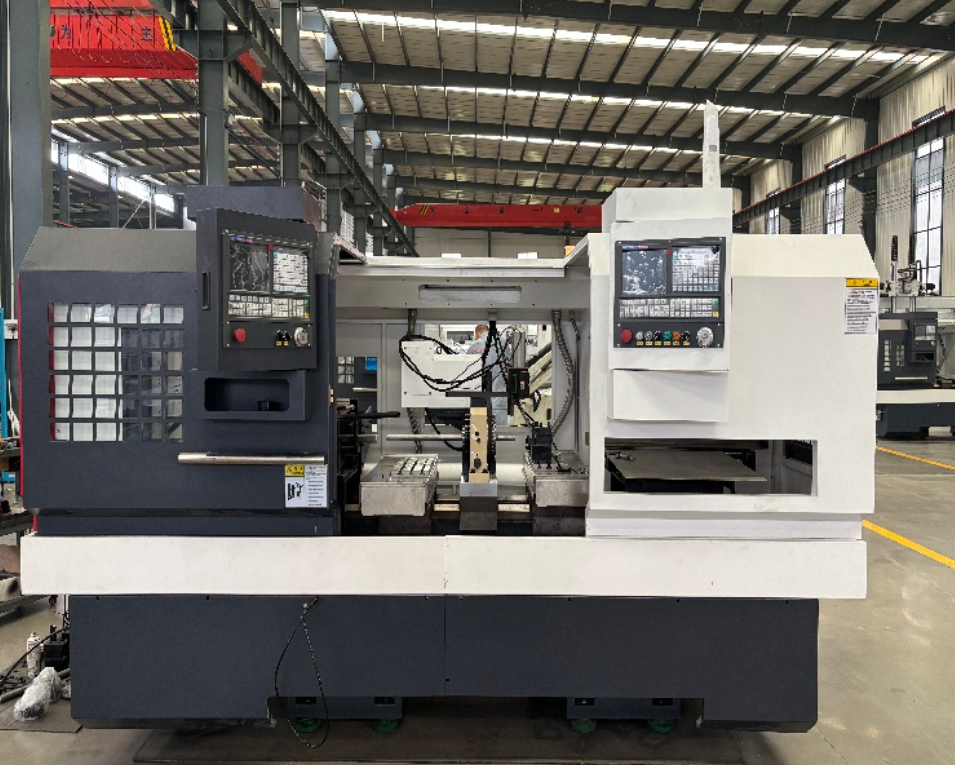
Basic Composition and Core Material Selection for Lathe Bed
The lathe bed works as the foundational skeleton of any single spindle CNC lathe and bears all dynamic loads generated from spindle movement cutting force and sliding component operation during daily production. Most mainstream machine manufacturers choose high grade grey cast iron marked HT250 or HT300 as primary bed material thanks to unique physical traits including strong vibration absorption and outstanding casting fluidity according to material specifications released by China Foundry Association. Unlike solid steel frames that transmit cutting vibration rapidly, qualified grey iron contains distributed graphite particles which damp mechanical oscillation six to ten times better than ordinary steel raw material. Manufacturers adopt resin sand integral casting craft to shape hollow rib reinforced bed cavity, adding multiple internal strengthening ribs to boost bending and torsion resistance without unnecessary weight rise. Field maintenance technicians with over fourteen years of machine overhaul experience mention low quality recycled cast iron beds often suffer gradual permanent deformation after six months of continuous heavy steel cutting, which directly pushes finished part tolerance out of standard IT6 and IT7 precision range.
Mainstream Structural Classification and Layout Features
Two widely accepted bed layouts dominate current single spindle CNC lathe production covering flat bed and inclined bed types each designed for distinct processing scenarios and user demands. Flat bed builds horizontal parallel guide rails on level base plane with simple layout and larger bearing capacity perfect for heavy duty rough cutting of thick solid steel shaft pieces commonly used in mining equipment parts production. Inclined bed normally sets guide surface at thirty to sixty degree tilted angle forming triangular supporting structure with machine headstock and tailstock to lower vertical cutting stress and reduce running vibration amplitude during high speed aluminum finishing. The tilted design also lets metal scraps slide down naturally into centralized chip removal trough to avoid residual cuttings scratching workpiece surface in repeated machining cycles. Some modified hybrid structures combine flat base frame and inclined sliding board to balance cost control and chip cleaning performance for small batch mixed aluminum and steel component manufacturing tasks.
Standardized Post Casting Processing to Secure Long Term Precision
Complete post casting thermal treatment stands as an indispensable step to lock bed dimensional stability and remove internal residual stress formed during cooling and solidification process. Authoritative mechanical experts from China Machine Tool Industry Association publish unified technical standards requiring all qualified CNC lathe beds to pass at least two full rounds of aging treatment either high temperature artificial aging or prolonged vibration aging to eliminate over ninety five percent hidden casting stress. Without proper stress relief treatment beds will deform slowly under long term alternating cutting load leading to guide rail flatness deviation and gradual precision drift of whole machine within one to two years of factory operation. After stress releasing procedure guide rail contact surface receives intermediate frequency quenching and precision grinding to raise surface hardness and anti wear property meeting long term round the clock production requirements for automotive and medical hardware component processing. International Production Engineering Research Institution data points out beds following full standardized heat treatment keep original machining accuracy for more than eight years under regular daily production conditions.
Practical Onsite Cases Showing Bed Structure Influences on Production Output
Real production feedback from global machining workshops clearly reflects how rational bed design changes overall processing yield and operational cost for single spindle CNC lathe users. A medium sized auto component factory based in Turkey replaced outdated low grade flat bed lathes with inclined bed CNC models to process piston rods and aluminum end caps for commercial vehicle assemblies. The factory production manager records workpiece reject rate falls from eleven percent down to below two point eight percent within three months after equipment upgrade thanks to improved vibration suppression and smooth automatic chip removal brought by optimized bed structure. Another hardware processor from Netherlands specializing in mining roller shaft manufacturing selects reinforced hollow rib flat bed lathes for heavy stock removal of high tensile alloy steel, lifting single piece cutting efficiency by nearly thirty five percent compared with previous thin wall bed machines and cutting extra expenditure from frequent tool replacement caused by cutting chatter. These practical examples help equipment buyers make targeted bed type selection according to their own raw material and production batch characteristics.
Global Production and Aftermarket Support for Customized Bed Manufacture
Growing numbers of global part manufacturers seek customizable bed structural solutions to match unique machining requirements for special alloy or oversized shaft production beyond standard machine specifications. Reliable equipment producers maintain complete internal casting and precision machining workshops to finish tailored bed modification ranging from rib layout adjustment to customized inclined angle redesign for non conventional processing projects. Mature global spare part logistics and long distance technical guidance become necessary backup to fix unexpected bed related failures for overseas clients across Europe South America Middle East and Southeast Asia regions. With eighteen years of accumulated ODM and OEM development experience and fifty thousand square meters of standardized production facility Hengxing maintains stable cooperative ties with over six hundred manufacturing partners spread across more than thirty global countries. Independent full chain production capacity enables flexible customization of single spindle lathe bed structure and continuous supply of related spare parts to help worldwide processing factories optimize long term production stability and precision retention.
Table of Contents
- Basic Composition and Core Material Selection for Lathe Bed
- Mainstream Structural Classification and Layout Features
- Standardized Post Casting Processing to Secure Long Term Precision
- Practical Onsite Cases Showing Bed Structure Influences on Production Output
- Global Production and Aftermarket Support for Customized Bed Manufacture