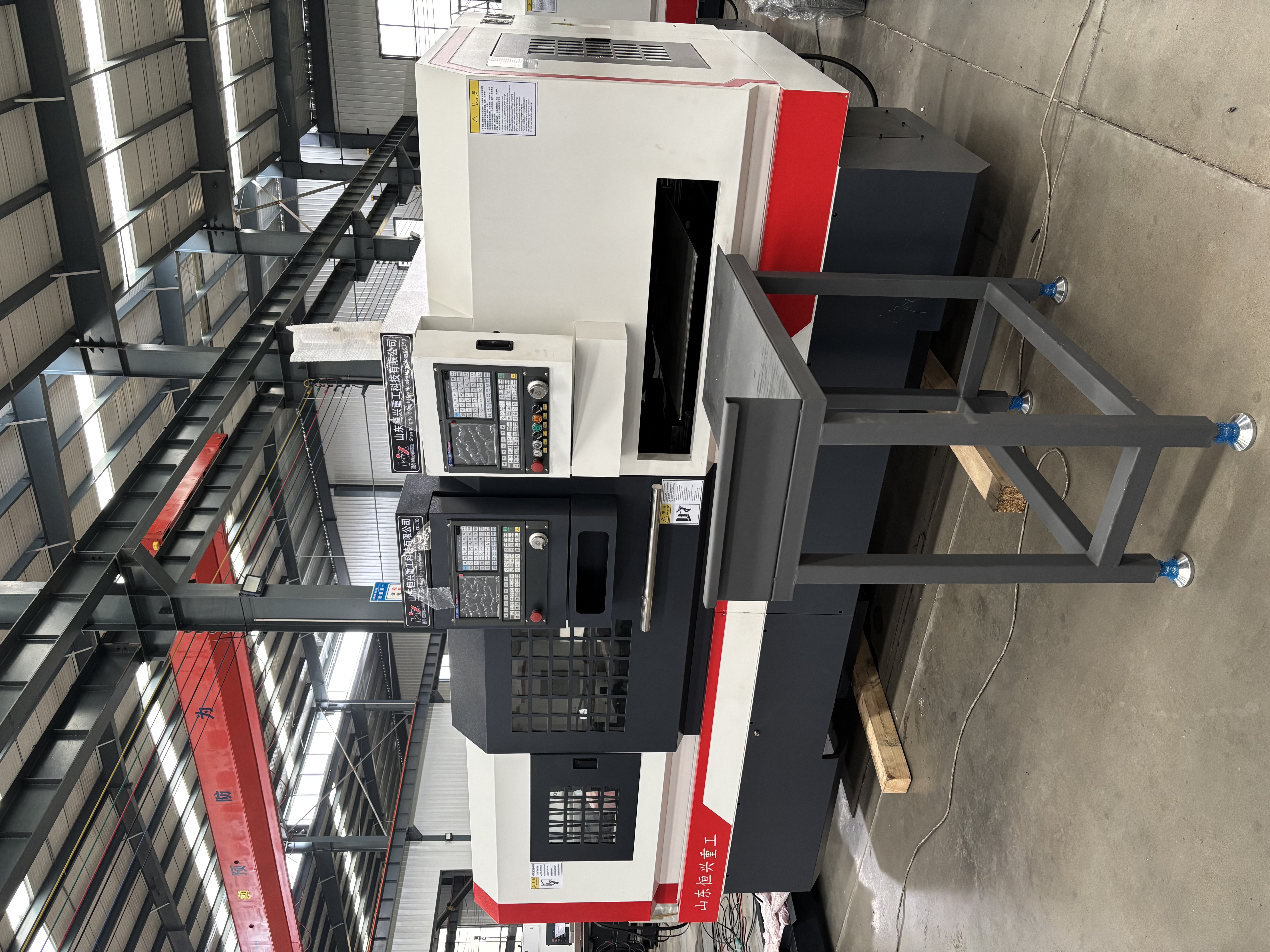
Core Mechanism: Parallel Processing Eliminates Spindle Idle Time
The dual spindle setup on CNC lathes really boosts machining efficiency because both spindles can work at the same time instead of sitting idle like they do on regular single spindle machines. According to some industry reports from last year, downtime for spindles alone eats away about 30% of the whole production cycle in large scale manufacturing. What makes these dual systems so effective is their ability to multitask. When one spindle is cutting metal, the second one isn't just waiting around. It can load new stock, remove finished parts, or even handle additional operations while the first spindle keeps working. This constant action means materials keep moving through the machine without those frustrating stop-and-start delays that slow down production so much.
How Simultaneous Main and Counter-Spindle Operation Cuts Non-Value-Added Time
The main spindle takes care of basic operations like roughing or facing while at the same time, the counter-spindle works on finishing touches, cutting off parts, or getting rid of completed pieces. What this means practically is that instead of waiting for one operation to finish before starting another, these processes happen together. Take a look at how it works: when the main spindle finishes working on a fresh workpiece, the counter-spindle grabs hold of what's already done and pushes it out. This clever arrangement cuts down those annoying wait times between steps by around 40 to 50 percent in really good setups. The big win here? Less wasted time overall because there's no need for extra tool moving around or people having to manually handle things. And all this happens without cranking up the speed or changing how fast the machine feeds material through.
C-Axis Control, Indexing, and In-Machine Rework Enable Seamless Part Handoff
Good control over the C-axis lets parts rotate and change position dynamically during machining operations. At the same time, accurate indexing makes sure parts line up consistently between spindles so there are no problems when switching from one to another. The machine can handle things like drilling, tapping, and deburring right there on the spot instead of sending workpieces elsewhere for fixes. This cuts down on setup time by around 25 percent and maintains tight tolerances of plus or minus 0.005 millimeters throughout the whole operation. Both spindles stay busy working most of the time rather than sitting idle waiting for adjustments.
Simultaneous Machining: The Primary Cycle Time Optimization Lever
Automotive Shaft Production Case Study: 42% Reduction in Total Cycle Time
When it comes to making automotive shafts, shops that switch to dual-spindle CNC lathes typically see their overall cycle time drop around 40% compared to those using single-spindle machines. Old school approaches need workers to do roughing first, then finishing, followed by cutoff operations, which leaves plenty of downtime between steps. The beauty of dual spindle systems lies in their ability to work on two parts at once. One spindle handles the front end of a component while the other takes care of the back end simultaneously. This kind of parallel processing basically cuts out all the wasted time when tools have to move around or wait for synchronization. As a result, production lines can crank out more finished products per hour without pushing the cutting speeds beyond safe limits.
High-Mix, Low-Volume Applications: Achieving Sub-2-Minute Part-to-Part Times
Dual spindle machines really shine in job shop environments where being able to pivot quickly is essential. With integrated C axis controls, each spindle can index independently for all sorts of operations from milling to drilling and tapping, which means getting to different features on various parts happens much faster. What makes these systems so powerful is how operators can load new raw material into the primary spindle at the same time the secondary spindle is wrapping up work on whatever came before. This overlapping workflow cuts down part switching times to well below two minutes even when dealing with complicated components produced in small quantities. An actual case study comes from an aerospace subcontractor who managed to slash their setup time by around two thirds through smart use of built-in probing systems and tools that adjust themselves based on what they sense during operation. The return on investment here isn't just limited to mass production scenarios either.
Optimizing Load Balance to Maximize Dual-Spindle CNC Lathe Efficiency
Strategic Work Distribution Between Spindles to Prevent Bottlenecks
Getting the best results isn't just about having parallel processing power, it really comes down to how work gets distributed across different components. When we assign tasks according to how long they take and their complexity level, things run smoother overall. For instance, putting primary turning jobs on the main spindle while reserving finishing work for the counter-spindle keeps everything moving without unnecessary waits, which helps maintain those valuable cycle time improvements. The good news is there are tools available now that can simulate spindle usage before actual production starts. These advanced CAM programs spot potential bottlenecks early on and then tweak various parameters like tool paths, feed rates, and when tools need changing during operation. Many shops have found these methods work well in practice.
- Grouping similar-duration operations per spindle
- Sequencing complex tasks in parallel with simpler ones
- Aligning tool change intervals across both spindles
When applied consistently, such load-balancing strategies reduce non-cutting time by 15–30%, converting theoretical parallelism into measurable, sustained throughput improvement.
Adoption Gap Analysis: Cost Perception vs. Proven TCO and ROI of Dual-Spindle CNC Lathes
ROI Validation: Payback in 14–18 Months for Tier-1 Contract Manufacturers
Many companies still see high initial costs as a major obstacle to getting dual-spindle CNC lathes, even though there's plenty of proof showing they pay for themselves quickly. Look at Tier-1 contract manufacturers who typically get their money back within about 14 to 18 months. Why? Because these machines cut production cycles by anywhere from 40 to 60 percent, slash both labor and energy expenses per individual part, and make better use of factory assets overall. Take one aerospace parts maker for instance. After switching to dual-spindle technology, they managed to bring down what they spent on each part by 32%. And when we look at all the other savings too - faster setup times, less need to handle components manually, longer lasting tools because of smarter cutting methods - the math clearly shows dual-spindle systems win out in terms of total cost over time. Even when production volumes aren't extremely high, these machines keep running nonstop and adapting to different needs, which gives manufacturers real competitive edge in the long run.
FAQ
What makes dual spindle CNC lathes more efficient than single spindle machines?
Dual spindle CNC lathes can perform tasks simultaneously, reducing idle time and allowing uninterrupted flow of materials through the machine. This multitasking cuts down production time significantly compared to single spindle machines.
How does the counter-spindle improve efficiency in CNC lathes?
The counter-spindle can work on finishing touches, cutting off parts, and removing completed pieces while the main spindle is performing basic operations. This concurrent operation eliminates unnecessary waits between machining steps, thus enhancing efficiency.
What is the role of C-Axis control in dual spindle CNC lathes?
C-Axis control facilitates dynamic rotation and positioning of parts during machining operations. It enables seamless part handoff between spindles, ensuring accurate operations like drilling, tapping, and deburring without additional setup times.
Can dual spindle CNC lathes be cost-effective for low-volume operations?
Yes, dual spindle machines are highly effective in low-volume operations, especially in job shops, as they significantly reduce part switching times and setup periods, enhancing overall efficiency and return on investment.
How quickly can companies expect ROI from investing in dual-spindle CNC lathes?
According to industry examples, companies, particularly Tier-1 contract manufacturers, can expect a payback period of approximately 14 to 18 months due to reduced production cycles, labor efficiency, and overall cost savings.
Table of Contents
- Core Mechanism: Parallel Processing Eliminates Spindle Idle Time
- Simultaneous Machining: The Primary Cycle Time Optimization Lever
- Optimizing Load Balance to Maximize Dual-Spindle CNC Lathe Efficiency
- Adoption Gap Analysis: Cost Perception vs. Proven TCO and ROI of Dual-Spindle CNC Lathes
-
FAQ
- What makes dual spindle CNC lathes more efficient than single spindle machines?
- How does the counter-spindle improve efficiency in CNC lathes?
- What is the role of C-Axis control in dual spindle CNC lathes?
- Can dual spindle CNC lathes be cost-effective for low-volume operations?
- How quickly can companies expect ROI from investing in dual-spindle CNC lathes?